



The Queensland Indigenous Family Violence Legal Service (QIFVLS)'s 2026 Overcoming Indigenous Family Violence Forum is underway in Magandjin (Brisbane) this week.
The forum began at the InterContinental Brisbane on Wednesday, bringing together advocates, legal services, community organisations, Elders, cultural leaders and government representatives under the theme "Our Way, Our Changemakers."
Hosted by QIFVLS, the forum focuses on community-led responses to domestic, family and sexual violence, with sessions centred on cultural healing, early intervention, trauma-informed practice, human rights, law reform and system change.
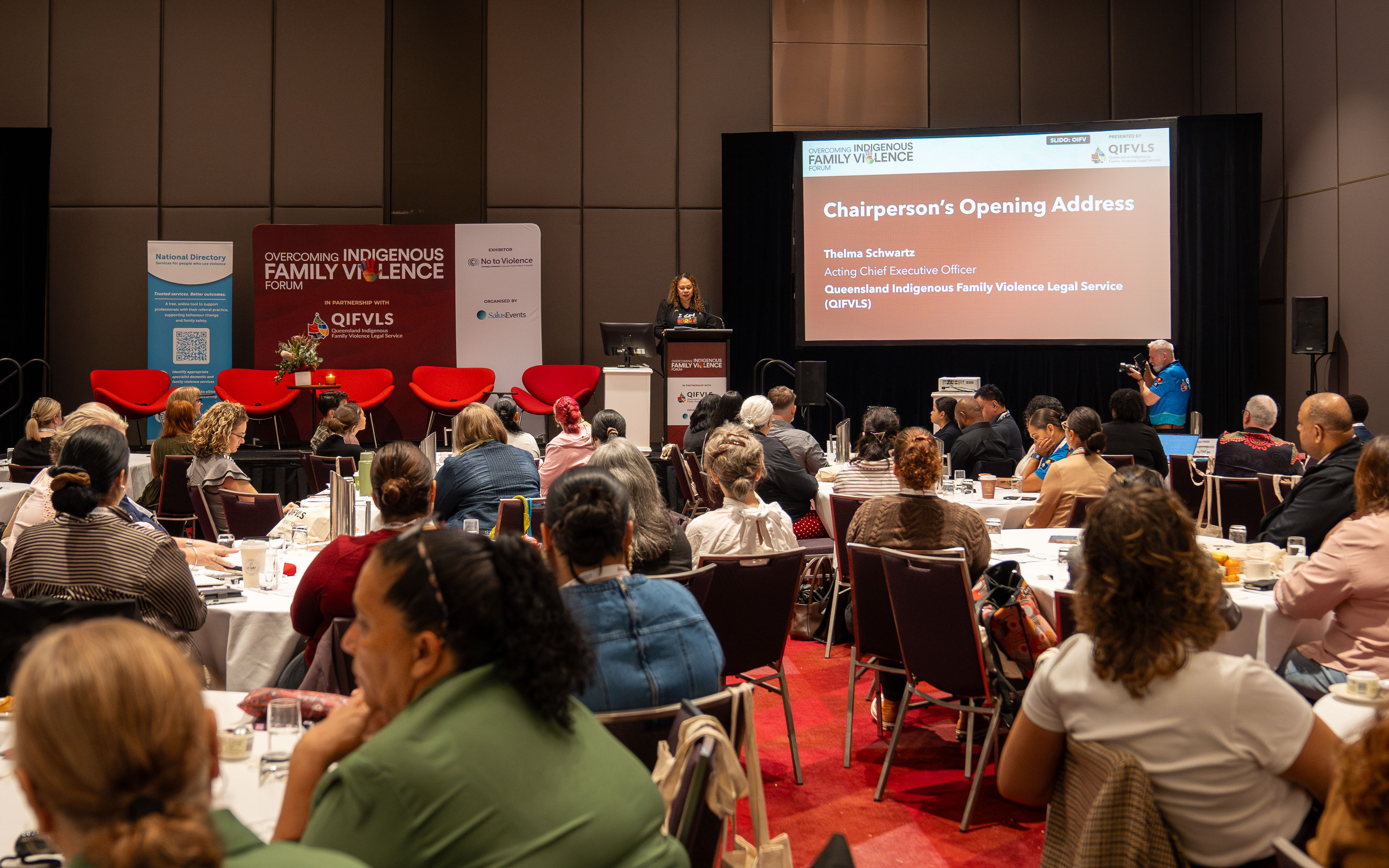
Day one opened with a Welcome to Country before Torres Strait Islander, Samoan, Papua New Guinean and German heritage woman Thelma Schwartz, Acting Chief Executive Officer of QIFVLS, gave the chairperson's introduction.
The forum's theme was designed to recognise people already leading change across the sector.
"This year, we've broken with the mould and we've done something a little bit different," Ms Schwartz said.
"We really wanted to highlight those creating change in our industry, but more broadly as it supports Aboriginal and Torres Strait Islander peoples, especially women, children and families escaping domestic family and sexual violence."
Ms Schwartz said the 2026 program had been expanded to respond to feedback from people working across the sector.
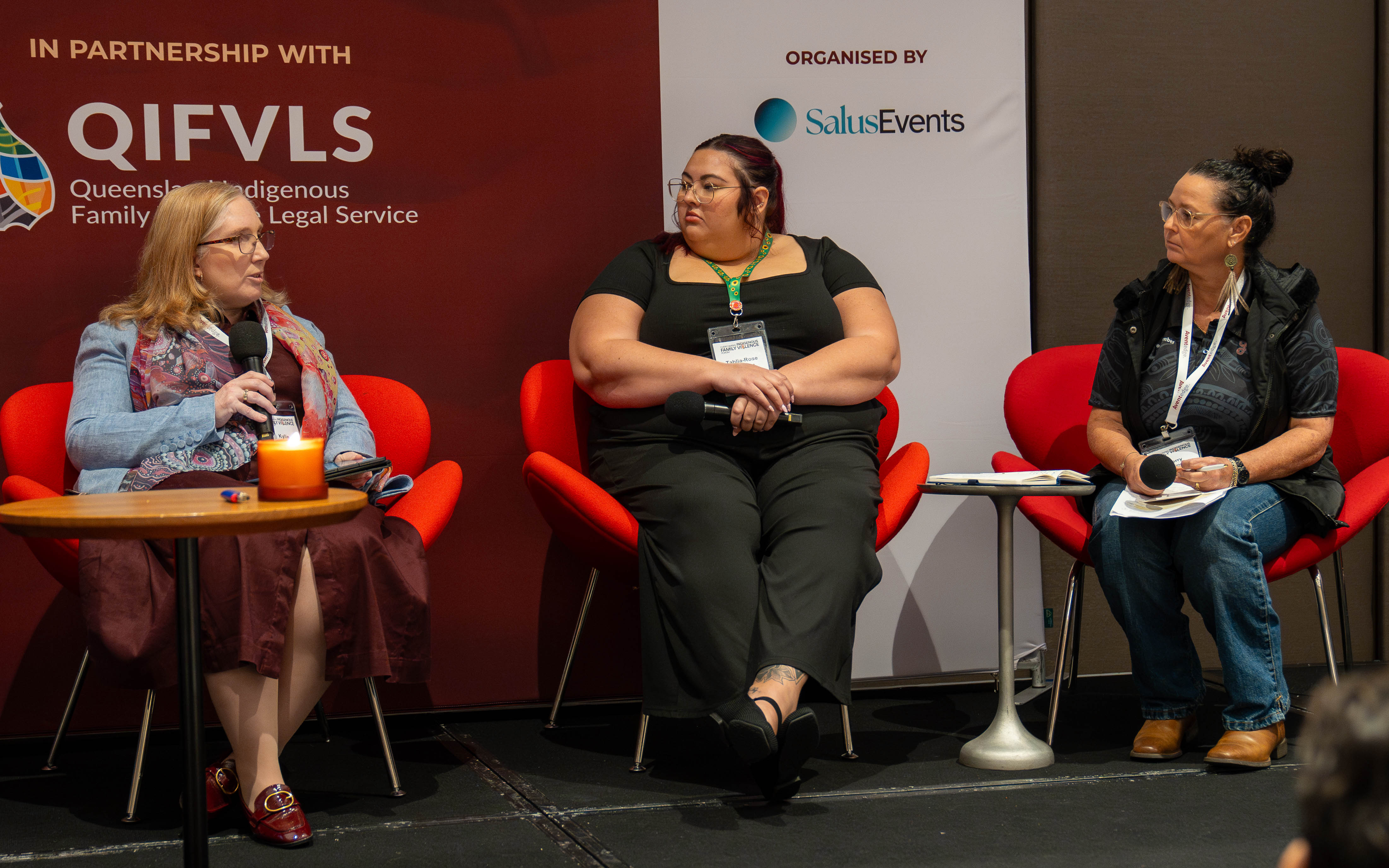
Day one included panels on influencing policy from a grassroots level, lived experience and systems change, human rights, community legal education, coercive control in cultural context, wellbeing, healing, trauma-informed training and shifting systems from control to care.
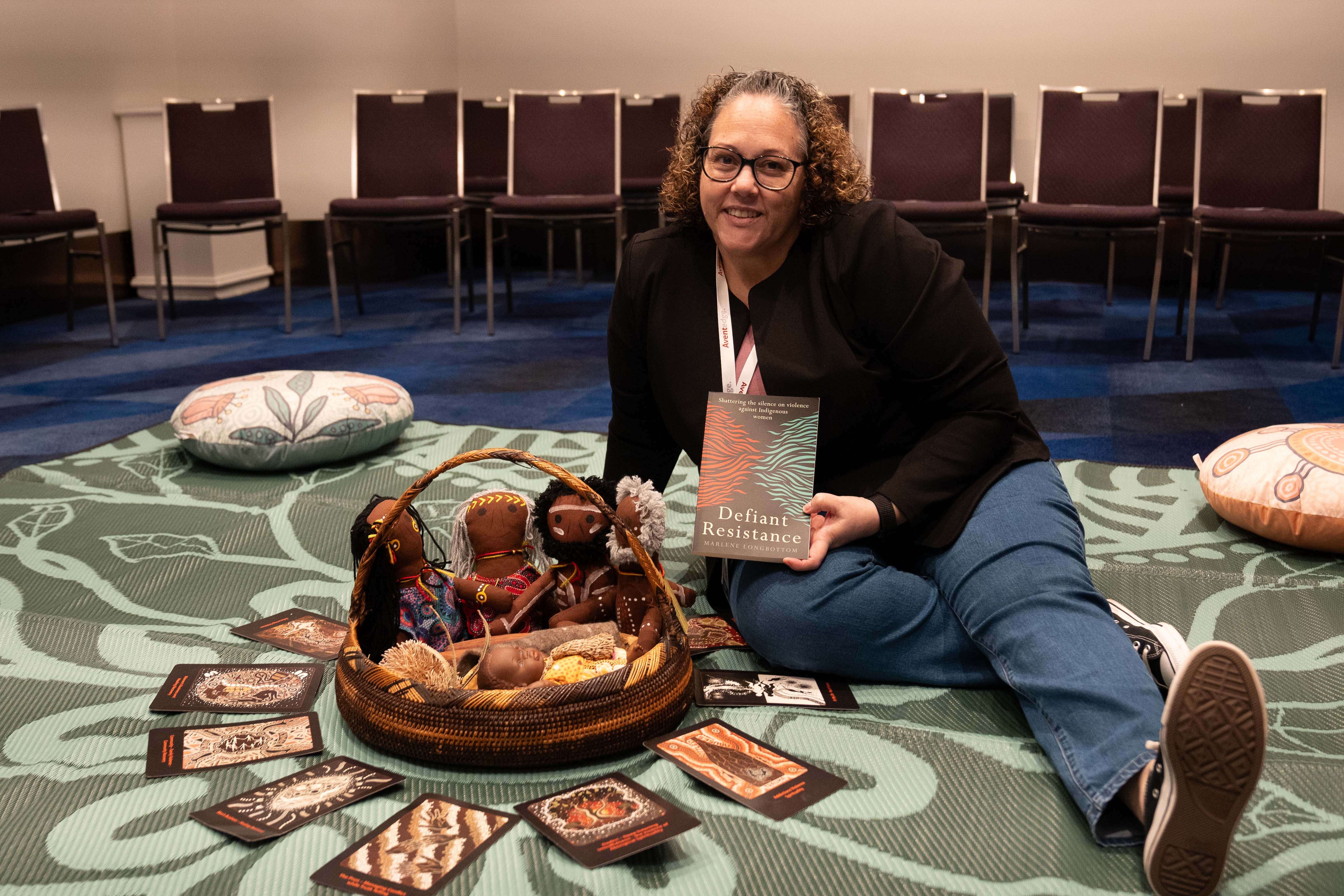
The program also included the launch of Dr Marlene Longbottom's book, Defiant Resistance: Shattering the silence on violence against Indigenous women.
Ms Schwartz said the forum had kept yarning circles while adding streams to bring more content into the program.
"That's allowed more content to come into the delivery of this forum," Ms Schwartz said.
"That's really picking up on the feedback that we've so gratefully received from participants who've wanted to hear how we actually supporting healing for victim survivors, but also healing for those people who are using violence.
"We have an amazing lineup of changemakers, both at national, state and territory level and even internationally, who've joined us to share their learnings, their journey and the pathway forward."
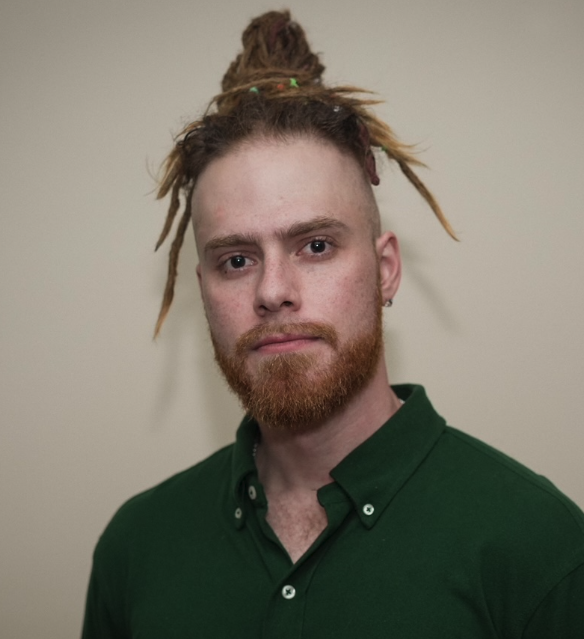
Wiradjuri, Kamilaroi and Dharrawal journalist and author, Stan Grant, delivered the opening keynote speech, 'Forging a path of justice and unity for our Country'.
Mr Grant spoke about history, trauma, family violence, media narratives, accountability and the strength of people working in communities.
His address linked family violence with the ongoing effects of colonisation and intergenerational trauma, while making clear this was not an excuse for harm.
Mr Grant linked family violence with the ongoing effects of colonisation and intergenerational trauma, while making clear this was not an excuse for harm.
"We know that where we see violence, where we see a collapse in our own societies, we know that we see people with a broken spirit," Mr Grant said.
"Those who hurt are hurt.
"Men in the room have to stare in the mirror and be accountable."
Mr Grant also challenged the way statistics can reduce the experiences of victim-survivors and communities to numbers.
"It is not a number, it is a human catastrophe. It has a name and it has a face," Mr Grant said.
"The healing for our people is in the country. It is in our soul. It is in each other."
Day 2 of the forum - Thursday - will focus on hope for the next generation, young people's leadership, self-determination, child safety, men's healing, women and children's safety and the national plan to end family, domestic and sexual violence experienced by Aboriginal and Torres Strait Islander women and children.
Speakers scheduled for day two include Ana Falemaka, Ged Kearney, Christine Thomas, Maggie Blanden, Joshua Creamer, Kulumba Kiyingi, Muriel Bamblett and Domestic Family and Sexual Violence Commissioner Micaela Cronin.
The forum will be followed by an on-Country workshop at Musgrave Park on Friday.



