




Politicians from across the political divide have heard about the hurdles and difficulties facing women in prison across Australia, with one speaker noting the prison industrial complex often targets a "specific population".
Held in the Senate committee room of Parliament House in Canberra, Truth Telling Yarns: Women in Prison, hosted by independent Senator Lidia Thorpe, heard from two organisations made up of formerly incarcerated women: Sisters Inside, and the National Network of Incarcerated and formerly Incarcerated Women and Girls (National Network).
"Communities can self-determine their own destiny, their own solutions," said Senator Thorpe, a Gunnai, Gunditjmara and Djab Wurring woman from Victoria.
Sister's Inside chief executive Debbie Kilroy said communities needed to be "reimagined" themselves to help build their own modes of safety, without any "carceral tentacles".
"We just need a government that has got the guts to put their money where their mouth is and actually act," she said.
The group spoke on behalf of women, both in prison currently, and suffering the continued impacts of their sentence.
One formerly detained woman spoke of the pain of having her child taken away and put into child protection the day she was released from prison, with the removal - and denial of children - compared to the Stolen Generation, whilst the continual imprisonment of Indigenous women was labelled a "crisis".
"We heard in the room the effects of the white Australia policy," Senator Thorpe told reporters.
"This place [Parliament] wasn't built to protect us, First Peoples' of this land, and it's been a continued breakdown of our society.
"We are the most incarcerated people on the planet, we have the highest suicide rate on the planet…it's not getting better, it's getting worse. We heard that today."
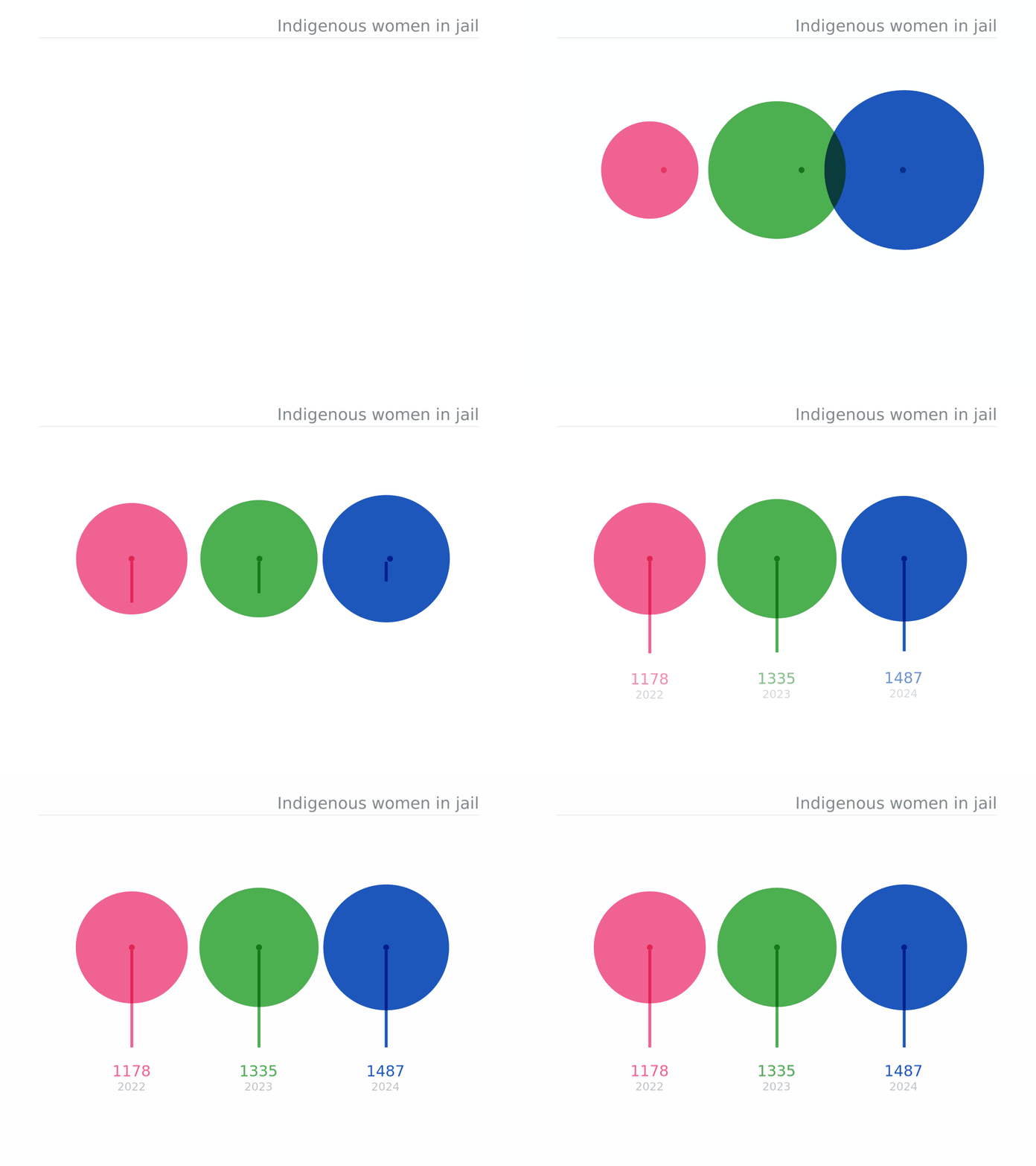
Indigenous women and girls are likely the most imprisoned female group in the world; incarcerated at a rate of 504 persons per 100,000 people, compared to the overall female incarceration rate of 31 persons per 100,000 people.
Despite making up only 3.8 per cent of the Australian female population, over 44 per cent of the female prison population on an average day in the March quarter was Indigenous — 80 per cent of them mothers.
The roundtable also heard about the difficulties of incarcerated women accessing the NDIS and mental health support, often only seeing a mental health worker in any capacity after they had been incarcerated.
National Network member MJ Whalen told the hearing: "People's access to the NDIS should be based on individual needs regardless of legal status."
The group met with a number of MPs, with the National Network's Tabitha Lean telling National Indigenous Times the delegation - from all around the country - were "really interested" in ensuring the voices of incarcerated women and "those who have been criminalised" are heard by those in power.
Senator Thorpe said the delegation offered "self-determined solutions," by Indigenous people, for Indigenous people, to begin to fix the crisis.
"So, it is about funding communities, not prisons," she said.
"We need to stop this racialised policy that this place [Parliament] continues to perpetuate." ?
One of the main arguments put forward by the groups was that the women who had gone to prison needed to be at the table when justice reform discussions were taking place.
"The justice expert panel…that's being put together," Ms Whalen said, "we need to be a part of that."
"We know what happens on the ground and we know what services are being disrupted."
Ms Kilroy added: "One of the biggest things that we want is that the secretariat of the National Network be funded."
Speaking to the media afterwards, Ms Kilroy argued: "It's about addressing harm that's been perpetrated, particularly against Aboriginal and Torres Strait Islander women in this country since the invasion and ongoing genocide."
Having visited a prison in the ACT the day before, she said it was important as a group of formerly incarcerated women, "some on parole, some that aren't," to be able to bring their voices to the table.
Ms Kilroy said the ministers they had spoken to had listened and the response had been "very positive," with many admitting they didn't know the extent of the issues at hand.
"For them, to meet people inside…so often people who are making the decisions that affect us inside, don't even get to meet anyone who has been in prison before," Ms Lean added.
Asked what the major goal of the delegation, and the organisations were, Ms Kilroy was succinct.
"What we're all about is ending the incarceration of women and girls," she told National Indigenous Times.
"Dismantling racial capitalism and the prison industrial complex and working to reimagine communities and build new modes of safety and security."



