




A groundbreaking new report has revealed that supporting First Nations women in fire and land management is a critical, yet untapped, strategy for protecting Australian communities from escalating climate disasters.
The report, First Nations women, cultural fire knowledge, wellbeing and memory, draws attention to Australia's workforce of First Nations women in fire and land management, and highlights the profound positive impacts that culturally responsive professional development programs can have on this cohort.
The research is a collaboration between Monash University's National Indigenous Disaster Resilience (NIDR) program and Natural Hazards Research Australia.
NIDR research fellow and lead author Zoe Schultz said that while gender equity has improved in the fire and land management sector, targeted professional development and support for First Nations women remains scarce.
"While some programs recruit young women into the fire sector, specific professional support for First Nations women already on the frontline is virtually non-existent," she said.
"As Australia faces more frequent and severe fires and floods, we cannot afford to ignore such a highly capable and valuable part of this workforce.
"First Nations women are driving incredible initiatives to protect community and Country, but they are often doing it without adequate support."
"This research proves that investing in culturally supportive, women-led programs isn't just a win for gender equity - it directly strengthens our national workforce on the frontline against climate disasters."

The report evaluated Australia's first Women-in-Fire Prescribed Fire Training Exchange (AUSWTREX), hosted by Queensland Fire Department and Queensland Parks and Wildlife Service in northern Queensland in 2025.
Over 12 days, 30 First Nations women gathered to enhance their fire practitioner skills and share cultural and western burning knowledge.
Researchers used interviews, participant journals, and participant observation to evaluate the program, specifically looking at how First Nations women-led spaces and cultural knowledge exchanges impact wellbeing and memory.
The evaluation found that the AUSWTREX program was highly valuable, providing a safe and supportive space for First Nations women to build confidence, step into leadership roles, and exchange critical fire skills.
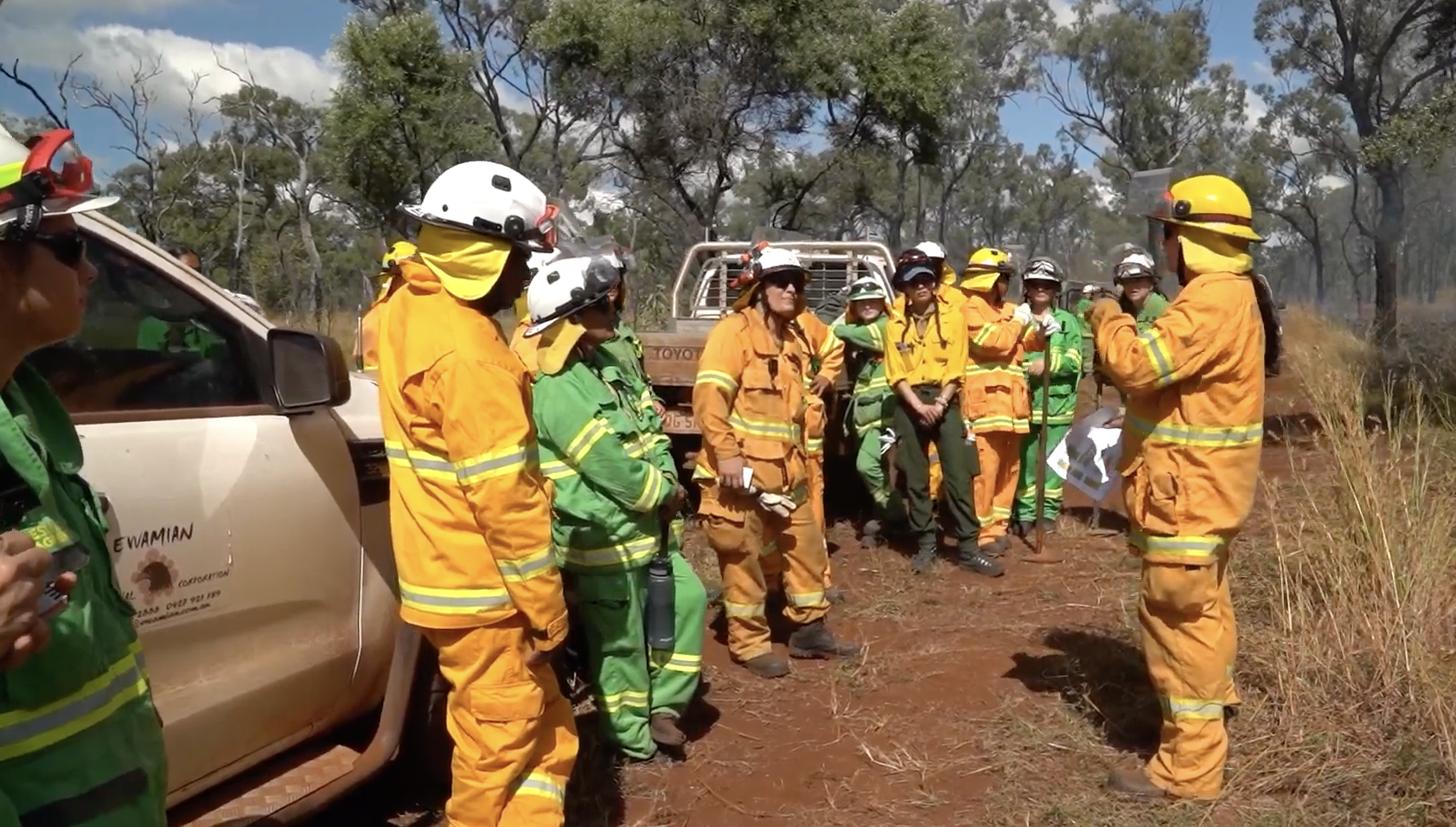
Chloe Swiney, manager of Bushfire Mitigation for the Rural Fire Service Queensland and one of the key organisers of the program, said the program went far beyond a traditional training program.
"By bridging the gap between western hazard reduction and cultural burning, the program allowed women to protect cultural heritage while fostering deep personal healing and lifelong professional networks rooted in shared lived experiences," she said.
"For many, it was their first opportunity to participate in a cultural burn or use their skills to protect cultural heritage.
"The impact went beyond networking and skills development. These women found companionship within a workforce that can be challenging and isolating for First Nations women. They returned to their communities changed and empowered, though the real challenge now is ensuring their workplaces actually recognise and value their expertise when they return."
The evaluation revealed that programs such as AUSWTREX deliver significant positive impacts for First Nations women, and offer culturally responsive professional development opportunities that are otherwise lacking across the fire and land management sector.
Ultimately, the research provides a practical framework for the wider emergency management sector. It demonstrates that investing in targeted, culturally supportive programs directly strengthens workforce capability and wellbeing.
The report authors said that as Australia faces increasingly complex climate challenges, learning from this model offers government agencies "a clear pathway to building a more inclusive and resilient frontline workforce".



