



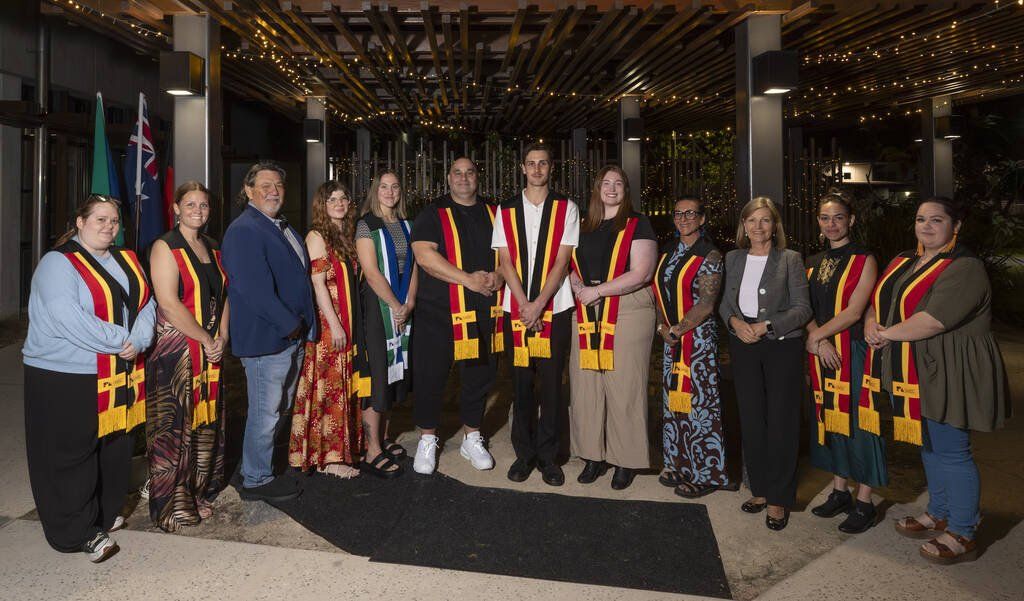
The University of the Sunshine Coast has celebrated a record 104 First Nations students graduating this semester, bringing the total number of Aboriginal and Torres Strait Islander graduates at the university to 771 since 1999.
It's a milestone that Professor Anthony (Joe) Fraser, Pro Vice-Chancellor for Aboriginal and Torres Strait Islander Strategy, says highlights the university's approach is built on relationships and respect.
"Students bring a wealth of knowledge when they start university. They are not vessels that need to be filled up. It's about mutual respect," Professor Fraser said.
"University is a process of learning, resilience and growth, and our approach is to ensure the student is empowered from the start to get their needs met and not feel like they need to drop out when things get overwhelming."
Closing the outcomes gap
UniSC currently has more than 760 Aboriginal and Torres Strait Islander students enrolled; many supported through targeted scholarships and culturally informed student services. Furthermore, the Buranga Centre offers support as a campus space where Indigenous students can study, meet and connect with Elders and Community.
"First Nations students make up four per cent of UniSC's student population, which is double the national average," says UniSC Vice-Chancellor and President Professor Helen Bartlett.
"So UniSC is leading the way in terms of ensuring First Nations students in our communities are finding a pathway to tertiary study, but the real criteria for us is supporting each of those students through to graduation and beyond."
This semester, 38 First Nations students will graduate across 26 different study programs. UniSC says the gap in success rates between Indigenous and non-Indigenous students has been closing steadily, dropping another five per cent in the past year.
Guiding the next generation
For Bundjalung man and UniSC graduate, Josiah Green, connection is key. After completing a Bachelor of Sports Studies in 2024, he returned to the university as a mentor at the Buranga Centre.
Josiah, who is also a fullback for the Brisbane Strikers, says students often need guidance from someone who understands what they're going through, and notes his experience from "older fellas" in the Sunshine Coast Goannas Indigenous soccer team.
"There are times you feel overwhelmed with everything. Not just uni life, but life in general," he said.
"If you relate to someone, and say 'I've been where you are', they know what you are saying. You can say 'it's going to be all right' and they know you mean it."

One of the most effective programs at UniSC is Capture and Keep, an Aboriginal nurse-led support model for Indigenous nursing and midwifery students. Created in 2013 by Mandandanji woman, Dr Lynne Stuart, and led since 2015 by Gamilaraay woman, Aunty Leone Smith, the program focuses on orientation, retention, and graduation.
Since it began, Capture and Keep has supported 122 Indigenous nurses graduate, whilst another 143 are currently enrolled. The Bachelor of Nursing Science is currently the university's most popular program for Indigenous students, comprising 18.8 per cent of First Nations enrolments in 2024.
For Aunty Leone, the role often comes down to reassurance.
"A lot of the time what they need is reassurance," she says.
"It makes such a difference. I've had situations where students have had issues and I've been able to make contact and say, 'this is just a hiccup'. And then we talk about what we need to do to get through it."
Programs like Capture and Keep are critical to ensuring future generations of First Nations students not only enrol but thrive, says Professor Bartlett.
"UniSC offers targeted scholarships, culturally informed support systems, universal design principles and community-driven outreach, empowering students not only to enrol, but to thrive and lead," she said.
With demand growing — including a doubling of Indigenous higher degree research students this year — the university says its focus remains on making pathways culturally safe and sustainable.



