




Key points:
- A native fish species, the Balston's pygmy perch was thought to be locally extinct before this discovery
- Bibbul Ngarma Aboriginal Association's BoorYul-Bah-Bilya Program aims to address declining river health
- BNAA collaborated with the River Science team at WA's Department of Water and Environmental Regulation (DWER) to undertake targeted fish surveys
Indigenous Association makes a significant ecological discovery
The Balston's pygmy perch, a rare and threatened native fish previously thought to be locally extinct, has been discovered in the Perth Hills by Bibbul Ngarma Aboriginal Association through its BoorYul-Bah-Bilya Program.
The presence of the species was first indicated through eDNA sampling undertaken to assess the health of the Mandoon Bilya (Helena River) catchment as part of BoorYul-Bah-Bilya (BBB), BNAA's long-term river restoration program.
BNAA has conducted extensive eDNA analysis at more than 90 sites to establish a biodiversity baseline for the catchment. An emerging technology, eDNA detects animals, plants, and microbes through traces of genetic material in the environment.
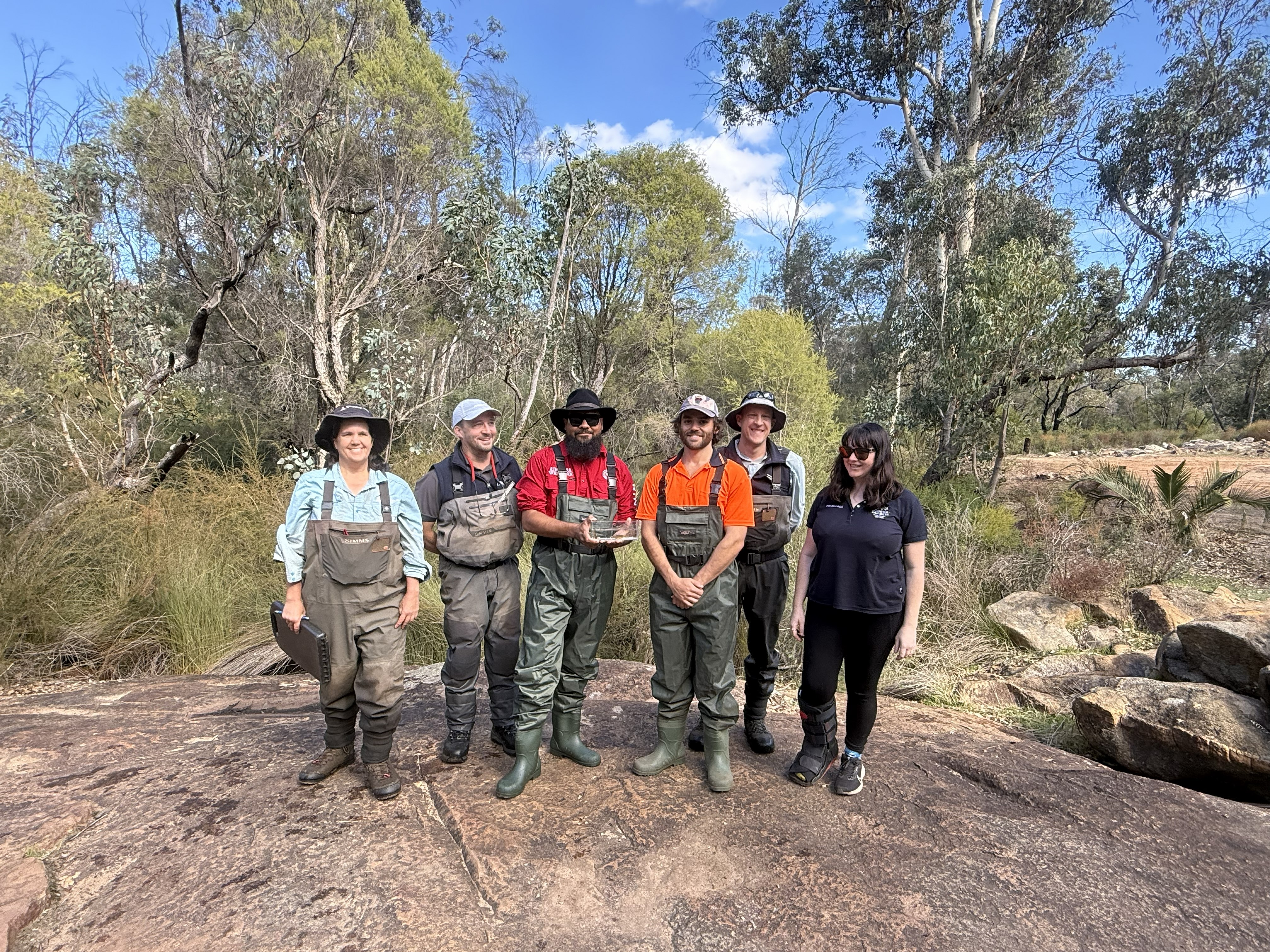
Following the initial detection, BNAA collaborated with the River Science team at the Department of Water and Environmental Regulation (DWER) to undertake targeted fish surveys to confirm the species' presence.
A community-led model for river catchment management
The BBB Program aims to address declining river health through creation of a community-led model for river catchment management to mark the 2029 Perth Bicentenary.
While currently focused on the Mandoon Bilya (Helena River) catchment, BBB aims to inspire widespread river revival through ecosystem restoration, cultural reinvigoration, and community connection to Country.
The newly established BBB Rangers supported the surveys, contributing to the verification process while gaining valuable field experience and learning more about the ecological significance of the discovery.
BNAA Chairperson and Noongar Elder Walter McGuire OAM said the Association has "story, song, heart, spirit, soul".
"We speak, we stand for this environment. If you got story, heart, spirit, soul, then speak yourself for the old, the now and the future. Stand for it," he said.
"BoorYul-Bah-Bilya is reconnecting the magical essence that this land has for all peoples.
"This environment is our family, we are part of it and it is part of us. The land, rivers, springs, hills, night sky, daytime sky, sun, moon, stars, rain, lightning, thunder, freshwater, oxygen, clouds, wind, all flora and fauna, everything, is our sisters and brothers; our Moort-Family."
One of the rarest freshwater fishes in the region
Balston's pygmy perch (Nannatherina balstoni) is the largest pygmy perch species in south-western Australia and one of the rarest freshwater fishes in the region. Historically, it was expected to occur across much of the southwest, from the Goodga River to Gingin Brook, but was long believed to have disappeared from most rivers and wetlands of Noongar Boodja, and to have been entirely lost to the north of Margaret River.
Remaining populations were thought to be confined to coastal peat flats along a small area of the south coast between Margaret River and Two Peoples Bay. In known habitats, the species typically occurs at very low abundances in fragmented populations. For example, in surveys between the Bow and Hay Rivers in the Great Southern, it accounted for approximately 2.5 per cent of all native fish captured. This is consistent will the recent surveys by BNAA and DWER in May 2026, where it typically accounted for almost two per cent of native fish, highlighting the importance of rigorous surveys to ensure critical species do not go undetected.
The species was recorded in parts of the Mandoon Bilya that flow year-round due to groundwater inputs, emphasising the critical importance of maintaining groundwater connections to our rivers. This finding aligns with previous research that indicates that the species can occur at higher abundances in habitats with perennial flows.
'Incredibly significant' find demonstrates 'the power of community and government working together'
Francesca Flynn, BNAA Executive Director and environmental scientist, said the discovery of the Balston's pygmy perch in the Mandoon Bilya (Helena River) is "incredibly significant".
"It highlights the importance of investing in long-term, community-led programs like BoorYul-Bah-Bilya, and the power of community and government working together, led by Noongar Traditional Owners and informed by modern scientific techniques like eDNA, to achieve the best outcomes for Country," she said.
Habitat loss and climate change threatens species
Balston's pygmy perch faces a high risk of extinction in the wild due to historical habitat disturbance and the likelihood of further habitat loss due to the drying climate. The newly identified northern population may be more resilient to climate change, making its protection and recovery especially critical.
Balston's pygmy perch is listed as Vulnerable under the Biodiversity Conservation Act 2016 (WA) and the Environment Protection and Biodiversity Conservation Act 1999 (Commonwealth), and as Endangered on the IUCN Red List (2019). The new population should arguably carry greater urgency for protection given its isolation (no opportunity for natural recolonisation) and potential to be protected from factors that may impact the southern populations.
The species' decline has been driven by land clearing, habitat degradation and salinisation, in addition to altered river flows and habitat extent due to water use and climate change.
Climate projections for southwest WA indicate further declines in groundwater and surface water availability, increasing pressure on the remaining populations. The findings will be reported to the State Government to inform future conservation, land-use planning, and land management decisions.
Discovery inspires rangers
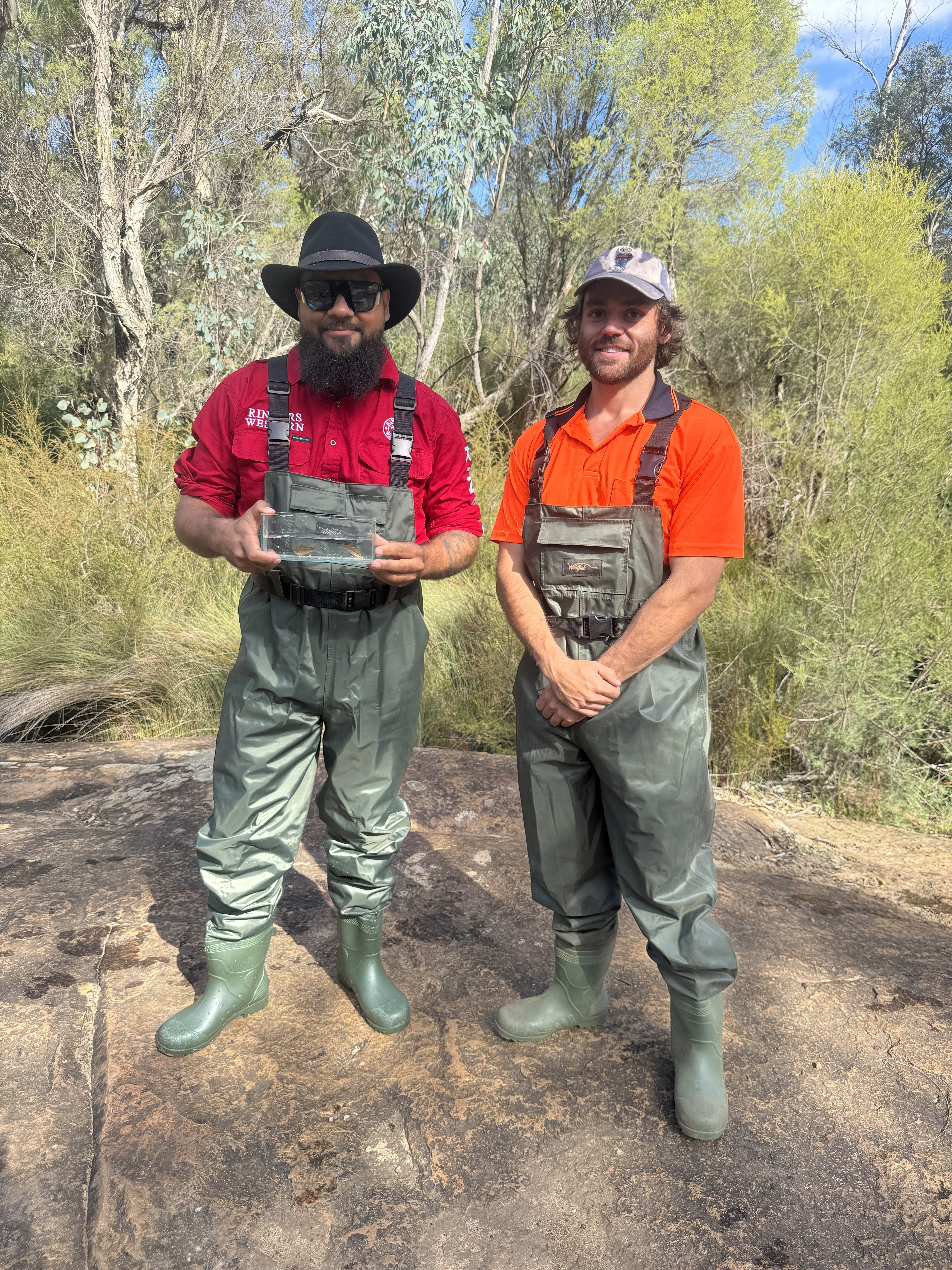
BoorYul-Bah-Bilya ranger Trei Winmar said being out on Country as a Noongar Ranger and finding the Balston's pygmy perch "was a really great opportunity for us".
"We have only just started as BoorYul-Bah-Bilya Rangers, so to have already found this fish has been great timing for us," he said.
"Not many people get to see this fish, so it was amazing to be there and be part of the discovery. This finding will make our Rangers team work even harder to care for our rivers and the beautiful Country up there in the hills."
Fellow ranger Ethan Kickett said the discovery "reinforces the need to protect and care for our precious ecosystems".
"This is a big win for the environment," he said.
'Something I will never forget'
Bibbul Ngarma Aboriginal Association said it will continue to work with stakeholders, including DWER and the Department of Biodiversity, Conservation and Attractions (DBCA), to support conservation actions and improve habitat for this and other threatened species in the Mandoon Bilya (Helena River) catchment, including mainland quokkas.
DWER Healthy Rivers Program Region Coordinator Dominic Heald said identifying the new population of a threatened species in the region "is a significant finding that will support our regulatory decisions into the future".
"We are passionate about management decisions being supported by science, and this is a great demonstration of the need to maintain rigorous and long-term environmental monitoring programs, particularly when rare species such as the Balston's pygmy perch can be easily missed. Being able to share this finding with Traditional Owners of the Mandoon Bilya (Helena River) was something I will never forget."



