




Banjima Traditional Owners say they have "stood still" and "asked the questions" of the Government of Western Australia about the legacy of asbestos contamination at Wittenoom for generations, only for nothing to happen.
On Wednesday, the Banjima Native Title Aboriginal Corporation (BNTAC) formally launched a $1.5 billion legal claim in the Federal Court against the WA government, which has long resisted calls to clean up the legacy of asbestos contamination left by mining at Wittenoom —1400 kilometres north-east of Boorloo.
The site contains more than three million tonnes of toxic asbestos waste — enough to fill the MCG twice over.
Speaking to reporters, BNTAC deputy chair Johnnell Parker said the Banjima people want the government to meet with them and explain exactly "how they're going to help us clean up country".
"We're already displaced on Country," she said, "Country is already damaged. But that means that my family can't go back. That means that there's stories there that can never be told."
Ms Parker, whose uncle Maitland — a respected Banjima Elder — died in 2024 after an eight-year battle with mesothelioma, said she is now the "fifth or sixth generation standing here asking on behalf of my people".
"I've lost loved ones to this disease through no fault of their own," she said. "So we want to be able to do something in this generation."
View this post on Instagram
The Banjima people experience the highest per capita incidence of mesothelioma in the world — a cancer directly linked to asbestos exposure — a fact the state government has known since 2016.
Since then, the WA government has collected more than $70 billion in Pilbara mining royalties, according to Peter Gordon of Gordon Legal, which is representing BNTAC.
"When you think about mining royalties accruing to a government, I'm sure there are a lot of states of Australia and overseas that would love to have that kind of asset in checks being written to it every year," he said.
"It's an enormous privilege that the Western Australian government has got."
He said the royalties are payments that are "extracted from the land of Western Australia, of the Banjima people," and argued that this "comes with obligations".
"Whilst the Western Australian government may have really good projects that it wants to prioritise...nothing is more important, and nothing is a greater priority for the West Australian government than, in the immortal words of Elvis Presley, to clean up your own backyard," Mr Gordon said.
"Successive governments have looked at this; looked at how hard it is; looked at how expensive it is...and what happens is you get 32 years where nothing has actually happened."
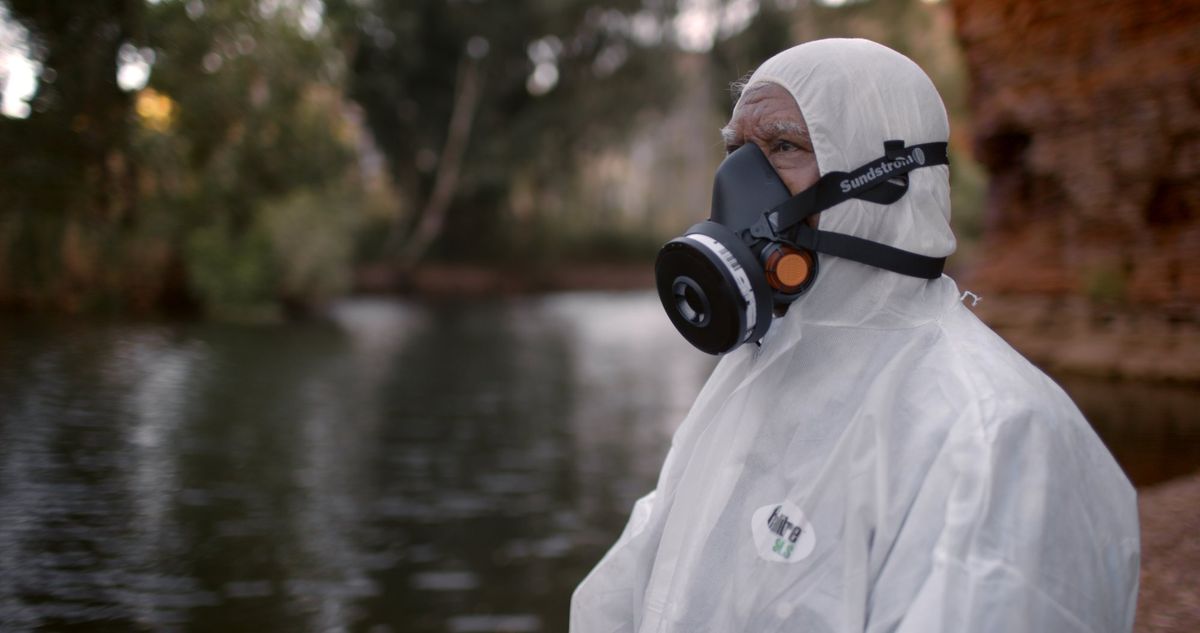
BNTAC is seeking orders to seal three mines, remove three tailings dumps, dismantle the asbestos-built Wittenoom racecourse and airport, and remediate any gorges, rivers and creeks that may have been polluted.
"All I'm asking is for us to have a real-time conversation; to talk about how Country is going to be cleaned up, and what are we going to do," Ms Parker said.
"Because as a Banjima community, we need to be able to do this...we need to be able to ask the question. And we are asking the question: 'How are you going to help us? What is this going to look like?' and, 'Who is going to support us moving forward?'"
Traditional Owners plan to ask the Federal Court to split the case into two stages.
The first would focus on orders to clean up Banjima Country, while the second would address damages for asbestos contamination and what they allege is the government's knowing role in the dispossession and marginalisation of the Banjima people.

Mr Gordon said discussions had been held with the state government, including Premier Roger Cook and senior ministers, who he said appeared to understand the issue, but no action followed.
"We left that meeting and then said to the government, 'Can you give us a time when you can come back on these things?'" he said from Gordon Legal's offices in Melbourne on Wednesday. "And their response was, 'We can't give you a time. We'll get back to you when we get back to you.'"
He then added: "Their most recent response is, 'We can't give you a time. We can't engage. We're not going to tell you what experts or what research we're doing.'"
Ms Parker said it is time for the Banjima people to be heard after years of inaction.
"We have stood still, we have asked the questions, we have opened our arms to be able to talk, but nothing's happened."
"I've had uncles and aunties that grew up there, that played in the tailings when they were kids. They went to school there...but as part of that, they live with this fear now of getting mesothelioma," she said.
"What happens to my family? Who listens to those voices? Because it's not just Country that's affected. It's affecting them physically... We need to be able to fix Country, or look at some kind of way to fix it, because this is too long."



