




Kimberley Aboriginal leaders say shuttered regional courts have cut First Nations communities off from justice, and they want local sittings reinstated without delay.
Marninwarntikura Women's Resource Centre (MWRC) chief executive Emily Carter AM told National Indigenous Times "justice should not depend on your postcode".
"Aboriginal people living in remote communities are entitled to the same access to courts and legal protections as people living in metropolitan areas," she said.
WA's courts announced the closures after police said they could no longer guarantee security at more than 20 regional courthouses.
WA Chief Justice Peter Quinlan signed the public notice, which said the arrangements would run from June 1 to August 28.
For nearly a month, courts in Bidyadanga, Dampier Peninsula, Fitzroy Crossing, Looma, Wyndham, Warmun, Kalumburu, Balgo and Halls Creek have been closed. Defendants now travel hundreds of kilometres to appear in Broome or Kununurra.
District Court circuit sittings in Derby are suspended for three months, with cases redirected to Broome.
In Fitzroy Crossing and about 40 surrounding communities, the closures have added another major travel barrier for defendants.
Instead of a local court appearance, people now have to travel more than 400 kilometres to Broome.
For communities like Ngumpan, the trip to Broome stretches to 487 kilometres and more than five hours on the road.
Marninwarntikura Women's Resource Centre says the extra travel has left Fitzroy Valley defendants stranded in Broome without accommodation or a way home. Others have missed court dates due to lack of transport, then faced arrest warrants or extra charges.
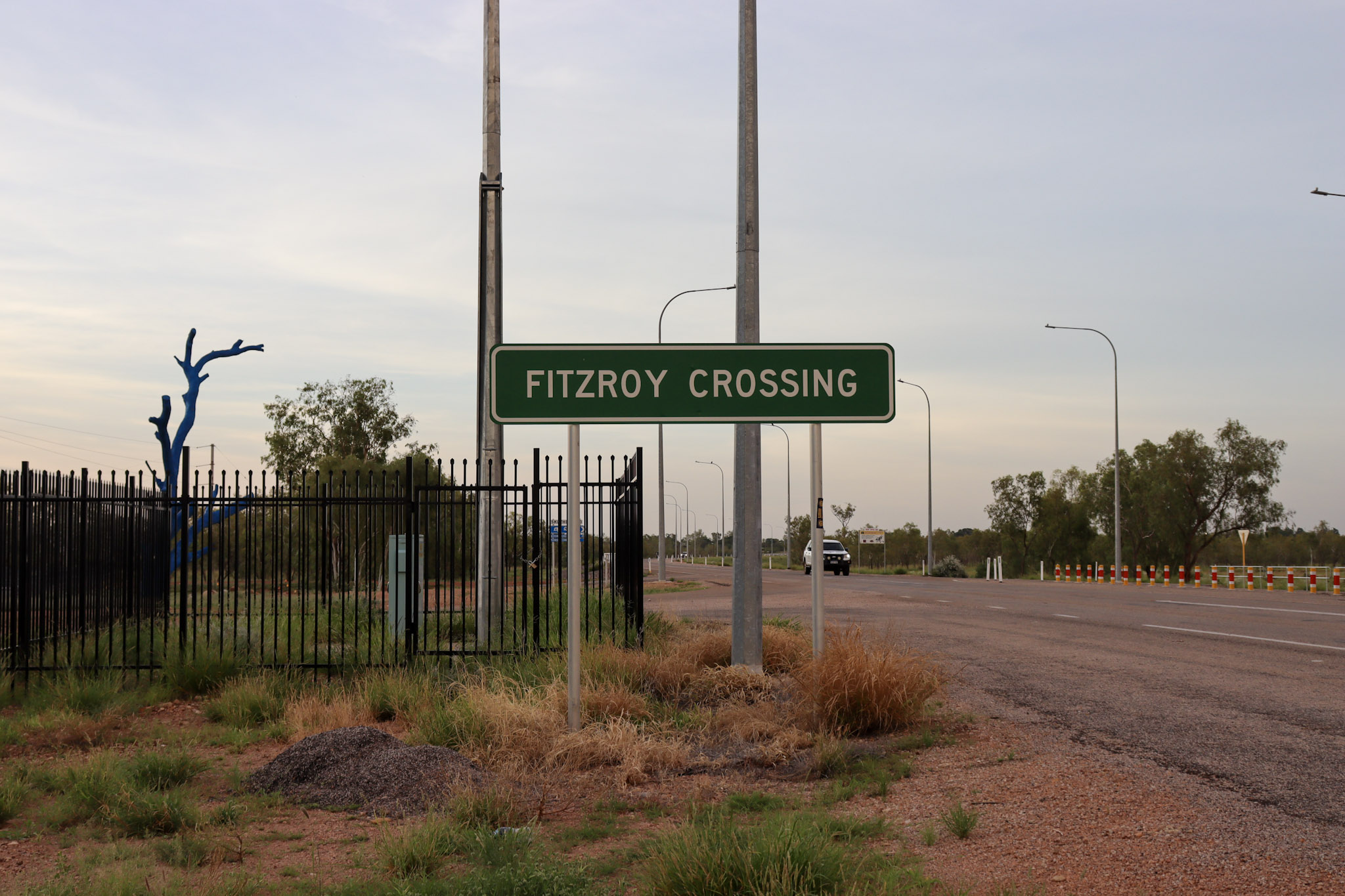
The organisation points to a recent case: a 16-year-old from Fitzroy Crossing taken into custody and flown to Broome over a minor offence.
The young person spent the night in custody, appeared in court the next day, received a $200 fine, and was left in Broome without family or transport home, MWRC says.
In another matter, a Fitzroy Crossing mother was arrested under an outstanding warrant and transported to Broome, leaving her three-year-old child behind in the community until other residents intervened and arranged care.
Ms Carter said the incidents show how court closures ripple through entire communities.
"These decisions affect children, carers, grandparents and entire families. A court appearance that may once have taken several hours locally can now involve days away from home, disruption to family responsibilities and additional trauma," she said.
MWRC executive officer David Couri echoed Ms Carter, saying the closures clash with efforts to reduce Aboriginal incarceration and Close the Gap.
"We cannot simultaneously commit to Closing the Gap and reducing Aboriginal incarceration while implementing arrangements that place more Aboriginal adults and young people into police custody," Mr Couri said.
Mr Couri said losing local court services raises serious questions about whether remote Aboriginal communities get the same access to justice as people in bigger towns and cities.
"Australia has committed itself to the rights contained within the United Nations Declaration on the Rights of Indigenous Peoples," Mr Couri said.
"We believe there are legitimate questions about whether the withdrawal of local justice services from remote Aboriginal communities is consistent with those commitments."
National Indigenous Times contacted WA Police for comment and was referred to an interview WA Police Commissioner Col Blanch gave to ABC Perth radio on the matter.
Commissioner Blanch said the decision to close regional courts was made by the courts, not police, but confirmed he had decided police officers would prioritise patrols and triple-zero responses over court security duties.
"It's not our responsibility under the act to deliver those services," Commissioner Blanch said. "What we do do is provide support to the Department of Justice. I think for the Department of Justice, they're the ones that must provide a guarantee, not the police."
Meanwhile, a spokesperson for the DOJ told the National Indigenous Times "the DOJ provides assistance for people to return to their home town after being released from custody, and this may include accommodation and food, depending on the individual's circumstances."
"Well-established supports are already in place for victims and witnesses, including travel and accommodation arrangements if required, and this will continue, " the spokesperson said.
The lack of consultation and communication between the DOJ, Commissioner Blach, and Aboriginal community-controlled organisations in the Fitzroy Valley region remains a source of disappointment for MWRC.
Despite this, Ms Carter says community-controlled organisations are ready to work with government and justice agencies.
"Our communities understand the solutions that are needed. We want to work together to ensure people can meet their legal obligations safely, fairly and without causing further harm to families and children."



