



A new Savanna Fire Management methodology grounded in First Nations fire stewardship has entered global public consultation, with its progression to be discussed this week at the Indigenous Carbon Industry Network Savanna Fire Forum in Darwin.
Two parallel methodologies are now progressing internationally: one under the voluntary carbon market through Verra's Verified Carbon Standard Program, and a second under the United Nations Article 6.4 mechanism for compliance markets.
The draft Methodology for Savanna Fire Management, developed by Maki Planet Systems in collaboration with partners including the International Savanna Fire Management Initiative (ISFMI), the Darwin Centre for Bushfire Research (DCBR), Indigenous land managers and technical experts, is now open for public consultation under the Verra Verified Carbon Standard Program. The consultation will run through to 20 March.
Savanna Fire Management in northern Australia is built on tens of thousands of years of Indigenous fire knowledge and cultural practice. Contemporary carbon methodologies quantify the emissions reduction and sequestration benefits of early dry season burning led by Traditional Owners and ranger groups, creating revenue streams that support land management, cultural continuity and economic opportunity.
Representatives from Corporate Carbon and Maki Planet Systems will participate across the forum program.
Corporate Carbon Executive Director Gary Wyatt will speak on the Day 1 workshop panel, New ACCU Scheme SFM Method, examining what transition to the proposed updated methodology means for existing and future projects. On Day 2, Maki Planet Systems CEO Julien Gastaldi will join the International Savanna Fire Management Method workshop to discuss how Australia's First Nations-led model may inform application in suitable regions globally.
The draft methodology under consultation accounts for avoided methane (CH4) and nitrous oxide (N2O) emissions. It uses a dynamic performance benchmark, remote sensing and vegetation mapping for baseline setting and monitoring, and establishes strict eligibility criteria that exclude non-woody grasslands to prevent unintended ecological consequences such as woody thickening.
It is designed to align scientific rigour with the practical realities of on Country fire management.
Mr Wyatt said the consultation period was an important milestone for Indigenous project proponents and the broader sector.
"Savanna Fire Management is first and foremost about Indigenous land stewardship," he said.
"Carbon methodologies should recognise and support that leadership. Public consultation provides an important opportunity for Traditional Owners, ranger groups and practitioners to review the draft and ensure it reflects on ground experience as well as scientific evidence.
"As the method evolves, maintaining integrity and clarity is essential for communities, project proponents and the wider market."
Mr Gastaldi said growing international interest in savanna burning highlights the importance of careful adaptation.
"Australia's experience demonstrates that culturally informed fire management can deliver measurable climate outcomes alongside social and economic benefits," he said.
"By progressing methodologies across both voluntary and Article 6.4 compliance markets, we are working to ensure Savanna Fire Management can access multiple high-integrity pathways that reflect the needs of host countries and Indigenous communities.
"If adapted carefully and in partnership with Indigenous communities in other regions, this framework has the potential to support high integrity climate action globally."
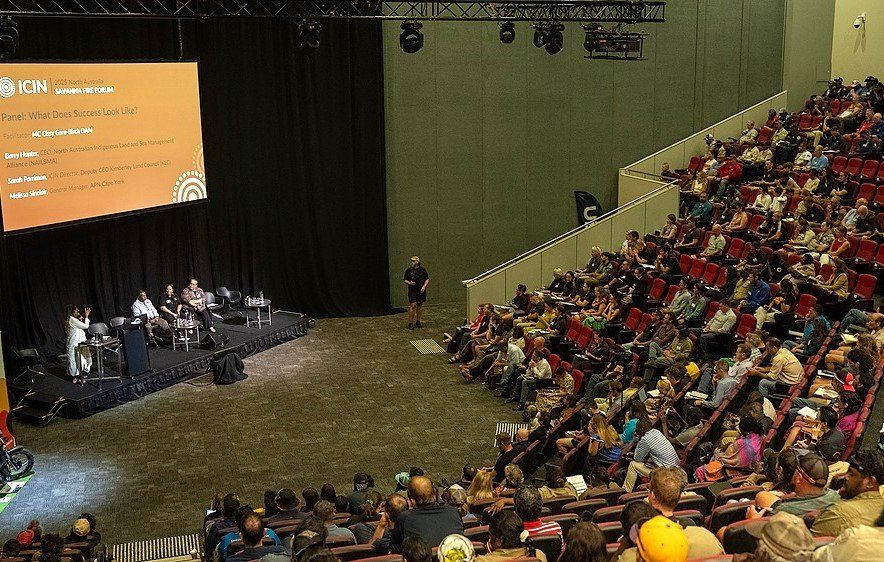
The Savanna Fire Forum, held 24 to 25 February on Larrakia Country at the Darwin Convention Centre, brings together Indigenous leaders, policymakers, technical experts and market participants to examine the future of savanna burning and carbon markets.
Public consultation on the draft methodology remains open until 20 March 2026 via the Verra website.



