



The Indian Ocean Craft Triennial united artists from around the world and across Australia to showcase their work, including First Nation artists Alfred Lowe, Russel (Wossy) Davey, and Ashley Hunter.
Arrernte man Mr Lowe, from Snake Well in the Central Desert north of Alice Springs, presents his "Idol Series," which highlights the influence of his artistic idols and mentors, particularly senior painters from the Adelaide Art Centre.
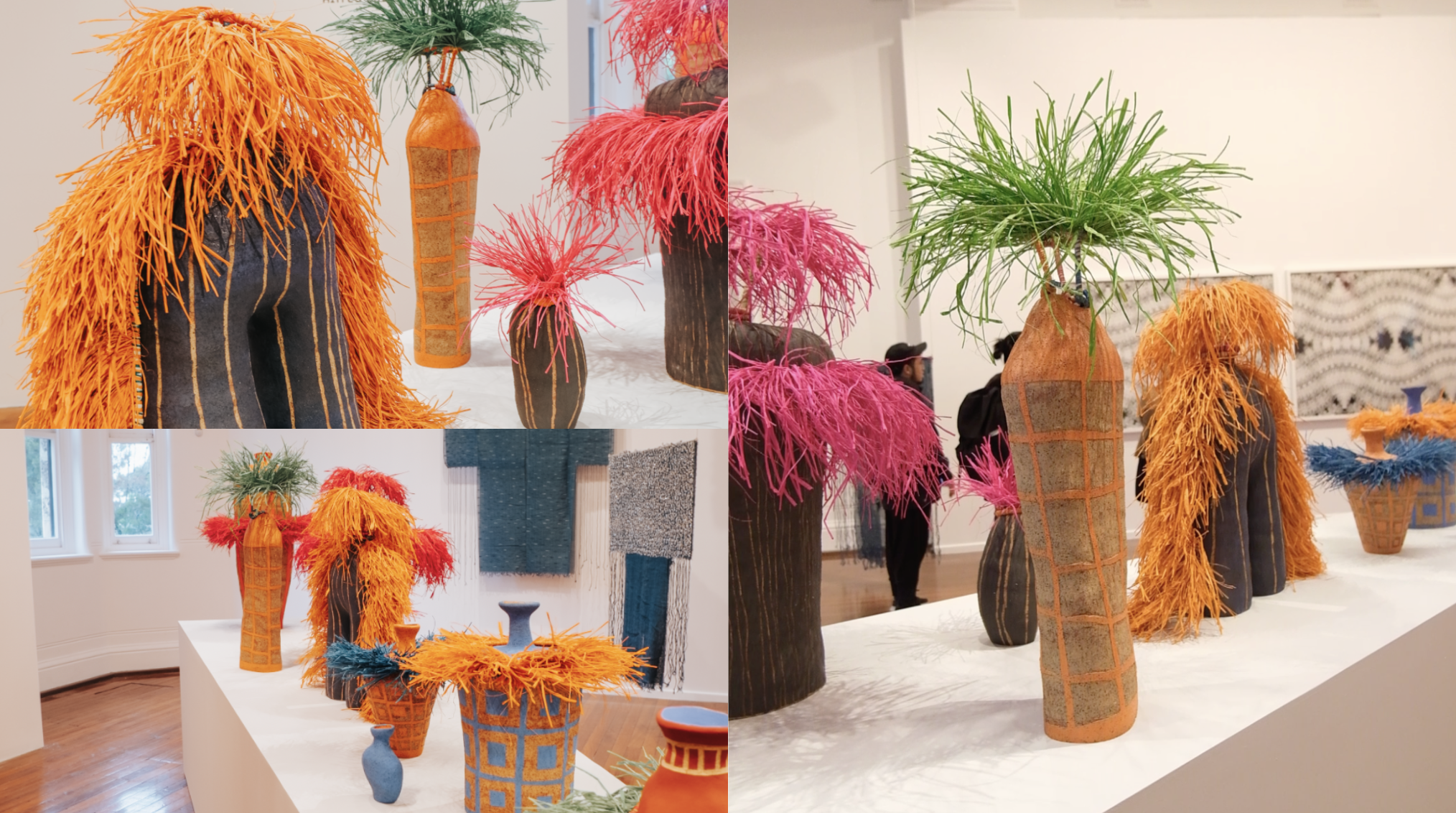
Mr Lowe uses clay to delve into themes of Country, with his deep knowledge of the Central Desert landscape informing his work. His stoneware pieces are hand-built, creating unique organic vessels that feature underglazes and varied mark-making to produce undulating, imperfect forms connected to nature.
Often provocative, Mr Lowe's colourful works are playful, with bright raffia detailing enhancing their organic shapes. His art explores identity, culture, and connection to Country, continuously addressing and interpreting these themes in contemporary contexts.
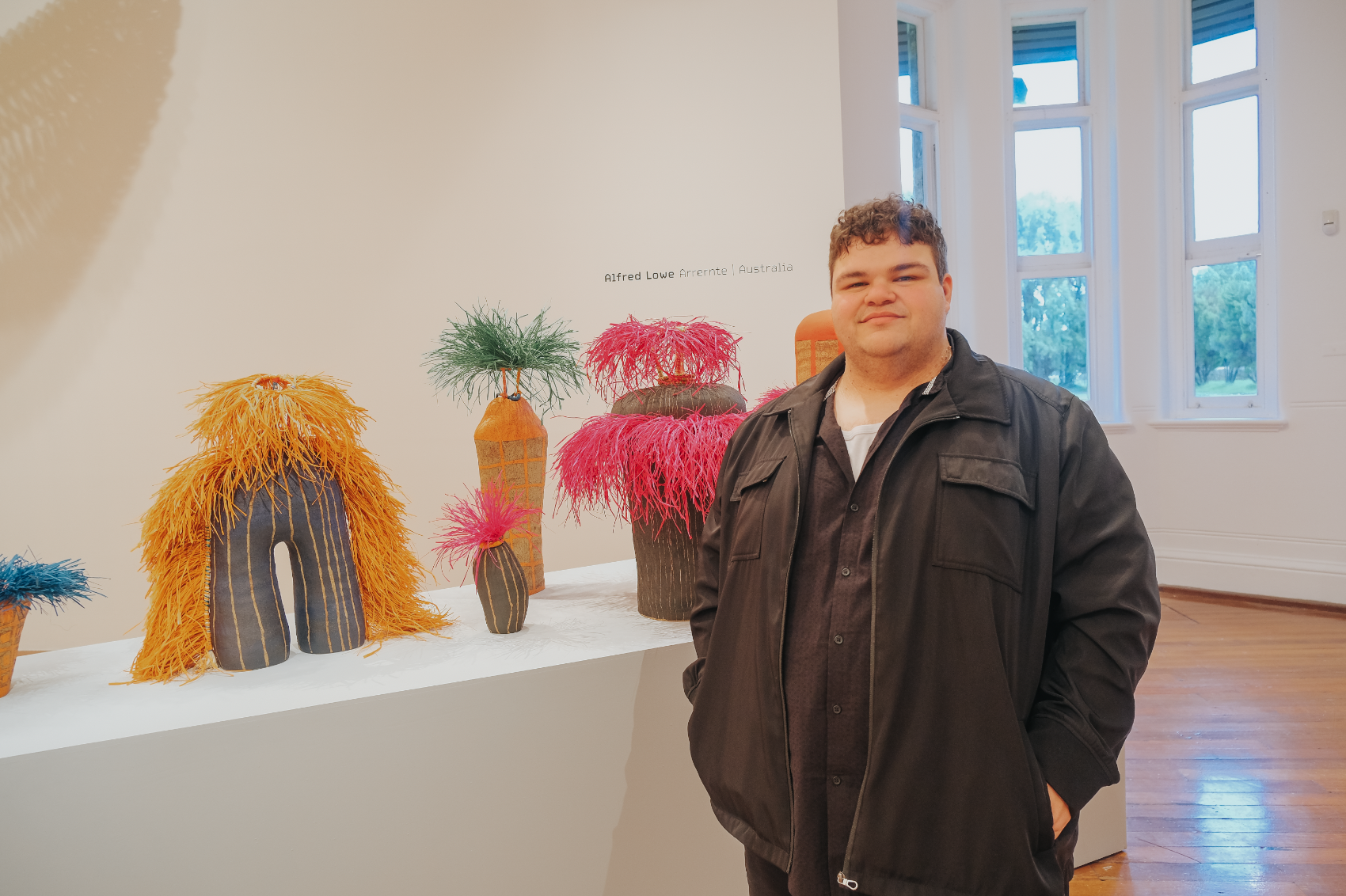
"My work is called Idolisation, it's looking at and exploring this idea of who we look up to as kids and how we look up to our elders and our leaders and our parents and our family members," said Mr Lowe.
"Not necessarily how they teach us directly, but the things we learn through watching and observing and, you know, just paying attention. And I think it's sort of this lovely part of, this lovely thing that's ingrained into us is this idea of paying attention."
The clay art features vibrant colours intentionally chosen by Mr Lowe to showcase a colour palette from Central Australia that is rarely seen.
"Central Australia is so much more than ochre and so much more than iron ore and there are all these beautiful colours that are sometimes hidden but sometimes they're just there and people don't notice; and so that's why I always like to use as many bright colours as possible," he said.
Badijawi men Mr Davey and Mr Hunter, from One Arm Point on the Dampier Peninsula, deeply embody the cultural heritage and spiritual essence of their people. Their artwork, titled "Milymilonjoon Jawal" (The Dreaming), captures profound spiritual stories.
The Dreamtime represents the foundational myths and spiritual truths given by the Creator. These stories describe how the Bardi Jawi people were given the laws of the land, sea, wind, and clouds, highlighting the interconnectedness of all existence.
Through these narratives, people transform into animals, reflecting the deep ties between the Bardi Jawi and their environment.
"This story is like a cycle of life, so it's like we're using this story as a rebirth. The shark dreaming place, then you've got the warrior and the family," said Mr Davey.
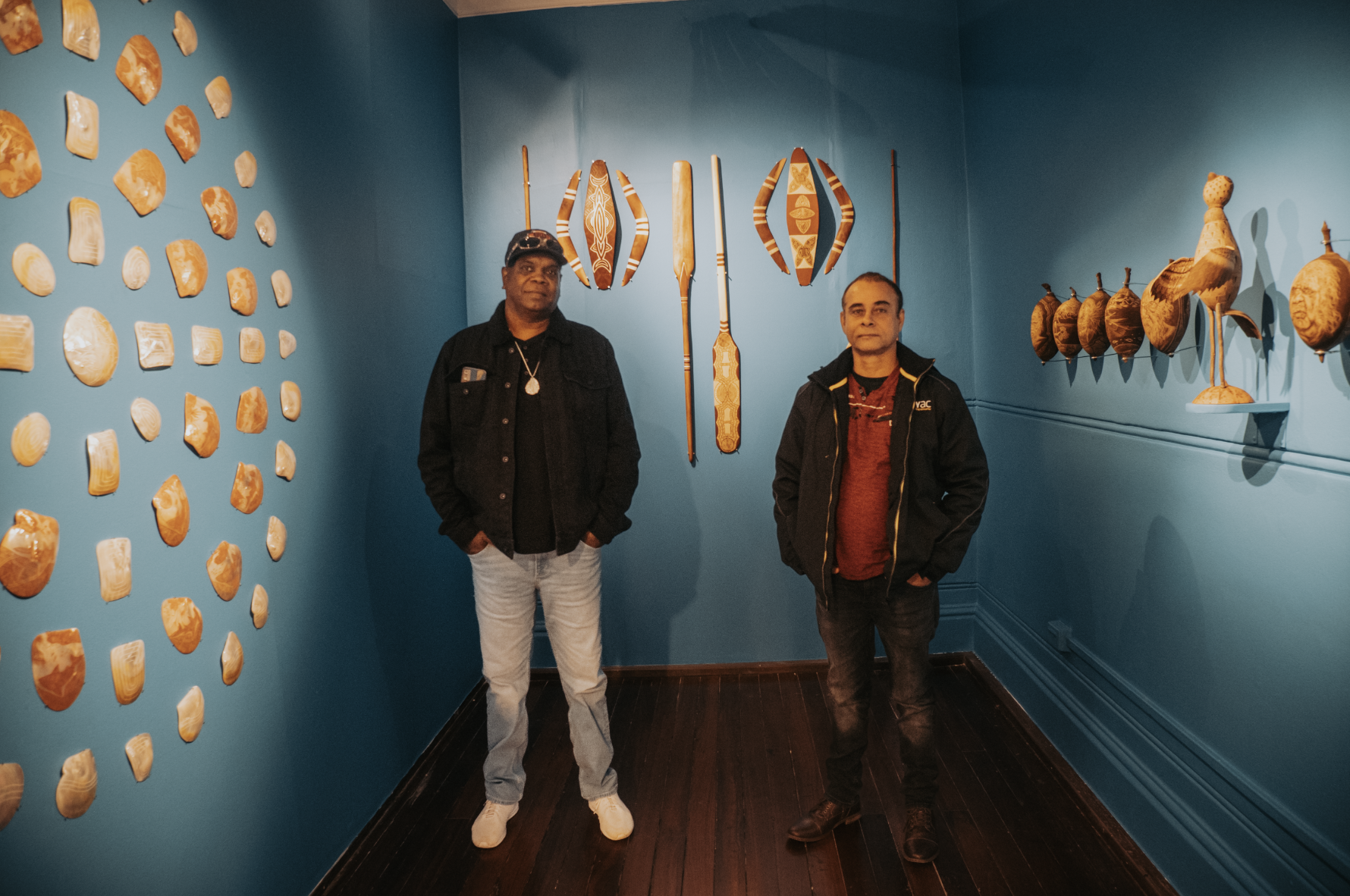
The guwan (pearl shells) in their art symbolise renewal for sharks and represent a Dreaming place celebrated through Rai (spiritual kids).
"Shell displaying here, It's about a shark dreaming place and in the middle, is about a totem that represents the sharks dreaming. It's the stomach and rebirth of young sharks. And it's also a dreaming place where we dance and songs come from," said Mr Hunter.
The Bardi Jawi, as ocean warriors, use gaalwa (rafts), garu (spears), marrga (shields), and irrigil (boomerangs) to protect their tribe from Darman (bad spirits).
"This one is the warrior, How he used to protect the family and the tribe and how we still play that role today as men from our community, that's all your paddle and your boomerangs and shields and your spears, up here is also the raft that they used to travel from island to island with, that's the Galwa," said Mr Davey.
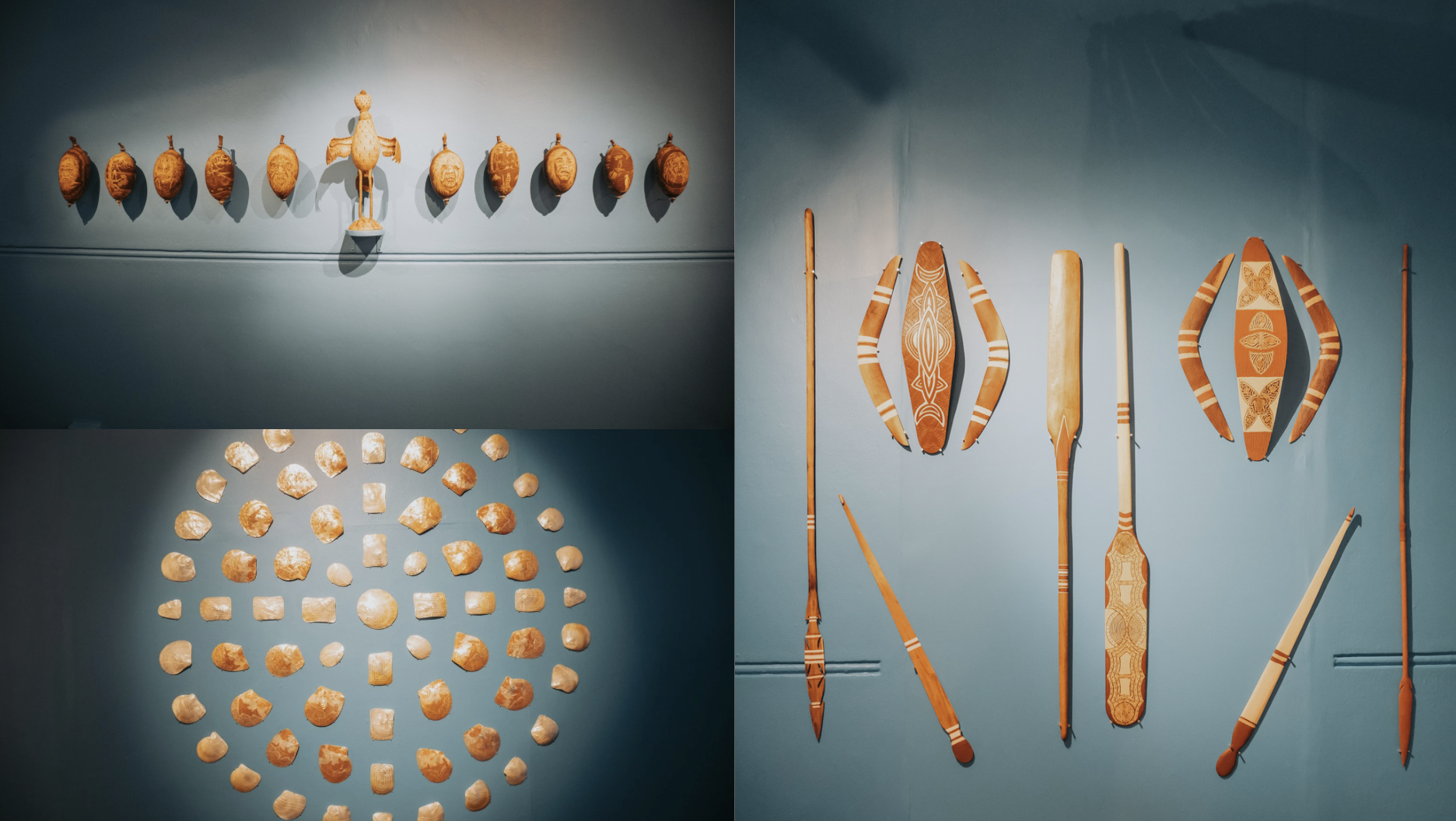
The Indoo (bush curlew) signals important messages, often indicating a loss, with its dance and call guiding the Bardi Jawi in their rituals of farewell.
"This side here represents the family with all these bob carvings you've got all the male figures. The old wise, clever men, elders, bosses, the young warrior, and in the middle you've, where they were just carrying on with their life," Mr Davey said.
The exhibition showcased at Fremantle Arts Centre not only displays the rich cultural heritage of Central and Western Australia but also highlights the profound connections these artists maintain with their land and traditions.



