



January 26 will be marked in Mackay, Queensland, with a Survival Day gathering organised and led by Indigenous people.
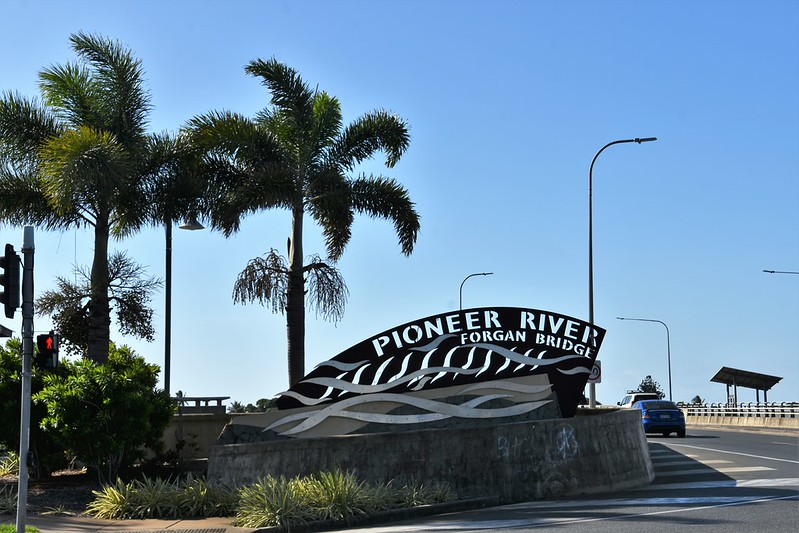
Aunty Fiona Mann-Bobongie, a proud Darumbal woman, and Aunty Deb Clark, a proud Yuwi woman, told National Indigenous Times the event would being at 8am on Monday at the river wharf on Pioneer River. The gathering will then cross Forgan Bridge to Cremorne.
Aunty Deb said she is "a very proud Yuwi woman, and very honoured to be living and working on my on my Country, on the ancestral grounds of my mother and grandmother's people".
"For me, Survival Day, it brings up a range of emotions, and it means so much... Survival Day for me means truth telling," she said.
"It means really acknowledging the history that happened here, for here on Yuwi Country, way back when the colonisers came over the mountains, they just saw fertile ground for farming, and they took the land, and like many other places, when they took it that came with all the genocides we've had, many massacres.
"On our Country, the same on other countries. And colonisation and the introduction here on our Country meant the loss of our culture. It was deliberate. We can try and put nice words around it and wrap it up, but it was a massacre, and many happened. The dispersals happened, where there were once thousands of people that were recorded being on Country here, and for us here on Yuwi country, we're down to four families."
Honouring the Old People and Country
Aunty Deb said the true history of the area must be told.
"It's about the struggles of our people. It was about the loss... our families, through no faults of their own, all got removed one way or another, off Country. We weren't allowed to practice our language, our laws, a lot of our stories and songlines... (now) we're retrieving them," she said.
"Despite all that, it was once recorded here in Mackay that all the Indigenous people from here, from locally here, were wiped out. As I said, we have four families still standing. That goes to show the strength of our people. We found our way back home, our way back and for me, Survival Day is telling the truth. It's honouring our old people. It's honouring the blood of our people that is in the ground here. It's also a way of honouring our Country, because our Country's got to heal and our people for us, we're saltwater, freshwater people. And when we look at that, we're connected. We're one of the same was our land.
"While our land was being raped and pillaged too, that hurt our people, because our land provided for us and always has, and our land brings us back home as well. Survival Day - it's honouring the past. It's honouring our ancestors."
Aunty Deb family has deep connections to the land, with one of her ancestors surviving a massacre in the area in 1867.
"50 men, women and children sought refuge up that mountain, and one baby was hidden. One baby survived that massacre of all the people. And that was my great, great grandmother. If it wasn't for them, I couldn't be standing where I am today. But that gives me a responsibility I have as well; I want to be able to advocate for our people, tell the truth, tell our history... We want to share our history with people, respect our Country and our culture, but also what my journey through life has shown me that not much has changed while we talk about what we experienced," she said.
"Through the frontier wars, through colonisation, through our removals. It saddens me to the core that we are still seeing that in today, while there is not equality there, while our men and our women are still at - an alarming rate - being locked up in juvenile justice centres and correction centres while our health systems, we're still more affected."
'We've got a long way to go'
Aunty Deb noted that child removals are still ongoing, and much work needs to be done.
"Our survival, of our people and of our culture, goes back to acknowledging the truth of the beginning. It's also reflecting the here and now, saying we've got a long way to go, and we need to stand united to do it, coming together," she said.
"To me, on Survival Day, while there's hurt and grief and while there's all the mixed emotions that go with it, we get strength also when we come together as one mob, when we come together and march proudly, hold our heads high, remembering talking our truth, walking in our truth.
"I have so much respect for Aunty Fiona here with me and Auntie Zelda. They've been leading the way with our Survival Days for the past few years. It's an honour to walk this journey with them. When we have strong community and passionate sisters and brothers and aunts and uncles, we can do some remarkable things on Country, but it's led by these remarkable women."
Aunty Fiona told National Indigenous Times that in ancient times, Yuwi and Darumbal people "would have sat together and gathered either on Yuwi Country, either on Darumbal Country".
"At different times, our mob, in ancient times, would have gathered and sat together. So as a non-Yuwi First Nations woman, I still believe that it is my role and responsibility about giving back to where I live, but also honouring, the pathways where I've come from and what we need to be doing to make our families strong, no matter where we are or where we live," she said.
"We are blessed that we have had blessings from Auntie Deb and other Elders, Uncle George, Aunty Ann, who are Yuwi Elders, and they've always supported us in organising, or helping with Survival Day. We have other Elders as well who would have gathered, their ancestors, but have been on Country, Yuwi Country, for a long, long time, like Uncle Arnold Doyle, Aunty Lynn Irvine, Carol Doyle, Aunty Mabel... have given to the community. And we follow in their footsteps."
'Standing strong in our cultural identity and who we are'
Aunty Fiona said the gathering on Monday morning will walk across Forgan Bridge, starting south of the Pioneer River, and gather on the other side (in Cremorne) for speeches and dancing, and then walk back across the river and have something to eat.
"It's a small event, but it's very impactful," she said.
She added that standing together on Survival Day remains as important as ever.
"There's still so much racism, discrimination that you see everywhere. I think it's really important for us that we continue to hold our integrity, to tell our truth and walk in our truth, because it's a responsibility, it's something that we take on," Aunty Fiona said.
"Our people are watching us. They're guiding us with this, and our younger people behind us are looking at us. They learn from us as well... standing strong in our cultural identity and who we are."



