




The Northern Territory government's celebrations about reduced crime and fewer victims have been criticised as failing to reflect the full impact of its policies on First Nations people.
Last week, the Country Liberal Party (CLP) government highlighted the latest crime statistics, reporting 1,884 fewer victims between January and October compared with the same period last year — an 8.6 per cent decrease.
"For 10 months we have consistently seen significant drops in property crime thanks to our stronger laws and better powers for police," said Chief Minister Lia Finocchiaro, who also holds the police portfolio.
"This year has marked a turning point for law and order in the Northern Territory. We have acted decisively, backed police, strengthened enforcement, and focused on protecting innocent Territorians and the results are clear."
.jpeg)
However, the government has faced sustained criticism over human rights concerns, with advocates arguing these issues are being ignored under the banner of community safety.
Since the CLP returned to government last year on a community safety platform, incarceration rates have increased sharply. Corrections data shows the average prison population has risen by 15 per cent over the past year. With the age of criminal responsibility lowered to 10 and bail laws tightened, more than 1 per cent of Territorians are now imprisoned on any given day.
Nearly 90 per cent of detainees are Aboriginal.
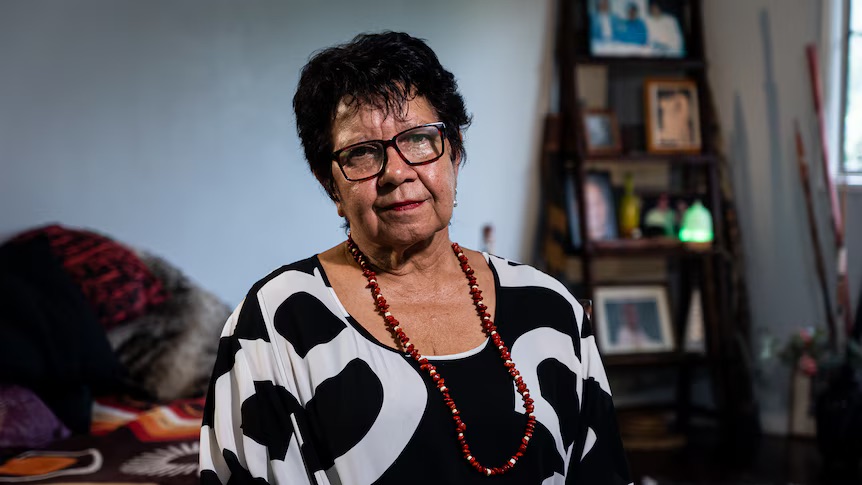
One of the co-founders of the North Australian Aboriginal Justice Agency (NAAJA), Nyikina woman Natalie Hunter, said the government's figures do not capture the broader consequences of its approach.
"We cannot trust the government when they say they have reduced the number of victims, because they are not telling the full story," Ms Hunter said. "Through their punitive and racist policies, they are making sure that trauma will be passed down instead of healed."
Earlier this month, the government refused to allow United Nations inspectors to enter its prisons, prompting Senator Lidia Thorpe to accuse the CLP of blocking scrutiny because it knows it is "guilty of torture and abuse".
A report released last month by Acting Ombudsman Bronwyn Haack called for all inmates held in NT watch houses to be removed "as a matter of urgency," arguing that no one should be subjected to the conditions currently present in those facilities.
"The CLP has allowed spithoods and dogs to be used against our children inside detention centres," Ms Hunter says. "These are crimes and will cause victims and suffering for generations to come."
It also emerged last month that young people in Central Australia are "disappearing" from the streets and placed into custody before being transferred north without their families' knowledge. The Department of Corrections said its policy is not to transfer children between facilities before attempting to consult the "relevant adults" involved in their care, but acknowledged there is no legal requirement to notify guardians.
View this post on Instagram
Following the closure of the Alice Springs Detention Centre, Labor's shadow attorney-general Chansey Paech said he "heard firsthand accounts from Aboriginal families of children being ripped from the streets, arrested without warning, and shipped off to Darwin without so much as a word to the families".
"This is not just wrong; it is a direct violation of these families' rights," Mr Paech said last month.
Tess Cunningham, from NT advocacy group Justice Not Jails, criticised the policy, saying: "Disappearing kids into highly traumatising environments, that cost the taxpayer $3,600 per day and increase all the known drivers of crime, is never the solution and it does not make our society safer long term."
The government has remained firm in its approach, arguing the results justify its policies. Alice Springs, which has experienced significant levels of violence, including murder and domestic violence, recorded 1,117 fewer victims — a 19 per cent decrease.
"More than 1,800 fewer Territorians had to suffer as victims of crime this year. Yet sadly, we know too many still are," Ms Finocchiaro said. "I make no apologies for continuing to focus on reducing crime as we head into 2026."



