




A cultural burn is scheduled at Wimbie Beach Reserve to remove an invasive weed, reduce the fuel load and protect the area's cultural significance.
The burn, managed by the Batemans Bay Local Aboriginal Land Council in collaboration with Eurobodalla Council, is set to begin on Friday, 23 August, pending favourable weather conditions.
Walbunja man Andrew White from Batemans Bay LALC said Walbunja Rangers have conducted test burns and prepared the site to manage the on-ground component.
"This Walbunja land is very significant to the mob," he said.
Under NSW's Biosecurity Act, the Council's Invasive Species team has been manually managing boneseed since 2011.
Paul Martin, the Council's invasive species and biosecurity supervisor, said the burn will clear the area and facilitate easier access to the invasive weed.
"We inspect every property in the Wimbie Beach area and hand pull all boneseed we find," Mr Martin said.
"It's a highly invasive plant that will completely take over the bush if allowed.
"It could potentially destroy habitat and food sources for native birds, animals and invertebrates."
The burn will cover about 15 hectares and slope steeply from east to west.
Known as cool burning, the technique ensures the area remains cool to touch after the fire.
Mr Martin said it was the first time Council has undertaken the Aboriginal cultural burning practice at Wimbie Beach.
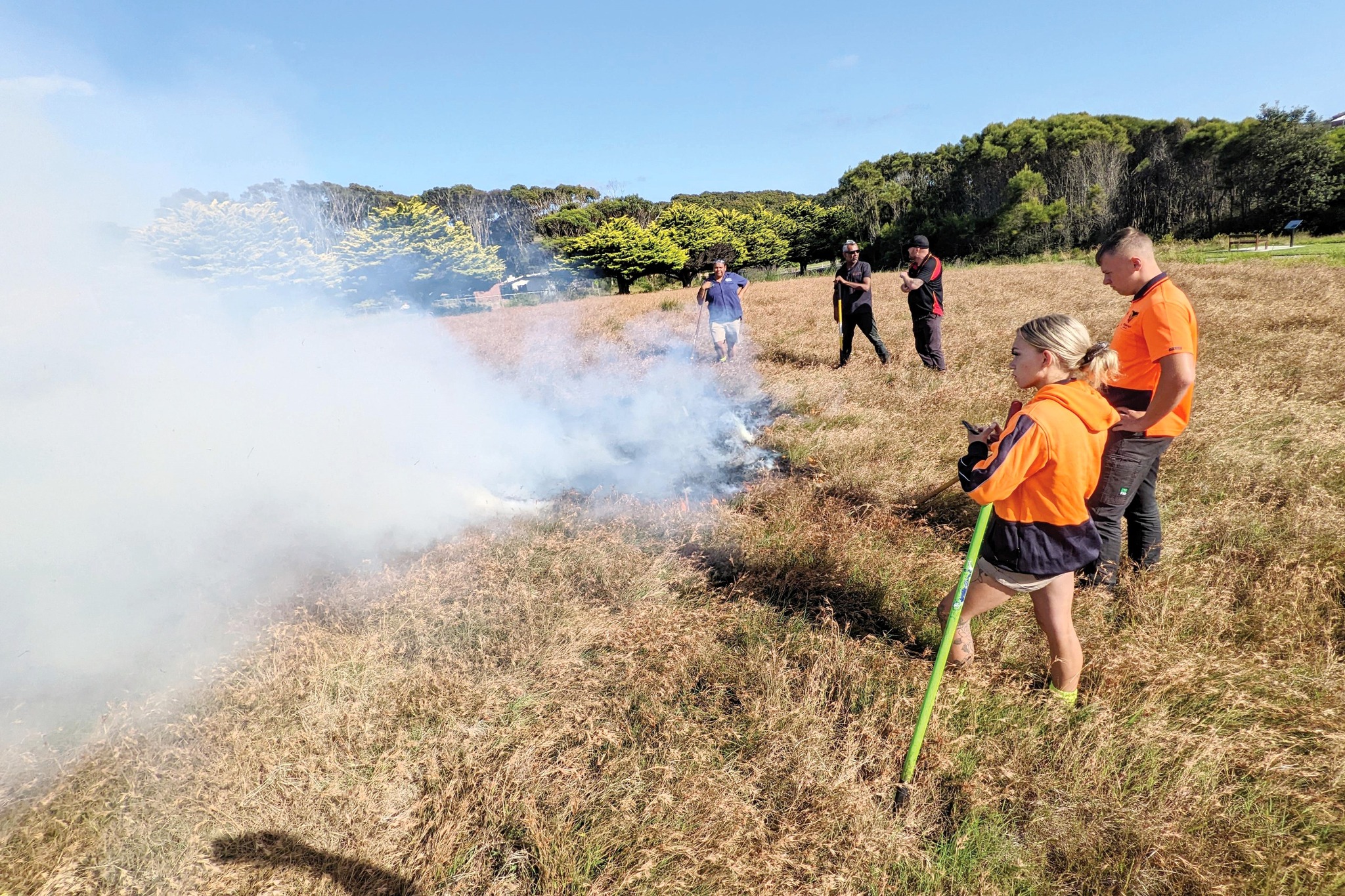
Earlier this month, the Eurobodalla Council and Walbunja Rangers successfully conducted cultural burns at Dalmeny-Kianga headland.
"We have been provided with the opportunity to listen to and learn from the Walbunja people using cultural practices that have been established for over 60,000 years," Mr Martin said.
"It is ultimately going to help reduce the soil seedbank of a control-order weed, enhance the vegetative condition of the reserve, reduce fuel loads and re-introduce Aboriginal cultural burning practices to a hugely significant area for the Walbunja people – it's a win-win for everybody."
The Newth Place car park and access to the reserve will be closed for up to two days during the burn.
Nearby residents have been informed by letter from the Council.
Taped transect lines have been set up throughout the reserve to monitor vegetation changes over time.



