




In 2026, NAIDOC Week will officially celebrate its 50th anniversary under the theme 50 Years of Deadly.
Each year, for a week beginning on the first Sunday in July, Australians celebrate the achievements, histories and cultures of Aboriginal and Torres Strait Islander peoples.
Government agencies, schools, local councils and workplaces mark the occasion, while the week traditionally culminates in the National NAIDOC Awards, recognising First Nations people who have made significant contributions to their communities and the nation.
But what is NAIDOC Week? And how did it come about?
The roots of Aboriginal activism
The history of NAIDOC Week can be traced to Aboriginal activism in the early 20th century.
Before then, Aboriginal rights groups boycotted January 26 in protest against the treatment of First Nations people and the impacts of colonisation.
Organisations such as the Australian Aborigines Progressive Association and the Australian Aborigines League (AAL) campaigned for greater political recognition and rights.
In 1935, Yorta Yorta man and AAL founder William Cooper drafted a petition to King George V seeking dedicated Aboriginal electorates in Federal Parliament. The proposal was ultimately rejected by the Australian Government.
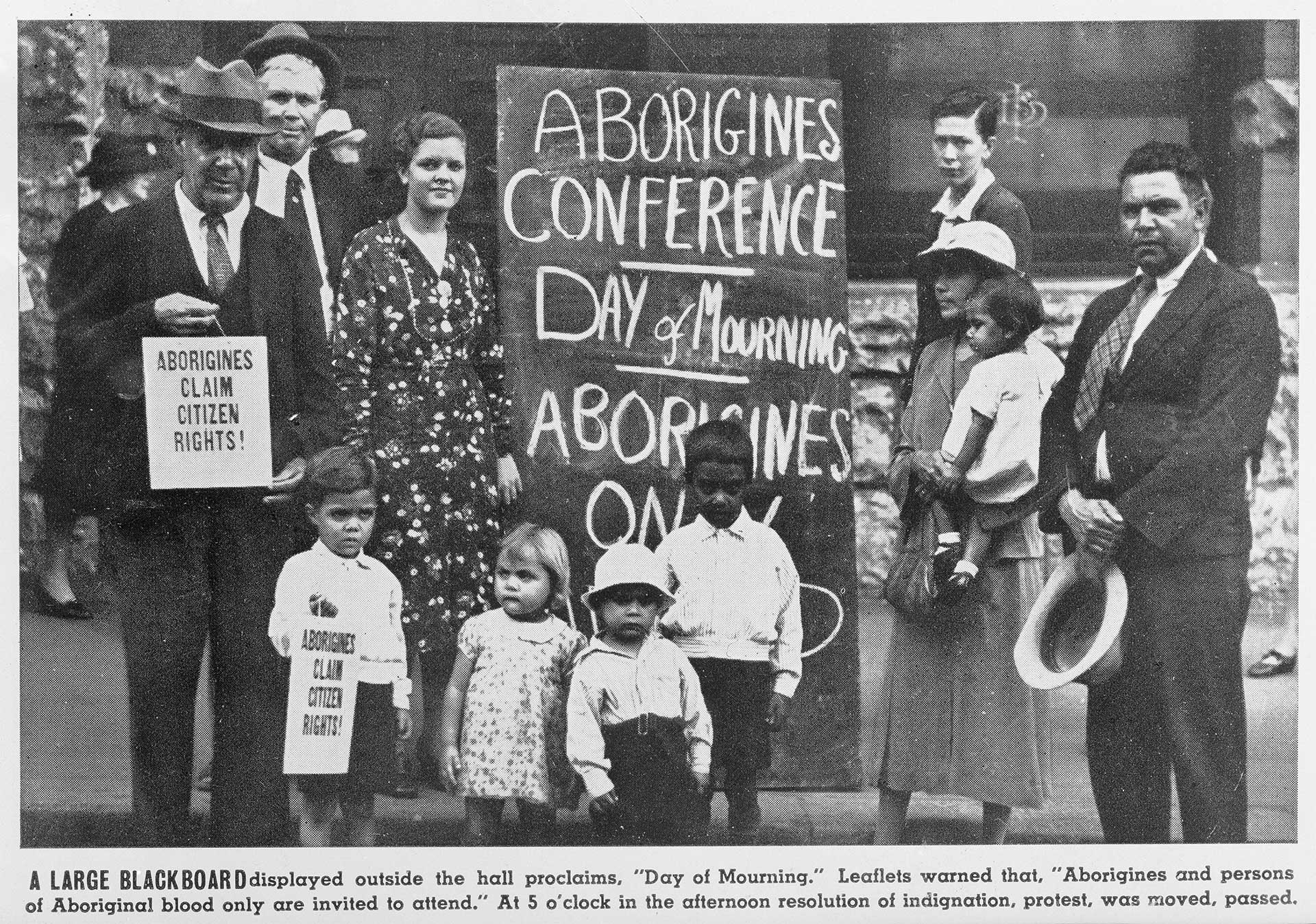
A defining moment came on January 26, 1938, when Aboriginal leaders, including William Cooper, Douglas Nicholls, Margaret Tucker, William Ferguson and Jack Patten, led a protest through the streets of Sydney before convening a congress attended by more than 1,000 people.
The gathering called for citizenship rights and federal action on Indigenous affairs — known as the Day of Mourning — was one of the first civil rights protests of its kind anywhere in the world.
Douglas Nicholls told the Congress: "I want say that we support this resolution in every way. The public does not realise what our people have suffered for 150 years.
"Aboriginal girls have been sent to Government Reserves and have not been given any opportunity to improve themselves. Their treatment has been disgusting. The white people have nothing for us whatever... Now is our chance to have things altered. We must fight our very hardest in this cause."
Speaking on Sydney radio station 2SM, Jack Patten said:
"The time has come now, after one hundred and fifty years of so-called progress, for the white people of Australia to face up to their responsibilities...we now ask for freedom and equal citizenship.
"Our only hope of obtaining justice is to arouse the conscience of the white people of Australia, and to make them realise how lacking they have been in regard to accepting their responsibilities towards us, the original owners of the land."
Following the congress, William Cooper presented then-prime minister Joseph Lyons with a proposed national policy for Aboriginal people. It too was rejected on constitutional grounds.
View this post on Instagram
Between 1940 and 1955, the Day of Mourning was observed annually on the Sunday before January 26 and became known as Aborigines Day.
In 1955, organisers shifted the observance to the first Sunday in July, recognising that it should be a time not only for protest and remembrance, but also for celebrating Aboriginal culture and achievements.
Support from Aboriginal organisations and state and federal governments led to the establishment of the National Aborigines Day Observance Committee (NADOC).
In 1974, the committee became entirely Aboriginal-led for the first time, and in 1975 the event expanded from a single day into a week-long observance spanning the first and second Sundays of July.
By 1984, NADOC had begun calling for National Aborigines Day to become a national public holiday — a proposal that remains unfulfilled.
The birth of NAIDOC
In 1991, the committee expanded its focus to include Torres Strait Islander peoples and became the National Aborigines and Islanders Day Observance Committee, creating the acronym now recognised across Australia: NAIDOC.
The committee has since noted it "respectfully acknowledges the now defunct and inaccurate term 'Aborigines', whilst retaining the term in our title due to historic use by our Elders in establishing this week of commemoration in 1938".
Today, NAIDOC refers to the entire week of celebrations and commemorations rather than a single day.
Each year NAIDOC Week adopts a new national theme and features events held across the country.
A highlight is the National NAIDOC Awards, traditionally presented during the NAIDOC Ball, which is hosted in a different city each year.
In 2026, awards will be presented across 10 categories: the National NAIDOC Person Award, Lifetime Achievement Award, Female Elder Award, Male Elder Award, Innovation Award, Education Award, Caring for Country and Culture Award, Creative Talent Award, Youth Award and Sportsperson Award.
Fifty years after its formal establishment, NAIDOC Week has grown into one of Australia's most significant annual celebrations, recognising the enduring cultures, achievements and contributions of Aboriginal and Torres Strait Islander peoples while honouring the activism that helped make it possible.



