




Aboriginal toddlers are being treated as part of the youth justice system under Western Australia's Department of Communities.
Marra Worra Worra Aboriginal Corporation (MWWAC) former chief executive Clinton Wolf told National Indigenous Times Child Protection Minister Jessica Stojkovski said the organisation's Night Space in Fitzroy Crossing would not receive Communities funding because it was classified as a justice diversion program.
Mr Wolf said he raised the issue directly with Minister Stojkovski during a meeting at Parliament House on November 12, noting that "children under 10 seeking care from the Night Space should not be classified as part of a youth justice diversion program, rather it is a humanitarian issue".
"That is why the Department of Communities should be providing funding to the Marra Worra Worra Night Space," he said.
"Unfortunately the Minister was of the opinion this is not the case."
The MWWAC Night Space operates seven nights a week in the remote Aboriginal town of Fitzroy Crossing in the Kimberley region.
It provides warm meals, showers, mentoring and access to services including school re-enrolment, as well as basic physical and mental health check-ins.
In its first year, the Night Space kitchen served more than 25,000 meals and engaged with almost 700 young people.
Marra Worra Worra head of community programs Nicola Angell told National Indigenous Times that 18 per cent of children attending the Night Space are under the age of 10.
Mr Wolf said he had stressed to the Child Protection Minister that the children were under 10 — below the age of criminal responsibility in Western Australia — but his concerns were dismissed.
"I said you cannot apply a criminal justice diversion model to two- to ten-year-olds — they are below the age of criminal responsibility, but I was told the Night Space was still considered a youth justice program by Ms Stojkovski and it won't be getting any funding," Mr Wolf said.
"The Minister is completely out of her depth in this portfolio and should not be in Cabinet."
Aboriginal leaders say children in remote towns like Fitzroy Crossing are often bearing the consequences of family and domestic violence.
The Kimberley has the highest rate of domestic violence across the State.
In just three months this year, police recorded 1,107 family-violence offences across the Kimberley — a region of only 40,000 people — equating approximately to one offence for every 36 residents.
Aarnja chief executive Cherrie Sibosado said children were frequently displaced, hungry and unsafe because of violence in the home.
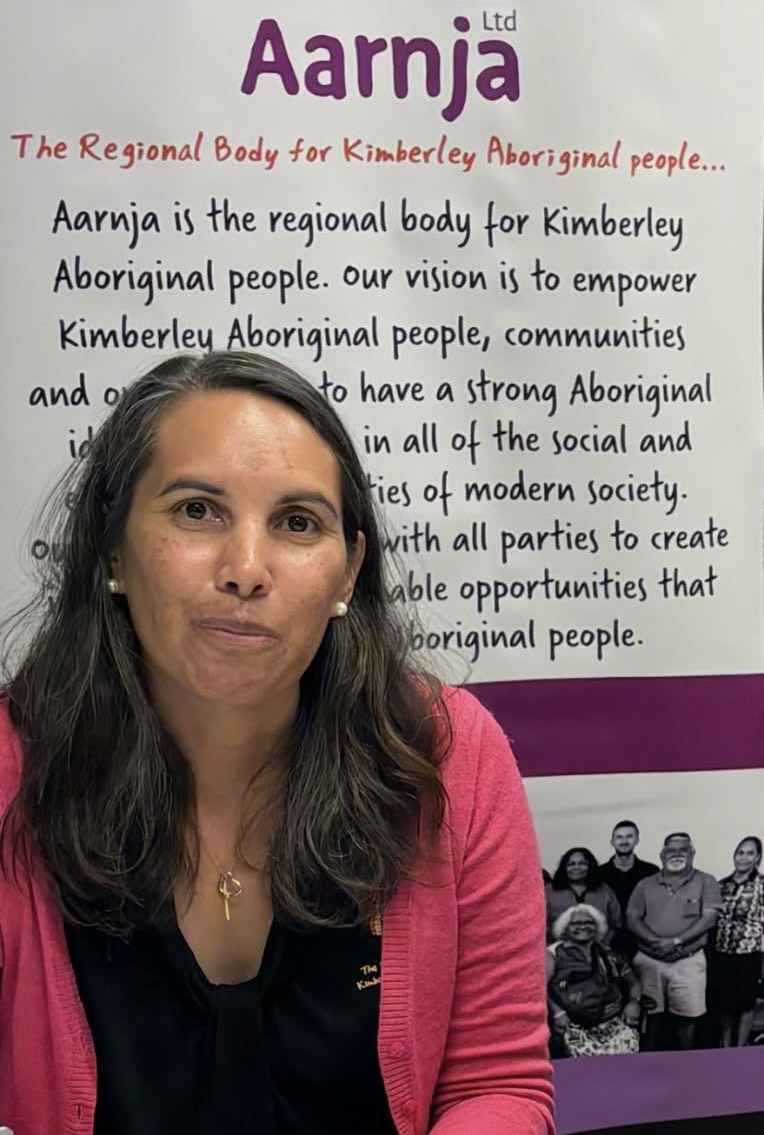
"Children are the innocent victims caught in the middle of family and domestic violence," she said.
Ms Sibosado said it was "extremely important" that the Department of Communities supported programs like the Night Space, which provide safety and early intervention for young children.
"When Aboriginal community-controlled organisations like Marra Worra Worra are doing an amazing job with programs like the Night Space, it makes sense to invest in local solutions," she said.
"If we're serious about early intervention and prevention — about stopping families coming into adverse contact with the department and children going into care — this is where the funding needs to go."
National Indigenous Times contacted Ms Stojkovski directly for comment and received a response from a government spokesperson saying in part "the safety and well-being of children is always the State Government's highest priority".
The spokesperson responded to questions surrounding its lack of funding of the Night Space saying "the State Government recognises the best long-term strategy to keep children and young people safe is to invest in initiatives that support children to remain safely at home, such as Early Intervention and Family Support Services, and Target 120, which supports young people at risk of offending".
"In the West Kimberley, the State Government funds Communities a total of more than $2 million per year to deliver Target 120 and provide Intensive Family Support Services (IFSS)," they said.
The spokesperson listed a range of programs as evidence of government spending, but did not identify any Aboriginal community-controlled organisations based in Fitzroy Crossing, instead referencing services such as perpetrator intervention programs and Family and Domestic Violence Response Teams in the West and East Kimberley.
Ms Angell said the Department of Communities already uses the Night Space to check in on children it is working with, through a service staffed by Aboriginal mentors.
"The Department of Communities do referrals, or they request that we support a particular child because we have workers on the ground, yet they don't fund us," Ms Angell said.
She stressed that the lack of funding meant the service was often unable to provide full support to children under the age of 10, particularly on busy nights.
"While we're not funded, we don't turn them away — but when it's busy, all we can do is a quick check-in, give them a takeaway meal, and take them home or to a safe location," she said.
"That's really hard, because we're sending our most vulnerable children away simply because we're not funded."
Note: Mr Wolf is a co-owner of the National Indigenous Times.



