




Victoria's main Indigenous legal organisation says it is "very clear" the state Opposition did not consult with First Nations leaders or Aboriginal community-controlled organisations before deciding to oppose the state's historic Treaty.
Earlier this week, the Victorian Opposition announced it would scrap the Treaty Bill - which would make Victoria the first state in Australia to have a formal Treaty with First Nations people - if it wins next year's election.
Despite widespread support for Treaty among Traditional Owners across Victoria, and despite having no Indigenous MPs, the Liberals and Nationals said on Tuesday they would introduce legislation within their first 100 days to repeal the Treaty Act, claiming the process is not the "best way to close the gap and deliver better outcomes for Indigenous communities".
On Thursday, the legislation passed the lower house with overwhelming support and is expected to pass the upper house in the next parliamentary sitting with crossbench backing.
The Victorian Aboriginal Legal Service (VALS)- which has also criticised the Labor government's criminal justice policies, including bail law changes - said it was "very clear that the Liberal party has not consulted with any First Nations leaders or Aboriginal Community Controlled Organisations (ACCOs)".
"How our voices are heard must not be dictated by a political party," a statement read.
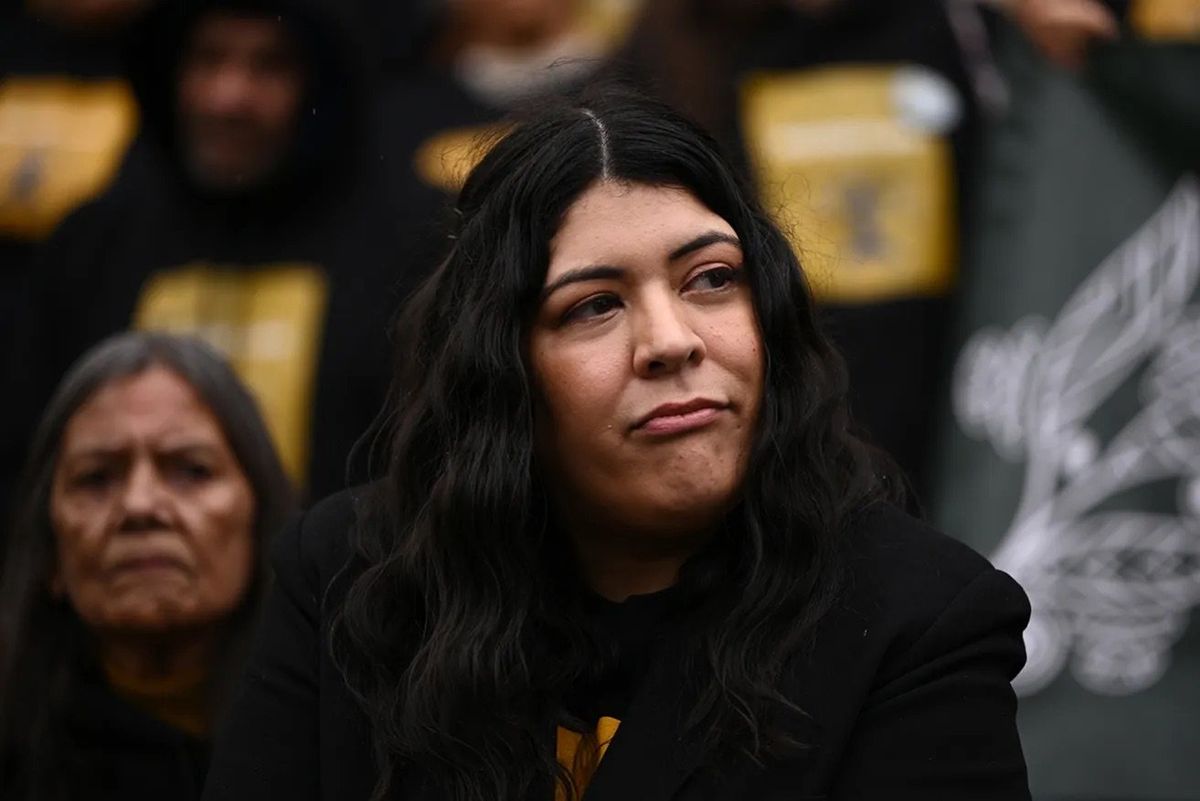
VALS chief executive Nerita Waight, who also sits on the First Peoples' Assembly as a metro region member, said it was "incredibly insulting" to sit in Parliament on Tuesday and hear the Opposition's proposal.
Under that plan, the Coalition would replace the Treaty process with a new department, First Nations Victoria, and an unelected Aboriginal advisory body. It argues this model would deliver greater transparency and measurable outcomes by working "alongside Indigenous Victorians to implement a community-led, co-ordinated and transparent approach to policy, funding and service delivery".
Ms Waight said this is "not what Aboriginal people want," adding, "they have not consulted with us".
"This unwanted intervention from the opposition, which essentially proposes to deny the right of Aboriginal peoples to decide for ourselves how to organise politically, shows exactly why Treaty is needed," she said.
"We have tried on numerous occasions to meet with the Opposition leader, to establish a strong working relationship based on mutual respect, but clearly, they have no interest in hearing from Aboriginal people about what works best for our people. I will not be spoken for anymore."
VALS Chairperson Associate Professor Crystal McKinnon said the call for Treaty had "echoed for generations," describing the Opposition's stance as "disrespectful, misjudged and offensive".
"It is a stark reminder that the colonial project continues. Their proposal is a step backwards; it is nothing new, nothing that will change the trajectory of our lives, and the lives of generations to come," she said.
"Treaty is future-focused; we invite the opposition to join us in this journey."
The Opposition withdrew from the previously bipartisan Treaty process in January last year - without notifying the First Peoples' Assembly - and has since maintained that a Treaty is not the best way to close the gap.
This week, Liberal Leader Brad Battin said 'First Nations Victoria' will "work in genuine partnership with Aboriginal community-controlled organisations, traditional owners, Elders and local communities to co-design and deliver services that reflect their priorities".
"Our commitment is to work alongside Aboriginal organisations, elders and communities to ensure that every initiative is grounded in cultural safety, trust and local knowledge," he said.
"There's a big difference from running an advisory group, to having an elected group come into the Parliament and operate effectively as another level of government."
Nationals MP and Opposition spokeswoman for Aboriginal Affairs, Melina Bath, said: "We have listened to Indigenous communities who want practical solutions."
After the Bill passed the lower house on Thursday, Assembly Co-Chair Rueben Berg acknowledged the Opposition's lack of support but urged them to reconsider.
"We have been walking this journey to Treaty for a decade now, and for most of those years, we had the Opposition by our side," he said.
"Aboriginal voices from across the state have been clear that Treaty is the change we need to create a better future for our people. As the Bill moves to the upper house, my message to Liberal and National representatives is it's not too late to again walk with us."
Ms McKinnon said Treaty offers a pathway to address key issues affecting First Nations communities and advance self-determination.
"It also provides a mechanism for accountability, so we can address the systemic issues of overpolicing, racial discrimination, Aboriginal deaths in custody and the shamefully high rate of Aboriginal children being removed from their families," she said.
"The status quo is not working. We need to be transformative and aspirational so that we don't continue to repeat the mistakes of the past."



