


After one of the wettest wets in a century which caused extensive flooding resulting in the Great Northern Highway being cut at Willare and Fitzroy Crossing for months on end, the Kimberley region experienced its hottest ever October on record. Temperatures over 40 degrees Celsius are common but not the sheer volume we saw in 2023.
The dry hot easterlies and high temperatures at that time of the year hasten the ripening of the wattle seed pods which due to the favourable conditions experienced earlier in the year are everywhere. This in turn has ensured an initiative by not-for-profit community group, Environs Kimberley (EK) has had a successful start to a new program.
EK, the region's peak environmental group is working with Aboriginal communities to facilitate the collection and harvest of wattle seed. The Wattleseed Collective is harvesting Acacia coleii, known as lirriirngkin (Yawuru, Karajarri and Nyangumarta), noomoorrgoordood (Bardi) and nimarrkoodkood (Nyul Nyul) and commonly as Soapy wattle, seed, a traditional food source that once roasted can be ground into flower. The program, using traditional and sustainable harvesting techniques, is promoting healthy people on healthy country. Just as importantly, it is helping keep alive traditional knowledge and promoting financial, social and emotional wellbeing.
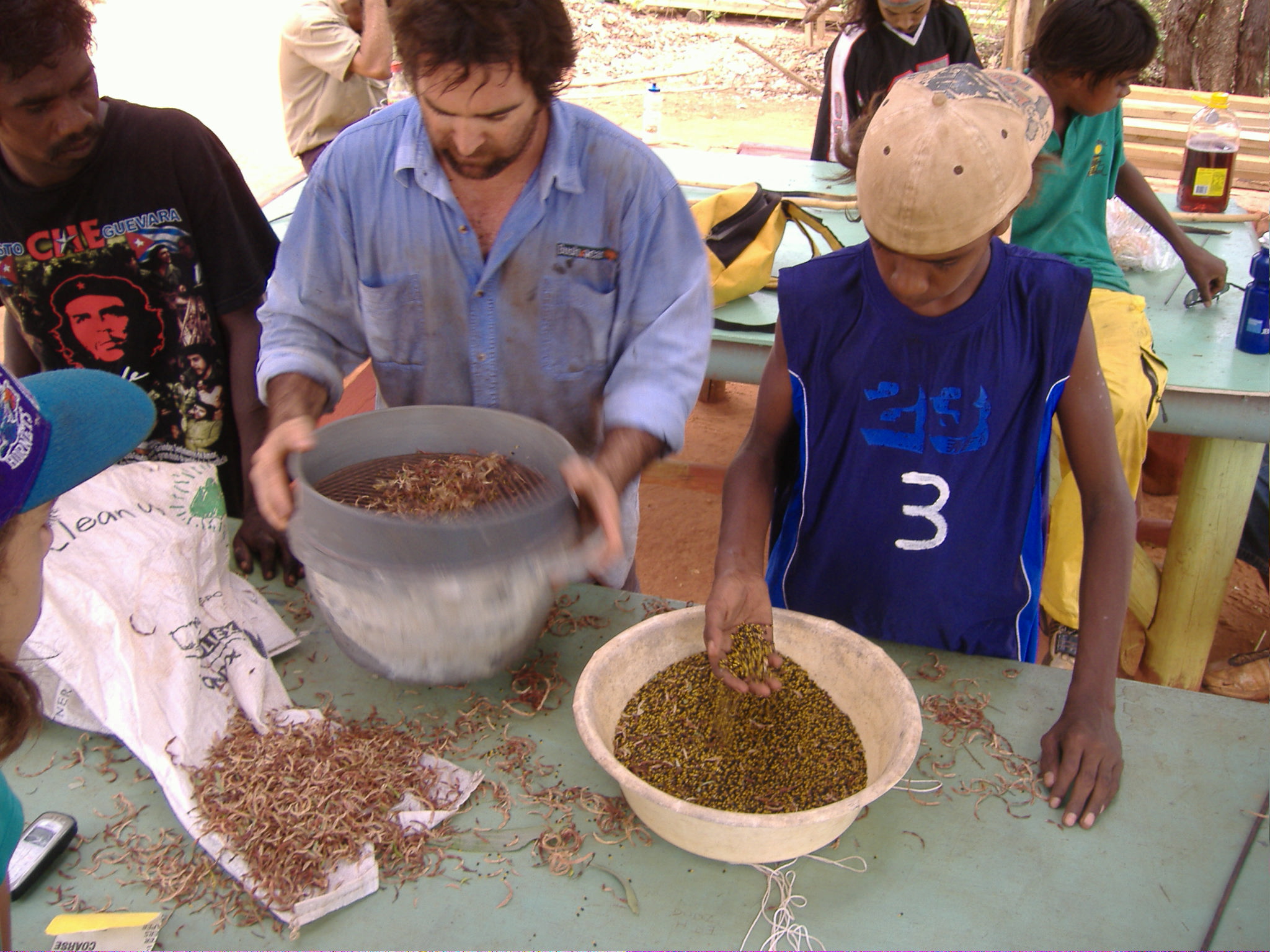
The seed is collected by either stripping the ripe pods by hand into a bucket or placing a tarpaulin beneath the tree to catch the falling wattle seed. This is massaged off the tree by hitting the pods with a plastic garden rake. The tarp is then shaken so that the heavier seed falls to the bottom, with the lighter pods on top being removed and left under the tree.
At the end of the day the seed is further cleaned using sieves or a machine designed to blow off remaining chaff and other items including an amazing number and variety of insects. With one tree producing anywhere between 300 grams and a kilogram, with effort you can collect up to 20 kilograms in a day. Now that I've got you champing at the bit to get out there and collect some, remember it is important to contact your state department in regard to rules and regulations around seed collection.
There are several other acacias in the Kimberley collected for their ability to produce flour including Acacia tumida, known as kulparn (Walmajarri) and wanggay (Bardi). Another, Acacia coriacea called kartawurru in Nyangumarta, has long twisted green pods that are roasted on the fire, the large green seeds are removed and have a taste like a snake bean.
All wattles are easy to grow, simply soak in near boiling water overnight, discarding the floaters. Bury the seed as deep as it is thick into good quality potting mix and keep damp. Germination will happen within 10 -14 days.
Kimberley gardeners with large verges have been known to scatter wattle seed directly onto the ground just before the onset of the wet where it provides a fast-growing privacy screen amongst which other slower growing trees and shrubs can be planted out. Wattles have the bonus of being nitrogen fixers which contributes to the health of your soil.



