




Naarm's premier festival of music, art and performance has expanded again, with RISING today announcing a new wave of programming across its 2026 lineup.
The additions extend its city-wide invitation to move, gather and experience music, dance and art across the city.
Building on a program that will transform Melbourne from May 27 to June 8, these additions place participation, nightlife and public space at the centre, spanning late-night parties, dance classes, major free events, First Peoples-led works, visual art, public programs and new music collaborations.
"This next wave of programming pushes further into the pulse of the city. Into clubs, onto trams, streets and shared spaces," said RISING artistic director Hannah Fox.
"Whether you choose to enter the big collective energy of large-scale free gatherings, or venture off the beaten path to an intimate dance floor, RISING is about communion - experiencing music, movement and culture, together."
This year, First Peoples-led work extends across RISING, spanning major public art, projection and participatory programs throughout the city.
Presented in partnership with RISING, Transport Victoria and Yarra Trams, the First Peoples Melbourne Art Trams return in 2026 bringing the power of the Blak imagination to the tracks.
Curated by Taungurung woman Kate ten Buuren, this year's edition will see six trams transformed into moving canvases across the city during RISING and remaining on the network for 12 months.
This year also introduces Wadawurrung Elder and senior artist Marlene Gilson OAM as the Legacy Tram artist. Her multi-figure paintings reclaim and reframe histories of Country, embedding cultural knowledge and storytelling into the public realm. Her work, exhibited from Ballarat to the Venice Biennale, brings a powerful intergenerational perspective to the project.
The newly announced Legacy Tram artist adds to the previously announced lineup of artists including Natasha Carter (Dja Dja Wurrung, Yorta Yorta and Jaru), Mitch Mahoney (Boonwurrung and Barkindji), Jenna Mayilema Lee (Larrakia, KarraJarri, Wardaman),Zena Zada Cumpston (Barkandji/Kurnu) and Sonja Hodge (Lardil).
An exciting new series of public programs will accompany the Trams, in Blak Art on the Move which invites audiences to go deeper into the work with artist talks, workshops and public art tours offering insight into the ideas and histories behind the Trams.
In this series of public programs, you'll hear directly from this year's artists about their works, and the curator about the history and enduring significance of First Peoples public art.
There are a range of ways to get involved, from hands-on printmaking workshops, artist talks, a hop-on hop-off public art tour along the tram network and more. These activities will run between Saturday, the 30th of May, until Monday the 8th of June.
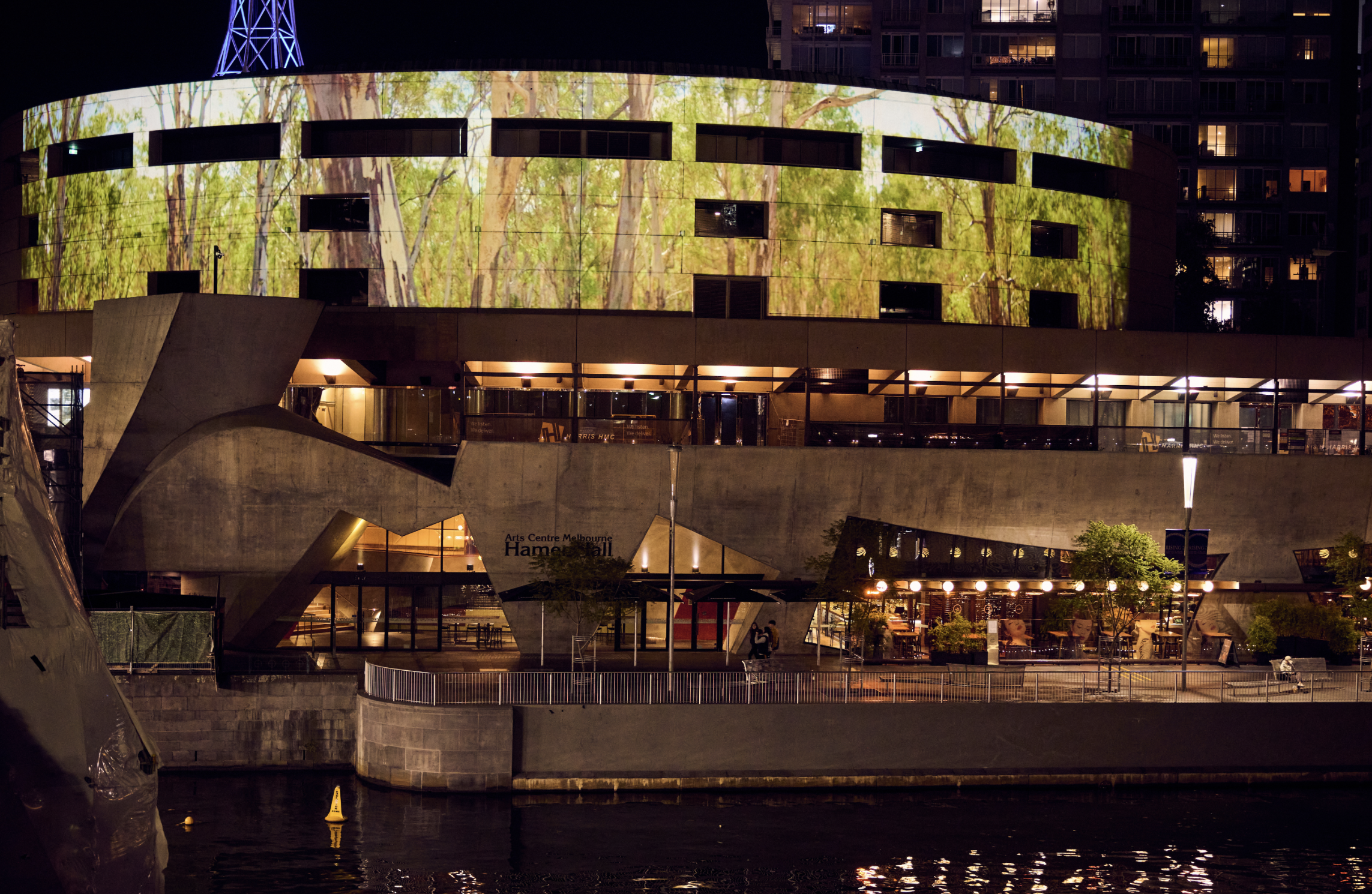
At Hamer Hall, Calling Country: The Land Speaks Back illuminates the expansive façade with a large-scale projection series centring Indigenous perspectives on land, language and more-than-human connection.
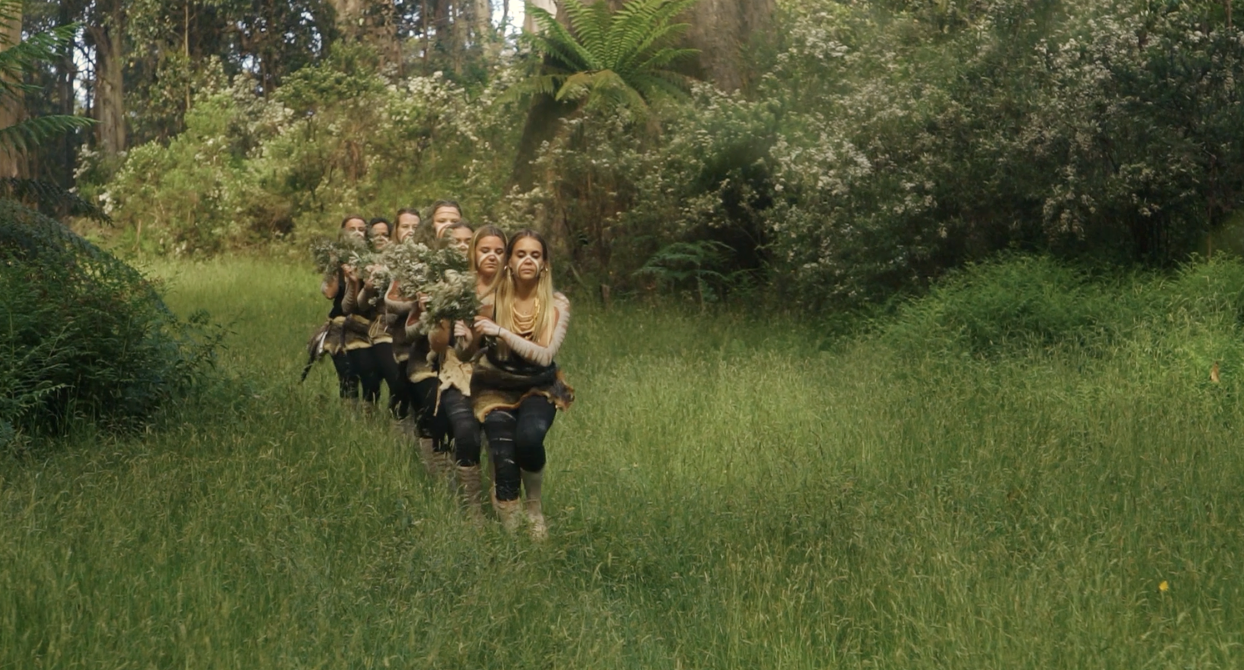
Newly announced works by the Djirri Djirri Women's Dance Group, Traditional Custodians of Narrm and surrounds, bring Wurundjeri ceremony to the fore.
Meaning "Willy Wagtail" in Woiwurrung, Djirri Djirri present the Wominjeka (Welcome to Country) dance filmed beneath Victoria's Mountain Ash forests, alongside a work centred on Bulin Bulin, the lyrebird and keeper of language.
Through song, story and movement, these works speak to creation, care for Country and the layered relationships between land, culture and bird kin.
The series spans local and international First Peoples artists, exploring transnational connections and reciprocal relationships with land, and launches with a work by Cannupa Hanska Luger.
Born on the Standing Rock Indian Reservation and an enrolled member of the Three Affiliated Tribes of Fort Berthold and is Mandan, Hidatsa, Arikara and Lakota, Luger creates large-scale installations and performances that offer new ways of seeing our shared humanity while centering an Indigenous worldviews.
Following his monumental Times Square work Midéegaadi, he brings a new iteration to Naarm, which envisions the regeneration and return of the North American bison through a speculative ancestral time-space world. Incorporating traditional dance and new regalia the work speaks to the return to land and care for Country and animal kin.
These new additions also build on an impressive program anchored by the inaugural Australian Dance Biennale.
For more fashion, arts, culture and lifestyle news subscribe for free to the Style Up newsletter.



