




New research has uncovered 8000 years of Aboriginal history on South Australia's Yorke Peninsula/Guuranda, highlighting the cultural and environmental resilience of the Narungga people.
The study, led by Flinders University and the University of South Australia in partnership with the Narungga Nation Aboriginal Corporation and Point Pearce Aboriginal Corporation, analysed marine shells and materials from seven archaeological sites.
Four sites were on Point Pearce Peninsula/Burgiyana, and three were on Wardang Island/Waraldi.
Flinders University archaeologist and PhD candidate, Adrian Mollenmans, said the results reflect a time when Wardang Island was connected to the mainland before sea levels rose after the last glacial period.
Narungga Elder and scholar, Professor Lester-Irabinna Rigney, emphasised the importance of oral traditions in understanding these changes.
"The stories of sea-level rise and the creation of gulfs and islands have been passed down by our ancestors," he said.
"Our Elders also told us many stories about how the Old People would swim to Wardang Island to collect penguin eggs, fish and conduct other cultural activities-a feat that required skill and knowledge."
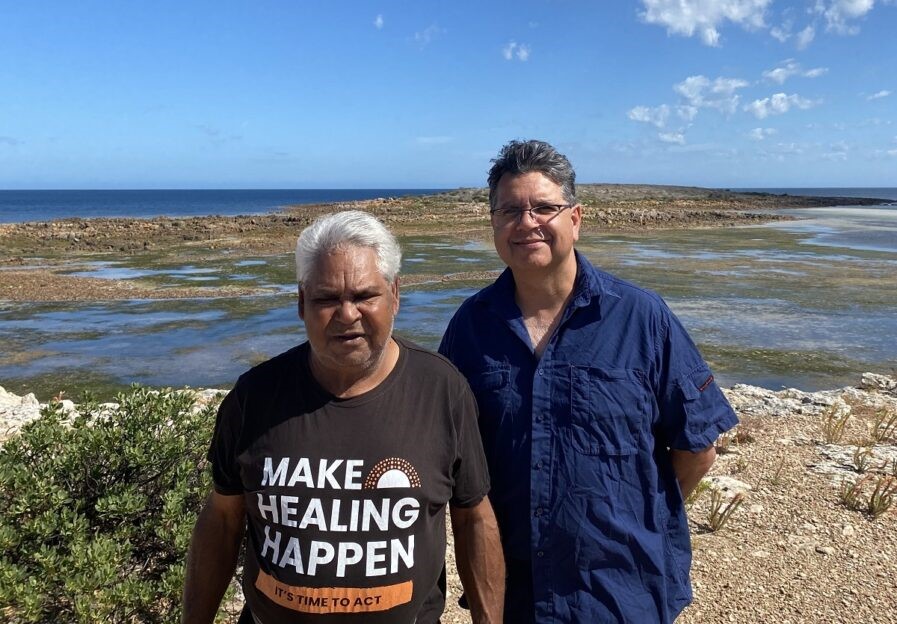
The radiocarbon dates capture a period prior to European colonisation, proving the lasting connection the Narungga people have with their coast and islands.
"Our research also reminds us of the dramatic effects of sea-level rise and our responsibility to care for the environment for future generations,' says Professor Rigney.
Flinders University Professor, Amy Roberts, said the findings reveal the Narungga peoples' adaptability to environmental changes, including rising sea levels and later periods of drying.
"These challenges are represented by gaps in the archaeological record," she said.
The findings are detailed in Burgiyana and Waraldi: A radiocarbon chronology for a selection of coastal and island archaeological sites on Yorke Peninsula/Guuranda, South Australia (2024), published in The Journal of Island and Coastal Archaeology.



