


Pauline Hanson speaking about Aboriginal people on a white Christian podcast last year said "they're the most primitive race on Earth and we're supposed to be holding them up and saying what they've achieved? They've achieved nothing." She resurrected the old shibboleth, "they didn't invent the wheel" and claimed that the entire achievement of 65,000 years of our ancestral peoples was "A few, you know, rock paintings".
The ABC and another media outlets claim that she gave a qualified apology but no apology is better than her incoherent nonsense about wanting to "unite" Australians. She claimed she was not talking "now," which we are supposed to intuit means this was not directed towards present-day Indigenous Australians. A truckie could drive a haul truck right through that. Her record tells us otherwise.
The response to Pauline Hanson's latest attack on Aboriginal and Torres Strait Islander people has been extremely muted. Only a handful of politicians refuted her vile comments, and none convincingly. Following the Steve Bannon textbook handed to Trump before his first election to the presidency of the USA, she has done her best in just one week to "flood the zone with shit". This is the distraction strategy. First, after her social media animations calling the SAS veteran and member for Canning in WA a "traitor" and a "maggot" had been up for weeks, she refused to remove it or apologise. Then she attacked the Prime Minister's late mother, who was crippled by rheumatoid arthritis, for living in public housing. There has been far more outrage about these comments than her racism towards us.
Pauline Hanson built a thirty-year political career on a single, durable proposition: that Australia is being changed for the worse by people who don't look or worship like the imagined national "us". Her 1996 maiden speech warned that "mainstream Australians" were the victims of "reverse racism" by those who promote political correctness and those who control the various taxpayer funded 'industries' that flourish in our society servicing Aboriginals, multiculturalists and a host of other minority groups." She said, "Present governments are encouraging separatism in Australia by providing opportunities, land, moneys and facilities available only to Aboriginals". These are not just lies, but clever racist deceptions that cast whites as the victim of "them." The last statement is especially false, as the Closing the Gap Reports to Parliament tell us year after year.
She said Australians are "in danger of being swamped by Asians"; two decades later she swapped the target to Muslims, and more recently to African migrants and "boat people". The vocabulary shifts; the mechanism doesn't. One Nation's electoral support has fluctuated over the decades — sometimes single digits, sometimes into double figures in the Senate — but its persistence is the real story: current polling shows that almost a third of voters will give their first preferences to One Nation candidates. Australian voters have, election after election, rewarded a politician whose signature product is grievance framed in racial and ethnic terms. Whatever the precise vote share in any given poll, the durability of that support is what makes Hanson's project more than a personal eccentricity. It is evidence of a market.
The 2023 Voice to Parliament referendum exposed how large that market can be. Roughly six in ten voters said No to a modest, non-binding constitutional recognition of Aboriginal and Torres Strait Islander peoples. We have been told repeatedly, especially by Senator Jacinta Jampijinpa Price that our proposal was "racist" and would divide the country by "race". Researchers and pollsters have offered competing explanations — misinformation about the Voice's legal effect, a general distrust of politicians, small-c constitutional conservatism, and, for a significant minority, straightforwardly racialised hostility to Indigenous recognition.
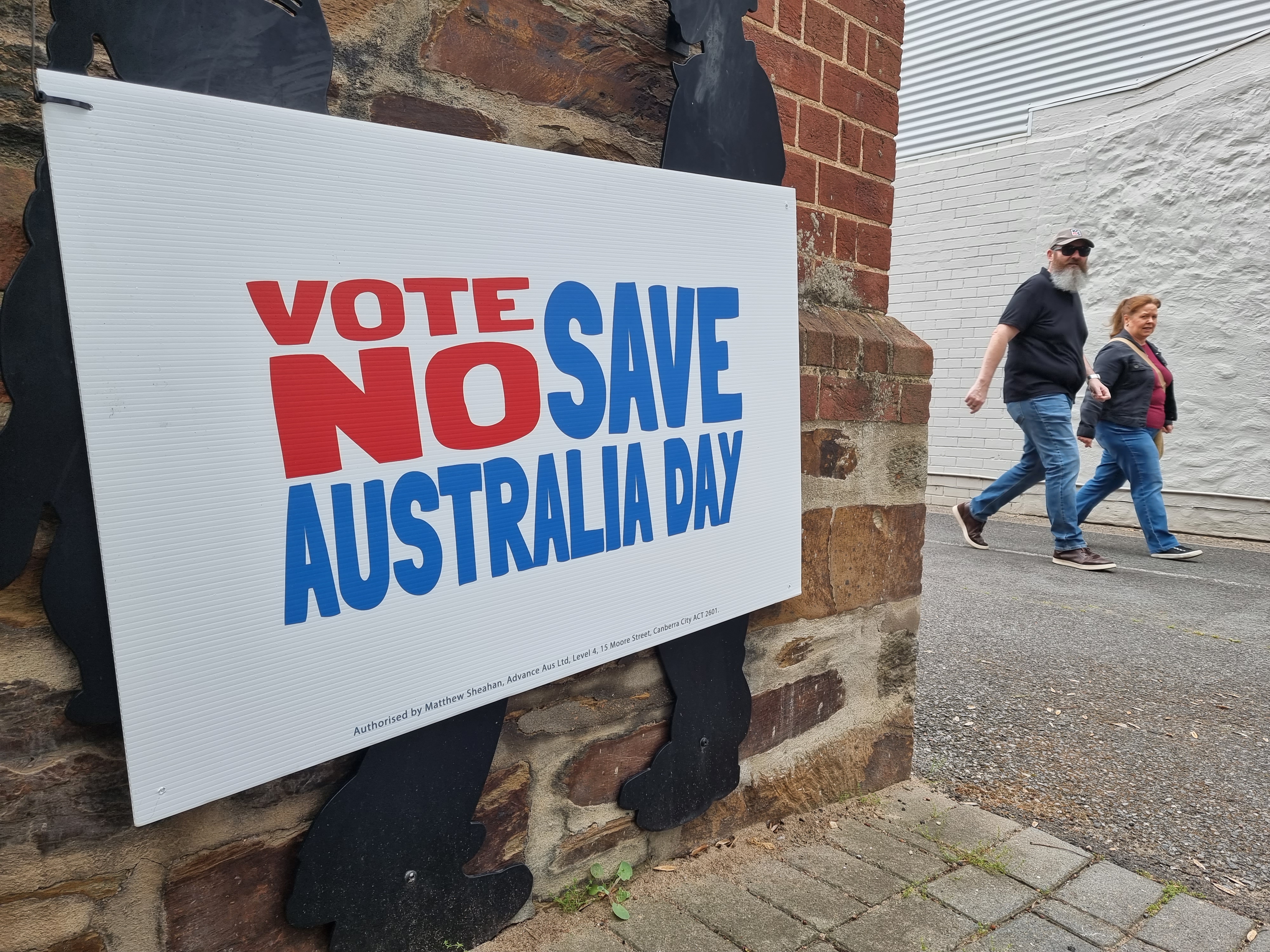
Price and the Advance campaign advertisements, funded by Gina Rinehart, other billionaires, conservative lawyers, corporate leaders, and according to Advance, ordinary Australians, made it clear that they believe "race" is biologically real, and the right to recognition for Indigenous Australians was a threat to white Australia. I have been told that some No voters reject that idea. But post-referendum surveys, including work by the Australian Election Study and the Scanlon Foundation's social cohesion research, suggest that a substantial share of the electorate holds views consistent with treating racial and ethnic categories as fixed, meaningful, hierarchical facts about people rather than as social and historical constructions. That increasingly popular belief in the existence of 'races' is the problem that Hansonism and her close association with neo-Nazis pose to Australian society.
The underlying science is not contestable: genomics closed the case on biological race decades ago. What remains open is whether politics, media and the public catch up.
The idea that humanity divides into a small number of discrete biological "races" — each with a package of inherited traits, including intelligence and temperament — was never good science, and the genomic revolution of the past three decades has dismantled what was left of its credibility.
The population geneticist Richard Lewontin showed as early as 1972 that roughly 85 per cent of human genetic variation exists within traditionally defined racial groups, not between them; later, genome-wide studies confirmed that there is no genetic marker, or cluster of markers, that reliably sorts humans into the categories "Black", "White", "Asian" or similar. Human variation is clinal — it changes gradually across geography, shaped by migration, isolation and admixture — not neatly boxed. Two people classified as the same "race" can be more genetically different from each other than either is from someone classified as a different "race."
The geneticist and broadcaster Adam Rutherford has spent much of the last decade making this case in public: that race science and eugenics were never neutral biology, but political ideologies — rooted in colonialism and white supremacy — dressed up in the language of objective science. His account traces the lineage carefully. Scientific racism was invented in the seventeenth and eighteenth centuries, in step with European expansion, to justify empire and plunder. Carl Linnaeus's taxonomy of human "subspecies" placed white Europeans at the top of a hierarchy with no basis in biology. Evolutionary genetics itself, Rutherford argues, often developed in the service of these political structures rather than alongside them.
Out of that tradition came eugenics proper. Francis Galton — Charles Darwin's half-cousin — coined the term and formalised the idea of controlled human breeding around explicitly white-supremacist ideals. Far from being a fringe obsession, eugenics was mainstream and fashionable across the political spectrum in Britain, North America and Europe through the late nineteenth and early twentieth centuries. It rested on bad science even by the standards of its day: early geneticists misapplied Mendelian inheritance, assuming that complex behaviours and social outcomes — criminality, "feeble-mindedness", poverty — were controlled by single genes in the way that pea-plant traits were.
The consequences were not confined to journals. Eugenic policy produced state-coerced sterilisation programs in the United States and Canada, targeting poor, disabled and racialised people.
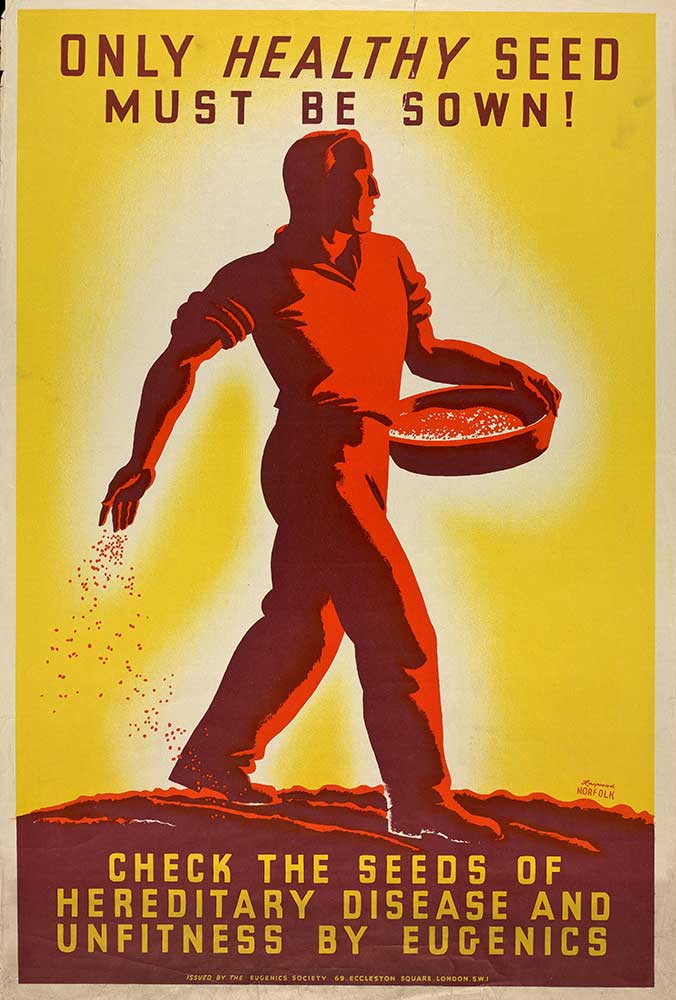
Eugenic ideology supplied the direct intellectual scaffolding for Nazi "racial hygiene" policy and the atrocities of the Holocaust.
In Control: The Dark History and Troubling Present of Eugenics, Rutherford warns this is not simply a closed chapter: modern gene editing, embryo selection and biometric data collection carry the same risk of sliding back into eugenic logic if pursued without historical awareness of where that logic leads.
His central point is not that race has no social reality — clearly it does, as lived experience and as the basis of discrimination — but that it has no coherent basis in biology, and that every serious attempt to ground a racial hierarchy in genetics has collapsed under scrutiny once it left activist pamphlets and entered peer review.
Australia has its own, particularly ugly, chapter in this history. As I have documented, the University of Melbourne's anatomy department under Professor Richard Berry, from 1906, assembled a large collection of Aboriginal skeletal remains — excavated from graves, purchased from collectors, brought in by students — explicitly to support theories of white racial supremacy. Financial records from 1914 show Berry advising the purchase of Tasmanian Aboriginal skulls, noting their price would rise because the "race" was believed to be extinct. This was not fringe activity; it was mainstream anatomical science, conducted inside a major university, and it fed directly into the policy architecture — protection boards, missions, the removal of children — that produced generations of trauma still measurable in health and justice statistics today.
None of this is in the past. Genomic language is being recycled by a new generation of "race realists" who cite selectively from population genetics — pointing to real, clinal variation in allele frequencies and inflating it into claims about group intelligence or criminality that the data cannot support. This is dangerous precisely because it borrows the authority of real science while discarding its rigour, and because modern platforms let it circulate faster and further than Berry's journal articles ever could.
The persistence of racial hierarchy as an unspoken assumption shows up in more everyday ways too. When the British sociologist Jason Arday — who did not learn to read until he was eighteen and is autistic — was appointed one of the youngest Black professors in Cambridge's history, he was accused of plagiarism by an American 'philosopher of biology' and peddler of 'race realism', Nathan Cofnas, who had been dismissed from Cambridge's Emmanuel College in 2024 over controversial views on race, and later worked at Ghent University in Belgium, where he has subsequently been put under investigation and disallowed from teaching. Cofnas published a Substack post accusing Arday of lifting passages in his doctoral thesis and embellishing personal claims. Cambridge University investigated the claims and most were dismissed. The deluge of media coverage in Britain treated his achievement with a scepticism that commentators argued would not have greeted an equivalent white academic's record: implying his appointment must be explained by something other than the work itself: the relentless media attacks accused him of benefitting from diversity policies misapplied by Cambridge to increase the number of Black and coloured people. He was hounded to death by a media pile-on that is reserved for the people of colour who subvert racial supremacy with their high achievements. Critics saw in that coverage a reflex, however unconscious, toward ranking credibility along racial lines — the same reflex, differently dressed, that put skulls in a university basement.
Pauline Hanson is not alone in promoting pseudoscience and ancient racial hatreds. She is extraordinarily well served by the Australian media whose ranks similarly hold the concept of 'race' to be real despite being dismissed decades ago by an avalanche of scientific evidence to the contrary. Her outrages are profitable or useful click-bait across all media and there's still another two years before the next federal election. Be afraid. It will get worse, as the late Professor Arday's case tells us.
Laureate Professor Dr Marcia Langton AO, BA (Hons), ANU, PhD Macq. U, D. Litt. ANU, FASSA
Associate Provost | Redmond Barry Distinguished Professor | Foundation Chair of Australian Indigenous Studies
Indigenous Studies Unit | Onemda | Aboriginal and Torres Strait Islander Health & Wellbeing
Melbourne School of Public Health



