



A new report from the Water Services Association of Australia has found that more than 6,500 First Nations people living in remote communities were supplied with water that did not meet the Australian Drinking Water Guidelines at least once over the past two years.
The Measuring the Gap: Water in First Nations Communities report also found that while more than $500 million in capital investment and $200 million in operating investment over the next five years has been committed by state and territory governments to improve water and wastewater services to First Nations communities, a further $200 million in capital investment and $50 million in operating investment over the same period is needed to reduce the highest risks.
The report investigated drinking water test results from water utilities and government authorities across the country from the most recently available public data.
The report will be released Wednesday at the Voices from the Bush 2026 Conference in Mparntwe (Alice Springs) where First Nations leaders, rural representatives and water experts will discuss water security and equity in rural, regional and remote Australia.
It comes five years after the release of the Closing the Gap Framework, which introduced Target 9B covering essential services such as drinking water standards for First Nations people.
A basic human right
Water Services Association of Australia Executive Director Adam Lovell said after five years a consistent set of metrics for appropriate water quality covered under Target 9B had still not been agreed to by governments and health and water authorities.
"Access to clean, healthy and safe drinking water is a basic human right for all communities in Australia, regardless of your location. The Australian Drinking Water Guideline is the starting point to achieve this," Mr Lovell said.
"We used the metrics for microbiological and chemical water quality in the national guidelines to measure the gap in water services in First Nations and other communities.
"All Australians would expect that drinking water being supplied to communities should comply with the safety standards in the Australian Drinking Water Guidelines. This report shows that is not the case for all First Nations communities."
'It is now past the time to act'
"Governments and the relevant health authorities need to consult with First Nations people and immediately agree on the right metrics to measure and address water quality issues in their communities," Mr Lovell said.
The Productivity Commission recently noted that no data was available for Target 9B as part of its consultation paper on its Closing the Gap Review 2026.
Target 9B in the Closing the Gap Framework states that Aboriginal and Torres Strait Islander communities should be receiving essential services that meet or exceed the same standard provided in the local area or state. It is applied to communities of 50 people or more that are living in discrete First Nations communities or town based communities. The Water Services Association noted it did not cover the hundreds of communities with less than 50 people, "which creates a further gap in the understanding of drinking water quality for all First Nations people".
Tests found levels of microbiological contaminants or some chemicals above acceptable levels
The Measuring the Gap: Water in First Nations Communities Report found that:
• Around 6,500 people from 1,929 households across 38 First Nations communities did not receive safe drinking water.
• This meant that microbiological and chemical levels in drinking water in these communities did not meet the safe level in the Australian Drinking Water Guideline for at least one water quality test result over the reporting period.
• The tests found levels of microbiological contaminants or some chemicals (such as nitrates, trihalomethanes (THMs), or chlorates) were above acceptable levels in at least one test result.
• This represents a water quality gap of 8.6 per cent, meaning almost one in 11 people living in a First Nations community are not receiving the same safe levels of water quality provided to other Australians.
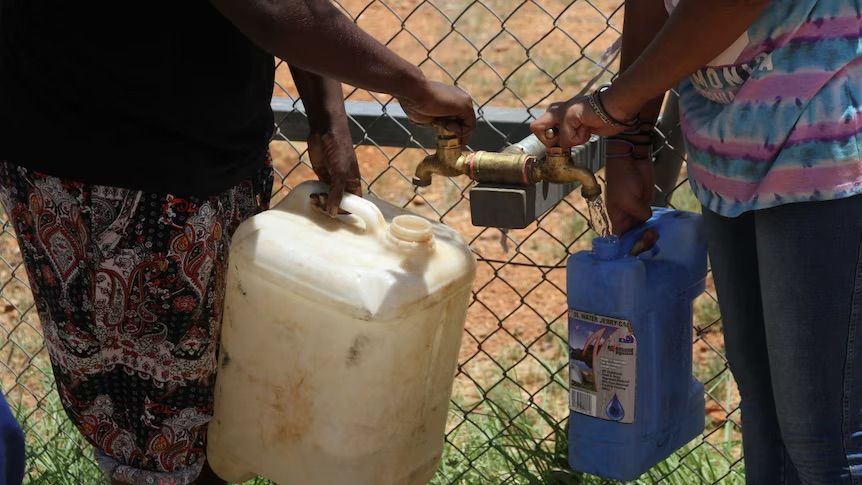
"The report shows that just over 90 percent of households in remote First Nations communities are receiving safe drinking water," Mr Lovell said.
"This figure has improved over the past decade, particularly in states such as Western Australia. This is a direct result of recent and growing investments in water and wastewater infrastructure.
"However, it is not acceptable that more than 6,500 First Nations Australians are still not being provided with safe drinking water at all times. As a country, we should be doing better."
Governments must 'immediately begin consultations with First Nations communities'
The Measuring the Gap: Water in First Nations Communities Report urges governments to immediately begin consultations with First Nations communities on the appropriate measures for the 9B targets to help close the gap in water services between First Nations people and other Australians.
A federal government spokesperson told National Indigenous Times the government acknowledges that "Australians deserve access to safe and reliable drinking water, regardless of where they live".
"That's why, through the National Water Grid, the Albanese Government is investing more than $193 million to support 43 First Nations water infrastructure projects across 6 states and territories, helping more than 110 communities," they said.
"We are also addressing sustainable long term national water management, through the National Water Agreement and the Water Act Review.
"We know work is still needed to improve water security in many First Nations communities. We are continuing to work with state and territory governments, First Nations organisations and representatives, and other stakeholders to identify, prioritise and deliver water infrastructure projects to improve water security for First Nations communities."
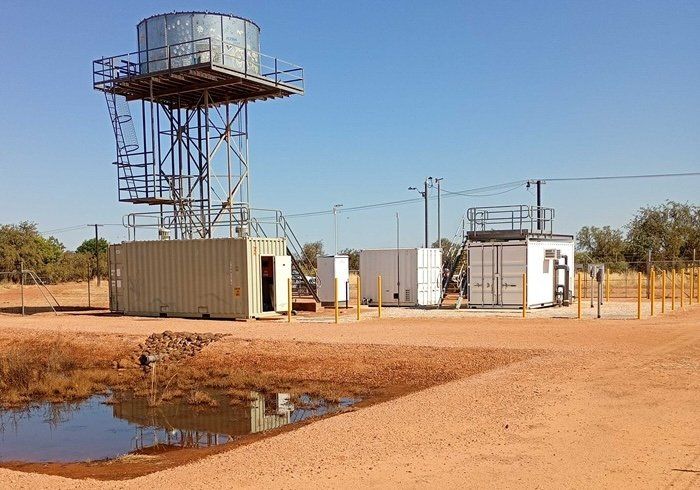
The Water Services Association of Australia is the peak body for the water sector in Australia and New Zealand that represents more than 150 water utilities which supply safe water and wastewater services to 24 million people.
The Measuring the Gap: Water in First Nations Communities Report used metrics for microbiological and chemical water quality as set out in the Australian Drinking Water Guidelines and the National Performance Reporting Framework for water and wastewater service providers.
The metrics were co-designed with water utilities, regulators and government agencies. It determined that for there to be no gap between First Nations people and other Australians, all households in First Nations communities must be supplied with water that complies with these water quality levels in the national guidelines.
Communities in NSW and Tasmania were not included in the report because there is no publicly available information, and due to concerns on Indigenous data sovereignty.
The full report is available online.



