



Indigenous rounds across the past three seasons of the Supercars Championship have shown a deeper meaning than just a range of traditional artworks simply painted onto the cars.
For most motorsports fans heading to the Darwin Triple Crown race, the designs are aesthetically pleasing to the eyes, the cars zooming around the track on Larrakia Country.
But every piece of artwork tells an individual story that each racing team is proud to support over the June 14-16 event.
The Walkinshaw Andretti United team showed off its Indigenous livery reveal week first in style to mark the occasion, unveiling two stunning looks for their Ford Mustangs of Chaz Mostert and Ryan Wood.
Mostert's #25 Mobil 1 Optus Ford will carry the artwork of Wurundjeri and Arrernte 16-year-old Ava Muir, while Wood's #2 Mobil 1 NTI Ford will display the design from Kamilaroi woman Rhonda Sampson.
Muir, who won the right to design the design Mostert's car from a sponsor's recent competition, created the artwork, Artangentyele akethe durt, meaning "together in the open stars".
"It's been amazing to have the chance to showcase my culture through my car design for the Darwin Triple Crown Indigenous livery," she said.
"I have learnt so much: the process from brief to realisation and all steps in between.
"It has been a once in a lifetime opportunity."
At the heart of the design is the sky, "the one we all share no matter who are we are or where we are that keeps us positively connected and together".
The handprints throughout the artwork are from those of Muir's friends and family, who have supported her passion for combining a love of culture with artwork.
The Waang (the raven or crow) is the protector of the Wurundjeri people and is seen throughout the car's design.
A theme of optimism is represented by the three meeting places signifying a journey through life, culminating with a symbol for people that represents "everyone you meet along the way, the positive connections and the relationships formed in the search for the ultimate community".
Sampson, who previously designed liveries for the team in 2022 and 2023, comes in from a similar theme in her Under the stars piece that is a visual representation of a commitment to and an ongoing journey towards reconciliation.
At the centre of the her design is the team members, who are committed to making a real difference in the community and strengthening relationships with First Nations peoples across the country.
Located in the four corners of the artwork are the four pillars of the reconciliation action plan that is based on respect, relationships, opportunities and governance.
The stars, which are scattered throughout the piece, represent the night sky and also the Southern Cross to signify people across Australia working together for a "safer and more sustainable future".
Walkinshaw Andretti United chief executive, Bruce Stewart said the artworks and the thought behind each was a "great way to celebrate our Indigenous communities".
"It's great to have Rhonda Sampson back on board this year as the artist for car two and a big welcome to the family to young Ava Muir," Stewart said.
"Both artists have done a fantastic job and I can't wait to see these cars hit the track."
Mostert and Wood currently sit third and 16th respectively in the season's drivers' championship, while Walkinshaw Andretti United sits second in teams' competition.
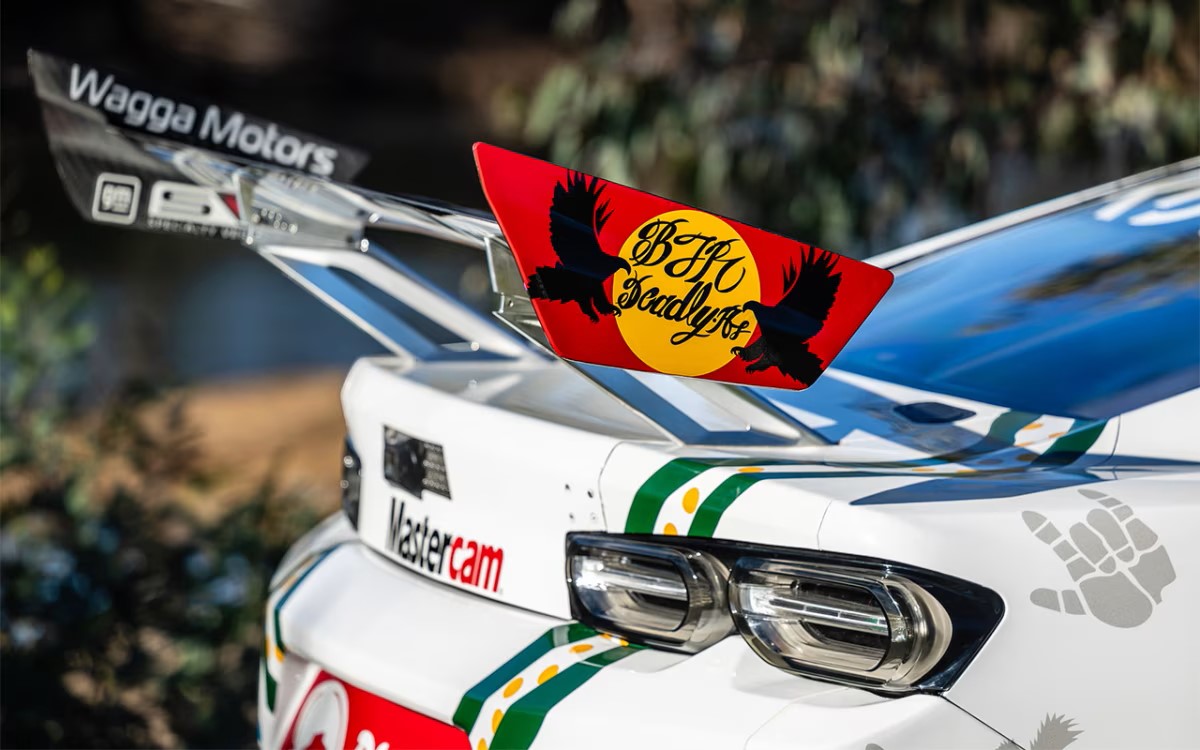
Macauley Jones in the Pizza Hut Camaro will carry the ever watching dreaming being, the Bunjil, on his vehicle under Brad Jones Racing.
The #96 Pizza Hut Chevrolet will sport artwork that was designed by Mungabareena Aboriginal Corporation, based out of river community of Albury-Wodonga.
This year's NAIDOC week theme of 'Keep the Fire Burning - Blak, Loud and Proud' is the inspiration behind the latest Brad Jones Racing livery.
Mungabareena's program of artists have worked to produce artwork that represents the spiritual Wedge-Tail Eagles Bunjil, known as The Creator.
The Bunjil is seen as the creator of land, rivers and the natural environment, who had helped form the laws, customs and rites in Aboriginal culture and not only created all landscapes but gave each tribe their country.
The hands seen across the Camaro symbolises a sense of connection belonging between individuals, communities and ancestral spirits.
'BJR Deadly As' is also incorporated into the car design on the wing endplates.
"The opportunity for us to work with Brad Jones Racing for a second year has given the fellas in the working groups a great opportunity to showcase their artwork skills and connect back to country and culture," Mungabareena boss Carl Tunstall said.
"The bold green and yellow lines represent the rivers we live, play and rely on in our region."
The proprietor of the car's team was also suitably impressed with the design and the symbolisation behind it.
"The car looks amazing, there's no denying that, but it's also representing something very meaningful and that's the best part about Indigenous Round," Jones said.
"Carrying Bunjil across the car is pretty cool.
"What it represents and means to Aboriginal culture is massive.
"I'm excited to have this car in Darwin – representing the Mungabareena Aboriginal Corporation in NT is special."
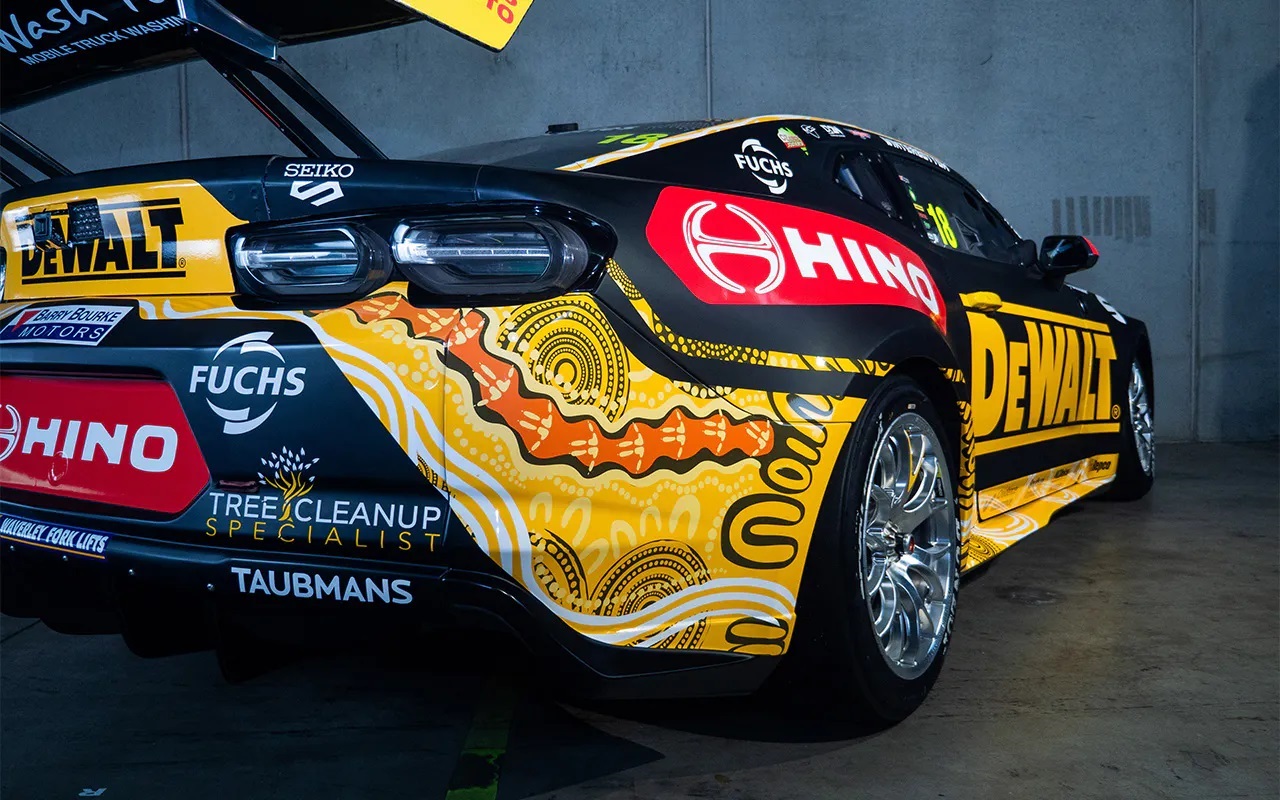
Mark Winterbottom will look to defend his Darwin win with a brand new Indigenous Round livery paying tribute to the centenary of sponsor DeWalt.
Winterbottom, who snapped a seven-year winless drought last year in the Top End, is carrying the artwork of talented artist Chern'ee Sutton.
Sutton, in collaboration with DeWalt and Stanley Black & Decker, created '100 Years of Striking Performance' in the design.
"I am incredibly honoured to have my artwork featured on Team 18's Supercar for the third consecutive year for the Darwin Indigenous Round," Sutton, a Kalkadoon woman, said.
"This collaboration is a meaningful way to celebrate and share Indigenous culture through a dynamic and visible platform.
"Each piece I create is a reflection of my culture and stories.
"Seeing it speed around the track is both thrilling and humbling."
The design Sutton created this year incorporates the National NAIDOC Theme and the use of flames from 'Keep the fire Burning: Blak, Loud and Proud' represents burning passion and a desire of Team 18 to race to win.
"Last year was particularly amazing because Mark won the race in his car, which for me proudly featured my design," Sutton said.
"It was such an amazing win and a very proud moment."
Winterbottom is specifically keen to reward Sutton's efforts in his favourite round of the season.
"My favourite part of the car is the shield, resembling 100 years of DeWalt's strength, reliability and durability, which are all the things I need as a driver to get the race car up the front," the 2015 championship winner said.
"Last year was great to win – any round is great to win, but when you can run a car that's got history and meaning, and all the work that Chern'ee puts in, to get that car across the line first does mean a little bit more.
"She's been great with what she's done for us the last few years and it's very special to have her do our artwork and my job is to repay the faith and put the car up the front."
The white and yellow Community symbol represents Team 18, and the travelling lines which lead from this symbol and continue throughout the design represents all of the communities and regions the team travels to around Australia to compete.
The kangaroo and emu footprints symbolises Team 18 "always moving forwards, never backwards" and the human footprints represents the teams' journey to race and win, while the yellow and grey dots in the background adds the spectators who follow the action trackside but also at home into the design.



