




The historic High Court ruling involving the Gumatj clan highlights the need for a national settlement process, the First Nations Economic Empowerment Alliance has said.
On Wednesday, the High Court upheld a landmark native title case lodged by the late land rights leader Dr Yunupingu against the Commonwealth.
The High Court confirmed native title holders in the Northern Territory have the same constitutional protections as all Australians when their land is acquired by the government.
The decision paves the way for the Gumatj clan to potentially receive millions in compensation for bauxite mining on the Gove Peninsula in North East Arnhem Land.
There was no decision on the compensation for the Gumatj Traditional Owners with National Native Title Council chair Kado Muir saying the "question of the amount [quantum] of compensation will be referred back to the Federal Court to determine".
"Once the issue of quantum of compensation is determined, the award arising from today's judgment will support real economic empowerment for the Gumatj people," Mr Muir said.
In a statement, the First Nations Economic Empowerment Alliance said this extra court proceeding was costly and highlighted the need for permanent change.
"While the Federal Court will now determine specific compensation, this ruling highlights the urgent need for a comprehensive national settlement process rather than forcing Indigenous communities through protracted and costly litigation to secure what is rightfully theirs," they said.
"The Gumatj struggle represents a cornerstone in Indigenous rights history—from the iconic Yirrkala Bark Petition to the 1971 Gove land rights case that helped shape the 1976 Northern Territory Aboriginal Land Rights Act and influenced the groundbreaking 1992 Mabo decision."
The compensation was sought for land from which Bauxite had been mined since the 1960s after the federal government entered into a lease with Nabalco. The lease is now held by Swiss Aluminium.
Chairman of the Alliance, Professor Peter Yu, welcomed the court's ruling.
"This decision honours the legacy of the late Dr Yunupingu, whose courageous leadership through decades of legal battles has finally secured justice for his people," Professor Yu said.
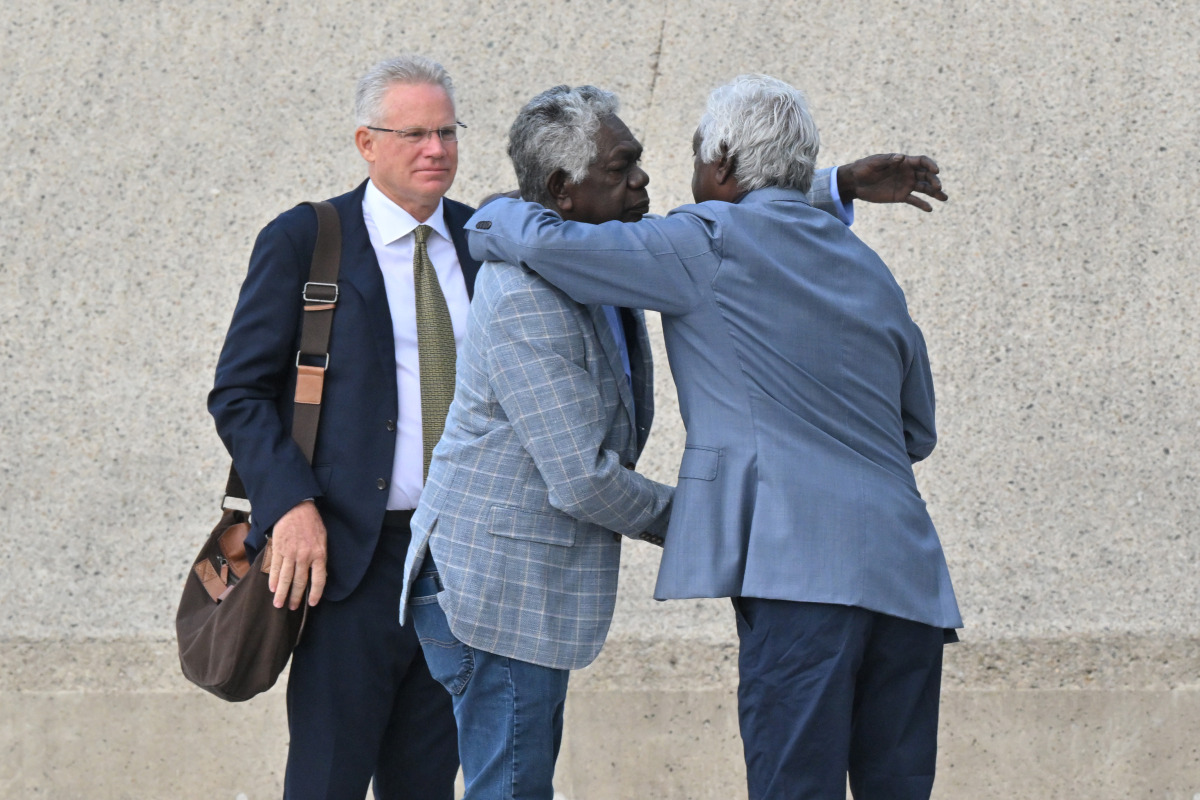
Djawa Yunupingu, a senior member of the Gumatj clan, told the ABC outside court that "justice has been served in this country for my people and the people of North East Arnhem Land".
"I also want to acknowledge my late brother … who was the one who had the vision. It's for the future of my people and our children and their children."
In 2019, Dr Yunupingu lodged a claim on behalf of the Gumatj clan, for native title for land in the Gove Peninsula. He also lodged an application for compensation from the alleged effects on native title of various executive and legislative acts between 1911-1978.
He claimed compensation under section 51 (xxxi) of the constitution, which allows parliament to make laws for the acquisition of property on "just terms" - in effect, the landowner is paid.
The full bench of the Federal Court ruled in favour of De Yunupingu in 2023 but the High Court granted the Commonwealth leave to appeal.
The government had argued it would be exposed to a "vast amount" of compensation if its appeal fails, which was noted by the significant interest in the case from parties across the country.
"The Commonwealth would be liable to pay compensation [to Native Title holders] with interest ... possibly over 100 years or more," commonwealth solicitor-general Stephen Donaghue KC told the court at the beginning of the appeal.
The Commonwealth argued the "just terms" clause within section 51(xxxi) of the Constitution doesn't apply to the territories, however, this was rejected.
"The time has come for it to be finally and authoritatively declared that the power conferred on the Commonwealth Parliament by s 122 of the Constitution to make laws for the government of a territory does not extend to making a law with respect to an acquisition of property otherwise than on just terms within the meaning of s 51(xxxi) of the Constitution," the court said.
The Commonwealth also argued Native Title rights could be overruled by an exercise of the Crown's sovereignty, however, this was also rejected by the court.
"In the present case, to adopt the conditional common law rule of recognition of Native Title rights and interests would destroy that equality and perpetuate its own form of injustice."



