




Traditional Owners are coming together in Canberra on Thursday to call for urgent action from the federal government on a Country and community safety-threatening 'weed' - buffel grass.
A delegation of Traditional Owners are calling on the government to list the plant as a standalone Key Threatening Process under federal law, take active steps for an action plan and recognise it as a Weed of National Significance.
"The risk posed by buffel to remote Aboriginal communities is massive, particularly the fire risk, lives and infrastructure," Eastern Arrernte Traditional Owner Camille Dobson said.
A joint statement from the Arid Lands Environment Centre (ALEC) and the Invasive Species Council warned buffel grass continues to "aggressively" spread across much of mainland Australia and songlines and sacred sites, choking waterways leaving behind dust behind what used to be diverse environments.
The delegation is due to meet with crossbench senators on Thursday, including independent David Pocock and the Greens' Sarah Hanson-Young.
They will also meet with the office of Environment Minister Murray Watt.
South Australia's Department of Primary Industries and Regions describes the impacts of buffel grass as invading rangeland, eliminating native species and a fire hazard.
The Northern Territory government says it grows rapidly in central Australia, creating environmental damage, increasing fire risks and damage on Aboriginal culture.
It is a declared weed in both jurisdictions.
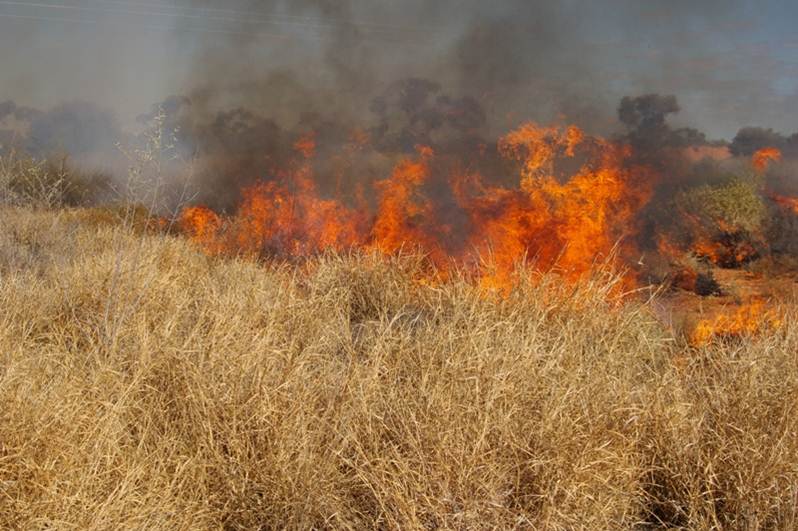
Once deliberately planted in the 1950s as cattle feed, buffel grass is "one of the worst invaders of arid ecosystems worldwide" and "can out-compete native vegetation, spread rapidly after rainfall, and increase the frequency and intensity of fires", ALEC said in a statement.
"It's considered a 'transformer weed' due to its ability to change habitats and is greatly impacting Aboriginal culture and connection to Country."
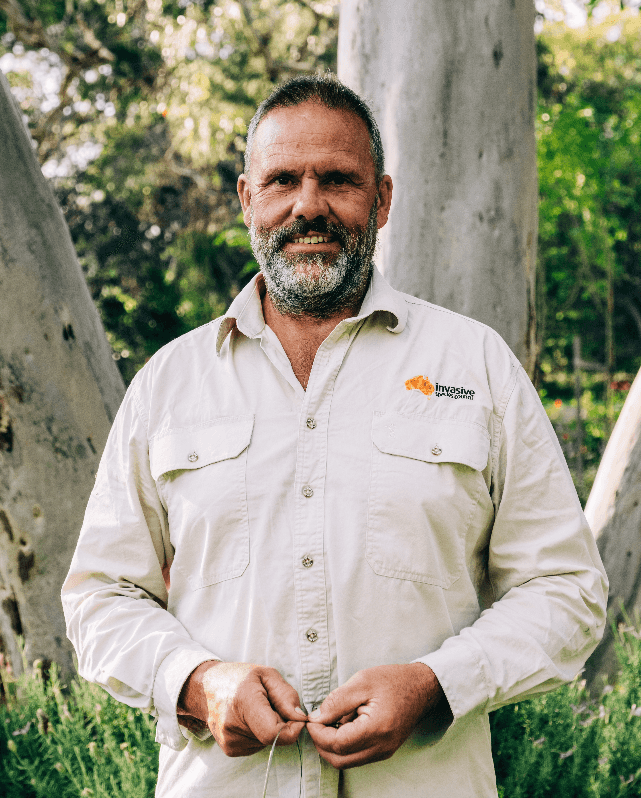
Invasive Species Council Indigenous Ambassador Richard Swain said the flora species "is changing the nature of our deserts".
"It's turning open Country into dense fuel, and when it burns, it burns hotter, faster and more often than these landscapes have ever known. Those fires don't just pass through - they destroy ancient desert oaks and mulga that have stood on this Country for centuries," said.
Mr Swain, and the Council, said it was disappointing to see an apparent delay to a Threatening Process Assessment of buffel grass from the federal government when there is a dire need for a Weed of National Significance (WOMS) declaration.
National Indigenous Times understands more time to allow for data collection, compiling evidence and public consultations was requested by the Threatened Species Scientific Committee, with their assessment now due April 30 2027, to be handed to Minister Watt.
The Department of Climate Change, Energy, the Environment and Water is also participating in a separate National Established Weed Priorities (NEWP) process considered buffel grass.
Mr Swain added: "For Aboriginal people, this is not just about a weed. It's about what happens to Country when the balance is broken. The plants, the animals, the old trees - they all hold stories and knowledge. When buffel takes over and fires intensify, we risk losing more than just species; we also risk losing parts of our living culture."
"This is not just a Northern Territory problem. Buffel grass has spread across Central Australia and continues pushing into Western Australia, South Australia, New South Wales and Queensland," he said.
"Around the world, buffel grass is recognised as one of the most damaging invasive plants in drylands. Yet Australia still doesn't have a coordinated national response. Caring for Country requires leadership, and this is a moment for the nation to step up."
Pushback and concerns have been raised by graziers when it comes to the buffel grass debate.
Cattle Australia chair Garry Edwards argued for the positive impacts buffel grass has had, and how it's critical for the industry, telling the ABC: "There's literally billions upon billions of economic value and landholding that's attached to the fact that buffel grass exists."
A federal government spokesperson told National Indigenous Times buffel grass management is a government priority.
"Our Threatened Species Action Plan 2022-2032 identifies priority places and species that will benefit from management of buffel grass. Implementation of the Action Plan is being supported by targeted investments under Saving Native Species program and the Natural Heritage Trust," the spokesperson said.
"On-ground work to address invasive species like buffel grass is undertaken as part of larger integrated projects that seek to improve habitat condition and support threatened species recovery and conservation."
The spokesperson also pointed to $4 million out of the Saving Native Species Program provided to the NT Government for focus on condition improvements to MacDonnell Ranges priority place "through feral animal control, strategic fire management, and targeted buffel grass management", as well as buffel grass priority weed target management plans in Uluru-Kata Tjuta National Park, near Uluru.
Within the calls for action from Traditional Owners is a push for a national buffel coordinator, development of an action plan with research and on-ground restorative, protective and fire risk reduction controls.
Camille Dobson said remote communities rely on regional councils "to keep communities safe but often the workers are not trained in firefighting, nor do they have access to all the equipment needed to keep communities safe".
"The Aboriginal rangers are often put up as the solution to buffel management, but with tenuous funding and often threatened by funding cuts, the community ranger programs are overstretched and under-resourced; they alone can't be responsible for a problem they did not create," she said.
'We all need to work together to find a solution to this problem and getting buffel declared a Weed of National Significance is a step in the right direction.'



