




One of Australia's largest Indigenous legal organisations has welcomed the Northern Territory Police's first-ever Anti-Racism Strategy, describing it as a crucial first step toward rebuilding trust between police and Aboriginal communities.
However, allegations of systemic racism in the NT Police force have once again been rejected by the Northern Territory's Chief Minister, who argued on Monday that much of the basis of the claims is historical.
The strategy, released last week, is led by Arrernte woman Leanne Liddle, director of the NT Police Cultural Reform Command. It follows widespread revelations of racism that emerged during the inquest into the 2019 death of 19-year-old Warlpiri-Luritja man Kumanjayi Walker.
Speaking about the strategy last week, Ms Liddle said it is about accepting "racism has informed the structures that have shaped policing for generations".
"This strategy is about confronting that reality, with honesty and courage. And the time for courageous conversations is now," she added.
The North Australian Aboriginal Justice Agency (NAAJA) welcomed the announcement, but argued it "must mark the beginning of meaningful and sustained change".
Chair Theresa Roe said an increase in transparency and accountability in the police is good for everyone in the Territory.
"It is especially important for Aboriginal Territorians, because of the long-standing mistrust between police and many Aboriginal communities and families," she said.
"This is the first step to repair the loss of trust that many Aboriginal people feel towards the NT Police. We extend our thanks to those who have made this strategy a reality and acknowledge the hard work and dedication of Leanne Liddle in this process."
The first stage of the strategy, to be rolled out by 2027, aims to tackle racism "in all its forms" and focuses on four key areas: 'serve and protect', 'eliminate racism', 'represent and reflect our Territory', and 'be accountable'.
NAAJA also praised the strategy's commitment to strengthening partnerships with Aboriginal communities. It highlighted successful community-led initiatives such as the ARDS Napungga'wuy mediation service and Groote Eylandt Peacemakers, which work to prevent conflict and reduce crime using culturally informed approaches.
Ms Roe argued while the strategy is a vital step, its success depends on proper implementation.
"That will require genuine engagement with Aboriginal communities, proper resourcing, transparent implementation, through a practical and staged approach," she said.
Aboriginal Territorians have long shared their experiences of racism at the hands of the police. The issue gained widespread attention during the inquest into Kumanjayi Walker, when evidence emerged of racist "games" and "awards" being shared in court.
Mr Walker was shot three times by former police officer Zachary Rolfe during a failed arrest in Yuendumu in November 2019. Mr Rolfe was acquitted of murder and manslaughter in a Supreme Court trial in 2022.
During the inquest into Walker's death, Coroner Elisabeth Armitage found that racist attitudes were entrenched within parts of the NT Police, stating: "Mr Rolfe was racist, and he worked in and benefited from an organisation with the hallmarks of institutional racism."
She added: "This was not a case of one bad apple... racist behaviour or language, although not uniform, was normalised within the Alice Springs police station during Mr Rolfe's time there."
The CLP Government has rejected claims of systemic racism in the NT Police, with Chief Minister and Police Minister Lia Finocchiaro repeatedly dismissing such assertions, telling reporters last month she did not accept "the premise" of a question about systemic racism in the force.
Speaking on Mix 104.9 on Monday, she welcomed the strategy, saying it is important "our institutions have these frameworks to be better", but reiterated her rejection of systemic racism claims.
"I've been very, very clear about that right from day one," she said.
"I just don't believe in dragging everyone down...obviously, we've had well-ventilated and documented issues in the past, but these are largely historical. Now, no organisation is perfect, but the police force has been on a journey of being better for a long time, and I'm very proud to be Police Minister."
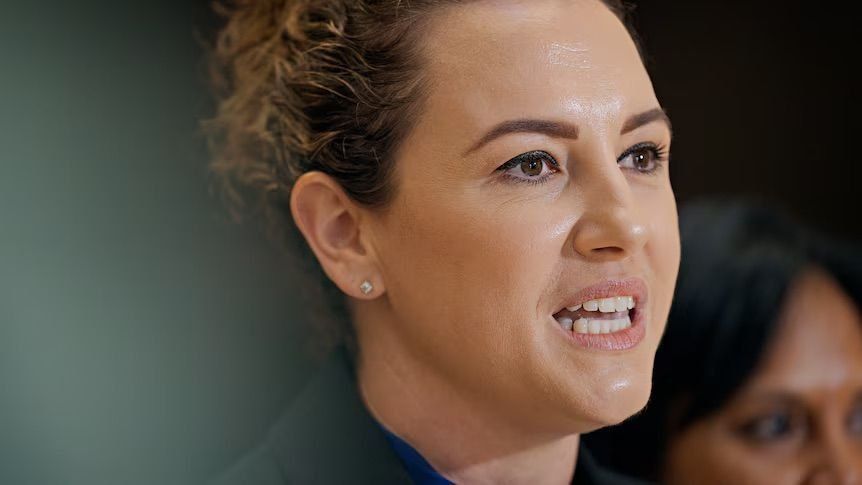
This position contrasts with Ms Liddle's assessment, who last week stressed that racism remains a problem in the NT Police.
"Racism exists in our police force, and we need to fix it," she said, noting that systemic racism is often harder to identify than overt racism because it is embedded in institutional practices.
The former police officer highlighted witnessing "lots of cases of racial profiling" involving Aboriginal people by serving officers, noting, "A lot of people have difficulty in understanding what systemic racism looks like and how it sits in agencies, particularly agencies like the police force."
NT Opposition Leader Selena Uibo has called on Ms Finocchiaro to take responsibility for the strategy and ensure it is adequately resourced.
"To date the CLP government has largely washed its hands of the challenges police are facing and shied away from the hard conversations that real change requires," she said in a statement.



