



At this year's Garma Festival, one of the largest gatherings in Australia dedicated to Indigenous culture, the first traditional ceremony was held since the passing of Dr Galarrwuy Yunupingu,
The event took place in north-east Arnhem Land, where a sacred Yolngu ceremony, known as a bunggul, was performed as hundreds gathered along the periphery of the ceremonial grounds.
Dancers from various clan groups emerged adorned in colourful garments and intricate body designs.
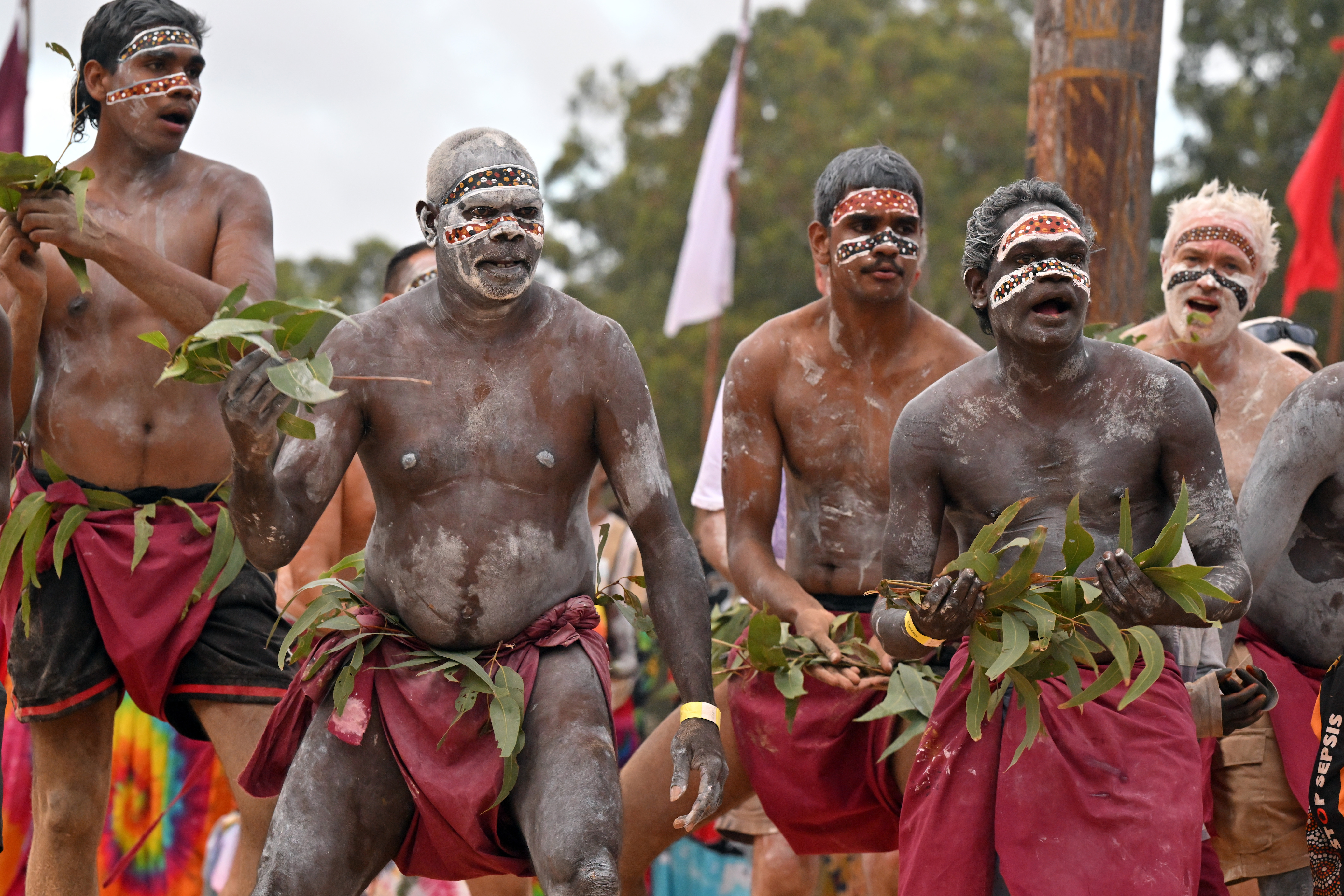
This cultural ritual has been a part of Yolngu clan traditions for thousands of years.
Among the Gumatj dancers was the daughter of the late land rights advocate Yunupiŋu, who passed away in April.
Yunupiŋu was a courageous leader who dedicated himself to the rights of Aboriginal people in Australia.
He played a vital role in influential movements including the Yirrakala bark petition and Barunga statement, leaving behind a renowned legacy.
Deeply rooted in Yolngu heritage, Maryanne Yunupiŋu had been engaging in bunggul ceremony since her early years, part of her deep connection to culture.
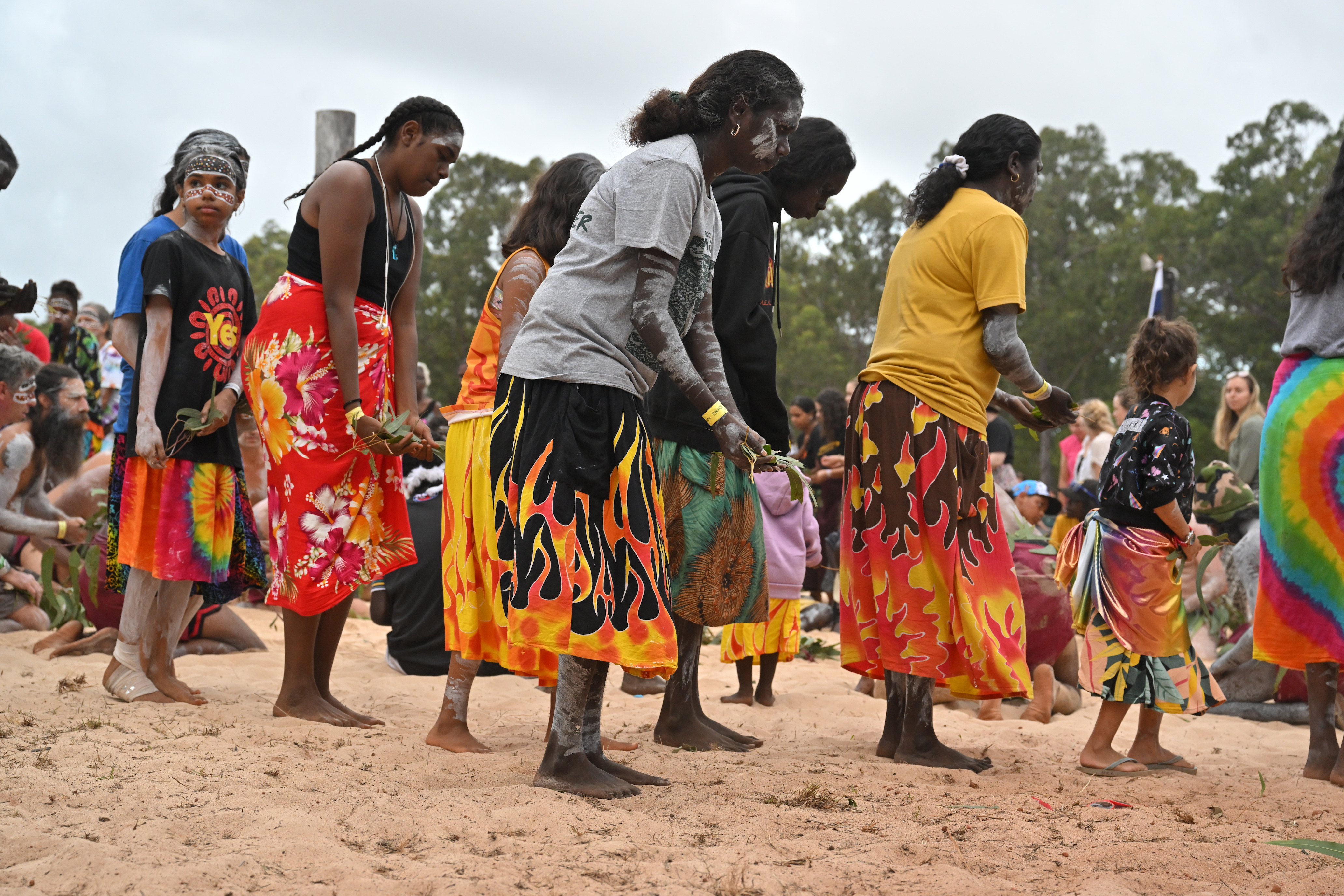
"My mum was my guide through bunggul," she told the ABC.
"We need it for our future generations. We need it to let people know our culture is still alive … as a Gumatj girl, I don't want to lose our culture."
Ms Yunupingu said her bunggul performance was dedicated to her father.
"He used to tell me every day 'get up, Maryanne, put your skirt on, put paint on and go show them our tradition, our bunggul … and stand tall," she told the ABC.
"It was really emotional for me today because my dad wasn't there singing."
Among Ms Yunupiŋu's dances was Ganbulapula's narrative, an ancestor in search of honey.
Bees and honey are used as sacred body art, symbolising cultural wisdom bridging the connection between people, land, and sea.
During this year's bunggul, the Gumatj clan performed the Ganbulapula dance while revealing a larrakitj – an adorned pole now prominently positioned at the heart of the bunggul site, paying homage to Yunupiŋu, visible in the image below.
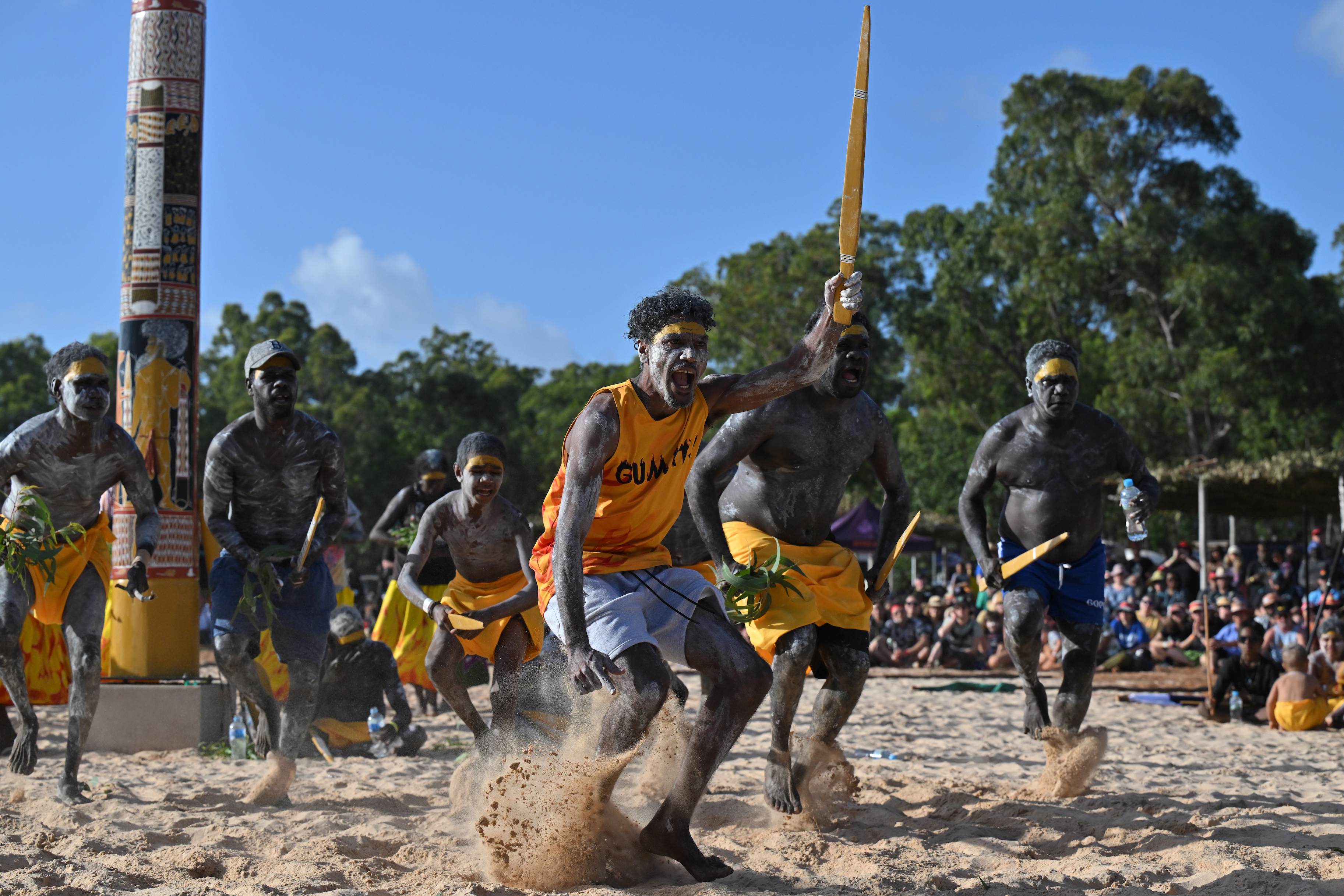
Yet, another significant process was unfolding as the bunggul grounds serve as a learning ground, nurturing the next cohort of leaders.
Cedric Marika, a Gumatj man, has devoted the last 28 years to engaging in bunggul ceremonies and has been designated as a ceremonial leader by his Elders.
"I was going through a lot of obstacles and the way I became a leader of the Gumatj tribe, is I've earned the respect of the Elders, it wasn't given," he told the ABC.
"Dancing is my number one priority … it's (how) I'm teaching my first son to be a great leader in the future."
Assuming the responsibility of instructing the upcoming generation in the intricacies of bunggul preparation and performance is a duty he takes seriously.
This past Friday evening, he gained the responsibility of his clan's legacy, leading the initial bunggul without the presence of his uncle Yunupiŋu.
"I've learned (to dance) from my uncle, Yunupiŋu," he said to the ABC after his performance.
"Every time I do the opening ceremonies, he is always there staring at me and I look right into his eyes and that's what gives me more power."
"Today, I was looking around and he wasn't there … it's going to be hard for me.
"We come here, laugh and make friends but inside us we're still grieving. We only show the outside part of us."



