




When entering Dardi Munwurro in the northern Melbourne suburb of Preston, one feeling immediately resonates: Community.
Everyone who enters the area is given a handshake, a firm introduction, and a smile. More importantly, everybody who arrives is made to feel welcome.
To feel like they belong.
"I think having a place for community to come is really important," Dardi Munwurro chief executive Alan Thorpe says.
The Gunai man established Dardi Munwurro (Strong Spirit), a specialist Aboriginal family violence service with a vision to build stronger families and safer communities in 2000.
On a freezing Friday morning, he told National Indigenous Times the organisation has "grown off the great work" from other community members and leaders who had inspired him.
"As a kid growing up, just seeing the importance of community and dealing with issues and the complexity of it," Mr Thorpe said.
"I've just seen so much hard work."
Since its establishment, Dardi Munwurro has been helping to support men's health and their sense of belonging through a variety of programs, with the end goal to make the entire community safer.
Mr Thorpe, Victoria's 2023 NAIDOC Male Elder of the Year, continually highlighted the role of others, none more so than his father, Graham 'Bootsie' Thorpe.
"My dad…he's been doing such great community work," Mr Thorpe said of his father, who was inducted into the Victorian Aboriginal Honour Roll in 2018 for his tireless work in the community, especially centred around drug and alcohol, and mental health.
"Since I've been growing up, I've seen him so committed to the work [and] the community… [In his work] I've seen him love community unconditionally…and the values he holds."
The programs look at an issue that's continued presence in the community is an epidemic: Men who use violence. This takes on many forms but focuses on intergenerational trauma and the systemic issues that impact First Nations communities.
Mr Thorpe said when he looks at anger from a holistic approach, it is about addressing the anger many in the community have carried for generations – being accountable whilst also addressing what men carry into the world from their past.
"It's really finding a safe space for men to really look at some of that suppressed stuff they carry," he said.
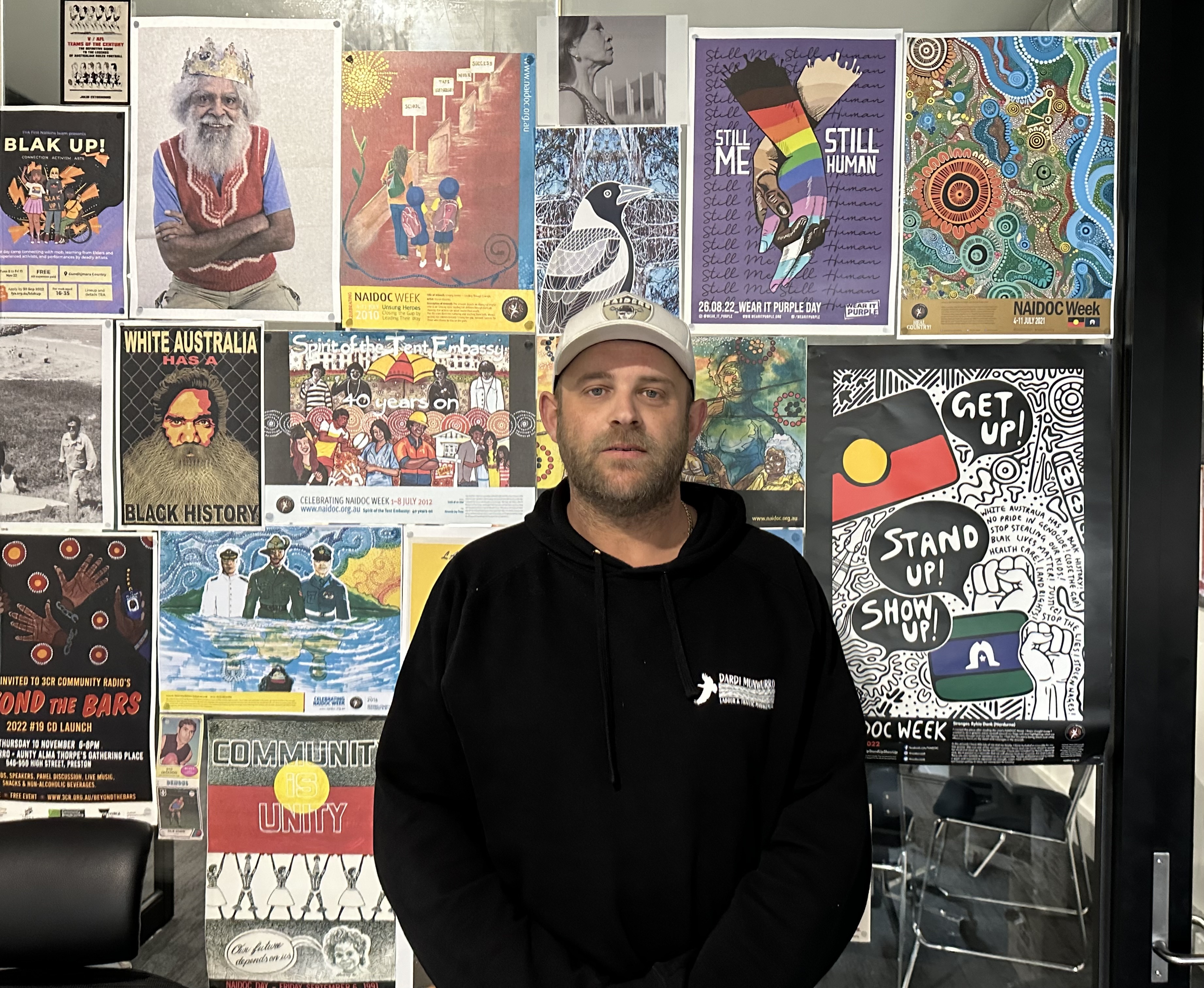
One of those men is Gunditjmara and Ngarrindjeri man Michael Douglas, who having participated in one of the programs at Dardi, is now working there himself.
In the process of "getting clean" after addiction during a transition in his life, Michael said he met "Uncle Al" at a men's group in Epping.
"I had a lot of family violence stuff going on as well," Mr Douglas told National Indigenous Times.
His initial recovery spanned close to 12-months on the Dardi program, but when he relapsed, Mr Douglas said he became involved in "crime, deeper family violence and more addiction".
"Everything was spiralling out of control for me," he said.
But as soon as he called Dardi Munwurro on the brother-to-brother crisis line, he said he was taken to Preston by Mr Thorpe and put him in the 16-week residential program.
"The main thing I felt coming into it was the love and support," Mr Douglas said.
"It wasn't from just one or two staff members; it was from everyone around Dardi."
Looking at helping men, Mr Thorpe said he knows there is no one-size-fits-all approach, and that at the end of the day, every man must want to change for the program to be successful.
Dardi Munwurro is just giving them the best opportunity to do that.
@natindigtimes Gunai man Alan Thorpe established Dardi Munwurro (Strong Spirit), a specialist Aboriginal family violence service to build stronger families and safer communities. #indigenousaustralia #aboriginalaustralia #firstnations ♬ Serenity - Hariseno
"There's the healing part and there's the education part," Mr Thorpe says.
"So, it's about the educational part because we can't assume that everyone knows how to behave and how to deal with things.
"We're really lucky because there's a lot of transformational work here, where men do come from being in the system for years; incarcerated and only know one way…and they come to Dardi and it's about life changing."
Mr Thorpe showed rooms that include shelter for women escaping domestic violence, a play area for children, and a communal room that will allow members of the community to work on hot desks.
Anecdotally, when National Indigenous Times mentioned they were visiting Dardi, everyone spoke highly of Alan Thorpe, mentioning his tireless service to the community.
The day before the visit, the former AFL footballer was appointed to a six-person First Nations Advisory Committee for the Hawthorn Football Club.
Looking towards the future, Mr Thorpe said spaces need intentions, and for Dardi, it is about seeing men eventually not having to come through the various programs.
"It's connecting with them when they're young men, teaching them around relationships and teaching them so they're not coming in with generational trauma…actually living life free," he said.
"They can learn from Elders and learn from community; learn their identity and learn their culture.
"The prevention work for me is really important, because if we can invest in that space, then we have less people in the family violence space, less people incarcerated."



