




Attending the 7th annual North Australia Savanna Fire Forum, hosted by the Indigenous Carbon Industry Network on my beautiful Larrakia Country, was a deeply moving experience.
With over 500 attendees, including Traditional Owners, rangers, scientists, policymakers, and land managers, the forum was a powerful gathering focused on culture, resilience, and collective responsibility.
The event began with a Larrakia smoking ceremony led by Trent Lee, setting a tone of respect and connection. I was honoured to deliver the Welcome to Country, emphasising the importance of protecting our lands and ensuring the wisdom of our Elders guides the next generation.
Elders played a crucial role throughout the forum, shaping discussions on fire management, land protection, and economic development. Dr. Otto Bulmaniya Campion of Arafura Swamp Rangers Aboriginal Corporation reminded us that fire management is inseparable from kinship and cultural connection—without this, knowledge is at risk of being lost.
The passion and commitment to Indigenous-led fire management were evident. Stories of triumph over wildfires, knowledge passed from Elders to rangers, and the economic opportunities emerging from carbon markets underscored that Indigenous knowledge is leading climate resilience efforts. Hearing about the 10 million carbon credits generated through Savanna Fire Management (SFM) projects was inspiring. These initiatives are not just about reducing emissions but ensuring economic empowerment for Indigenous communities and reinvesting in ranger programs.
Yet, challenges remain. Data from the North Australia Fire Information (NAFI) system highlighted successes in fire reduction, but sustained funding is a pressing issue. The need for long-term government support was a common theme, with many calling for stronger commitments to ensure fire mapping programs continue.
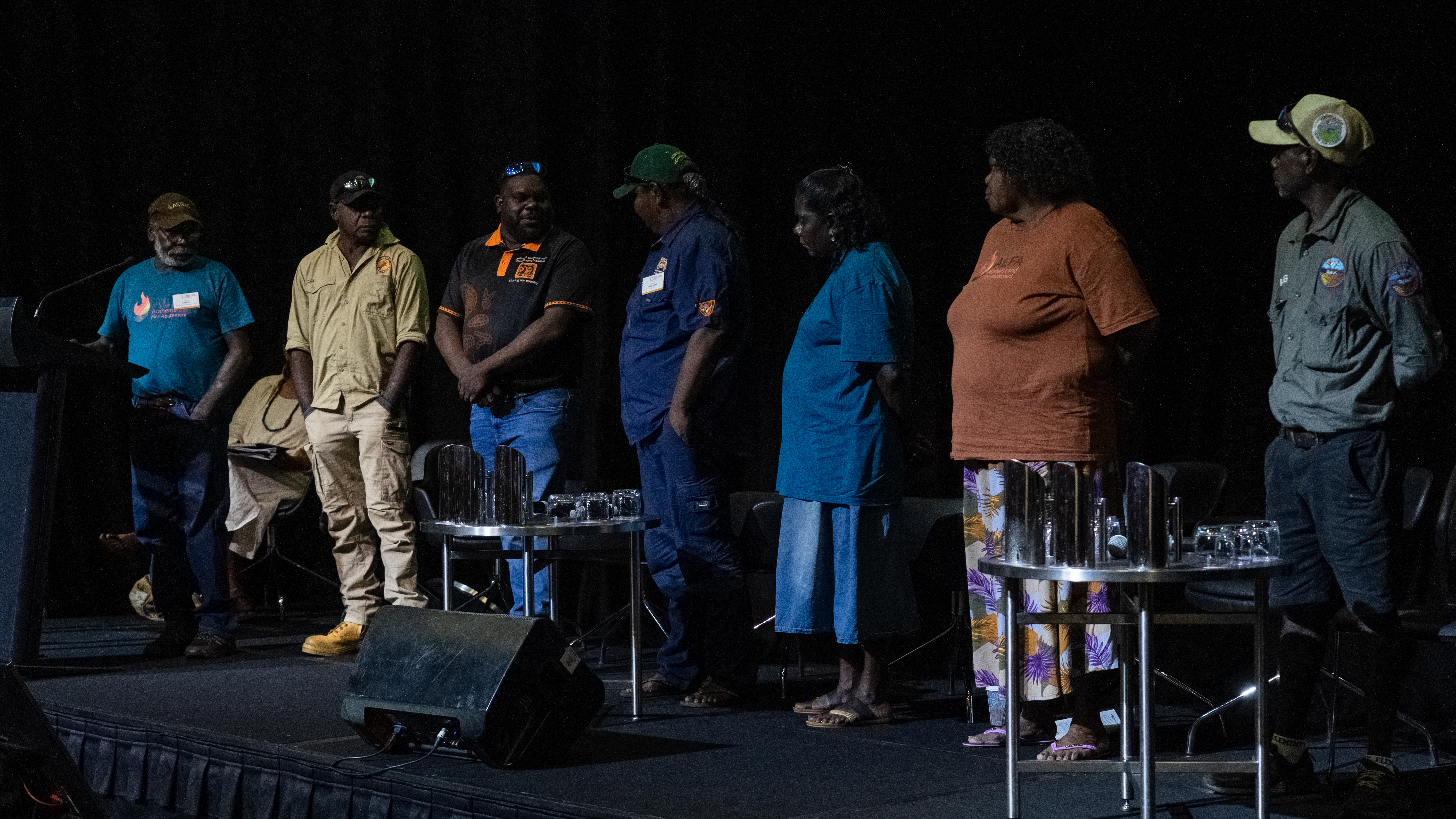
Listening to speakers like Cissy Gore-Birch OAM, it was clear that fire management is not just about protecting landscapes—it's about sovereignty and self-determination. As she put it: "We must ensure that Traditional Owners lead this work and that economic benefits remain within our communities."
Key challenges raised by attendees included: limited funding for ranger training and fire management programs; lack of formal career pathways for young rangers; barriers faced by women in fire management leadership; and the need for stronger partnerships with government and corporate stakeholders.
One of the most powerful moments was hearing Elders stress the urgency of passing down knowledge.
Dr Dean Yibarbuk, ICIN Co-Chair, remarked: "If we do not pass this knowledge down, we risk losing not just the land, but our culture and identity."
For many young rangers, fire management is not just a job—it is a calling, a way to reconnect with Country and family.
Programs such as the Youth Yarning Session, facilitated by Tikesa Hale and myself, provided young rangers a platform to share their journeys, challenges, and hopes. Their voices reinforced the importance of creating pathways for Indigenous youth to lead in land management and environmental stewardship.
Key takeaways from the Forum included: on-the-job training and mentoring for young rangers; knowledge-sharing between ranger groups; technical training in drone technology and digital mapping; expanding the Indigenous Carbon Industry Network to shape policy and economic opportunities.
As discussions turned to the future, a sense of urgency and hope filled the room. The carbon industry is growing rapidly, offering opportunities for Indigenous leadership. However, it must be done in a way that respects Traditional Knowledge and ensures economic benefits remain within Indigenous communities.
A Policy Updates panel reinforced these priorities, calling for increased transparency in carbon markets, stronger Indigenous participation, and ensuring Traditional Knowledge is central to fire management strategies. Yet, a critical concern remains: more investment is needed to truly empower Indigenous groups to lead these efforts on their own terms.
Despite the successes of Indigenous-led carbon markets, it was alarming to hear that the Indigenous Carbon Industry Network, a 100 per cent Aboriginal-owned charity, does not receive any long-term government or corporate funding. The assumption that the network is well-funded due to its impact is far from reality. Without ongoing investment, its ability to support Indigenous fire management programs, workforce development, and policy advocacy remains uncertain.
As the forum concluded, I felt a deep sense of responsibility—to listen, to learn, and to support the leadership of Indigenous fire managers working tirelessly to protect Country. As Dr Yibarbuk said: "Before, our Elders were sad because Country was empty. Now, people are back, working on the land, keeping it strong. That is success."
With continued collaboration, strong policy support, and investment in youth leadership, the future of Indigenous-led fire management in Northern Australia is not just promising—it is essential.



