




The 2024 Telstra National Aboriginal and Torres Strait Islander Art Award Winners were announced Friday evening.
The Museum and Art Gallery of the Northern Territory was delighted to announce the winners.
The 2024 NATSIAA panel of judges, Putuparri Tom Lawford, Keith Munro and Katina Davidson, said: "Congratulations to the 2024 Telstra NATSIAA finalists. They have all collectively continued to honour the legacy of culture and artistic expression from our unique places and spaces. We were entrusted with a task – to deeply understand each work, the artist and their intentions and then decide on a winner. There were outstanding works across all categories, making the role of the judge very difficult."
"We were greatly impressed by the calibre of work presented by all entrants and were excited to learn of artists who we weren't familiar with," the judges said in a joint statement.
"The diversity in artistic materials and the artist's interpretation of their stories moved and sometimes surprised us. Several artworks discussed timely themes which have recently received national attention- and the judges commend each artist for using their practice to give attention to important stories at this prestigious event. The diversity of cultural, social, political- and ceremonial stories across all media should be celebrated."
Noli Rictor, a Pitjantjatjara man and artist from Tjuntjuntjara in Western Australia, is the winner of the prestigious 2024 Telstra Art Award valued at $100,000 for his synthetic polymer paint on linen piece titled Kamanti.
The painting depicts the significant site of Kamanti, in the north of traditional Spinifex Lands. This site is home to the Wati Kutjara Tjukurpa (Two Men Creation Line), an epic narrative that follows the journey of a father and son water serpent across the Spinifex Lands on ceremonial business.
Noli's painting illustrates the Country he was born into, reflecting the deep spiritual and cultural heritage that has shaped his life. The arid but sacred environment of Kamanti, the birthplace of the Creation Beings, is brought to life through Noli's masterful use of colour and form, capturing the enduring power and presence of the ancestral figures who sculpted the landscape as they moved through it.
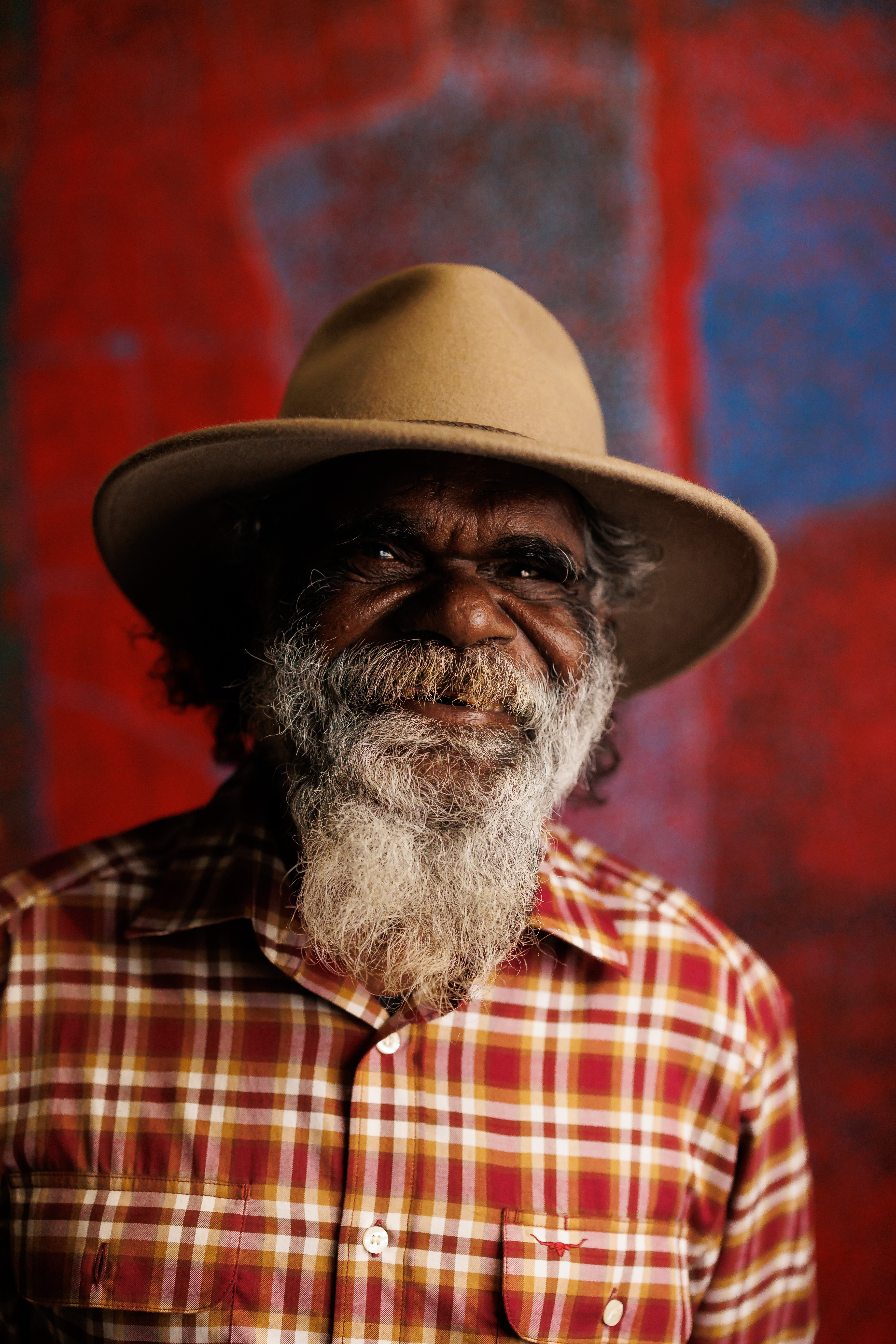
Adam Worrall, Director, Museum and Art Galley of the Northern Territory, said: "We are thrilled to celebrate Noli Rictor as the recipient of the Telstra Award."
"Noli's work is a testament to his exceptional talent and deep connection to the Spinifex Lands. His depiction of the Wati Kutjara Tjukurpa at Kamanti offers a powerful glimpse into his heritage, beautifully illustrating the Ancestral narratives that shape his Country and community," he said.
"I would like to extend my congratulations to the other category winners and to all 72 finalists who entered their works and shared their stories."
In 2024, the Awards proudly highlight the significant participation of female artists, with 42 of this year's artworks created by women. Additionally, NATSIAA welcomed the surge of emerging artists, with 21 featured in this year's Awards.
The Telstra General Painting Award went to Lydia Balbal, a Mangala Traditional Owner based in Bidyadanga/Broome, WA, for Keeping up with the Balbals, a synthetic polymer paint on enamel-painted steel car bonnet depicting her homelands, a conduit to Country and to the memory of her family.
Keeping up with the Balbals is a subversive and cheeky play on words. It reveals the distances that Aboriginal people need to travel in today's world. Lydia Balbal always goes her own way, but her artworks reveal her as a sentimentalist, a memory keeper and a dedicated mother with a wild sense of humour.
Her Country is near Punmu in the Great Sandy Desert, WA. Her people's existence was threatened by severe drought so they had little choice but to leave their traditional Country. Her family were some of the last to walk out to the coastal town of Bidyadanga (then La Grange Mission) located two hours south of Broome in the early 1970s. Lydia first began painting in 2007.
Highly commended in this category were Bugai Whyoulter's Kartarru (Blue Hills Station, Canning Stock Route Well 24) and Nancy Long Nungarrayi and Rene Long Nungarrai's Pereltye.
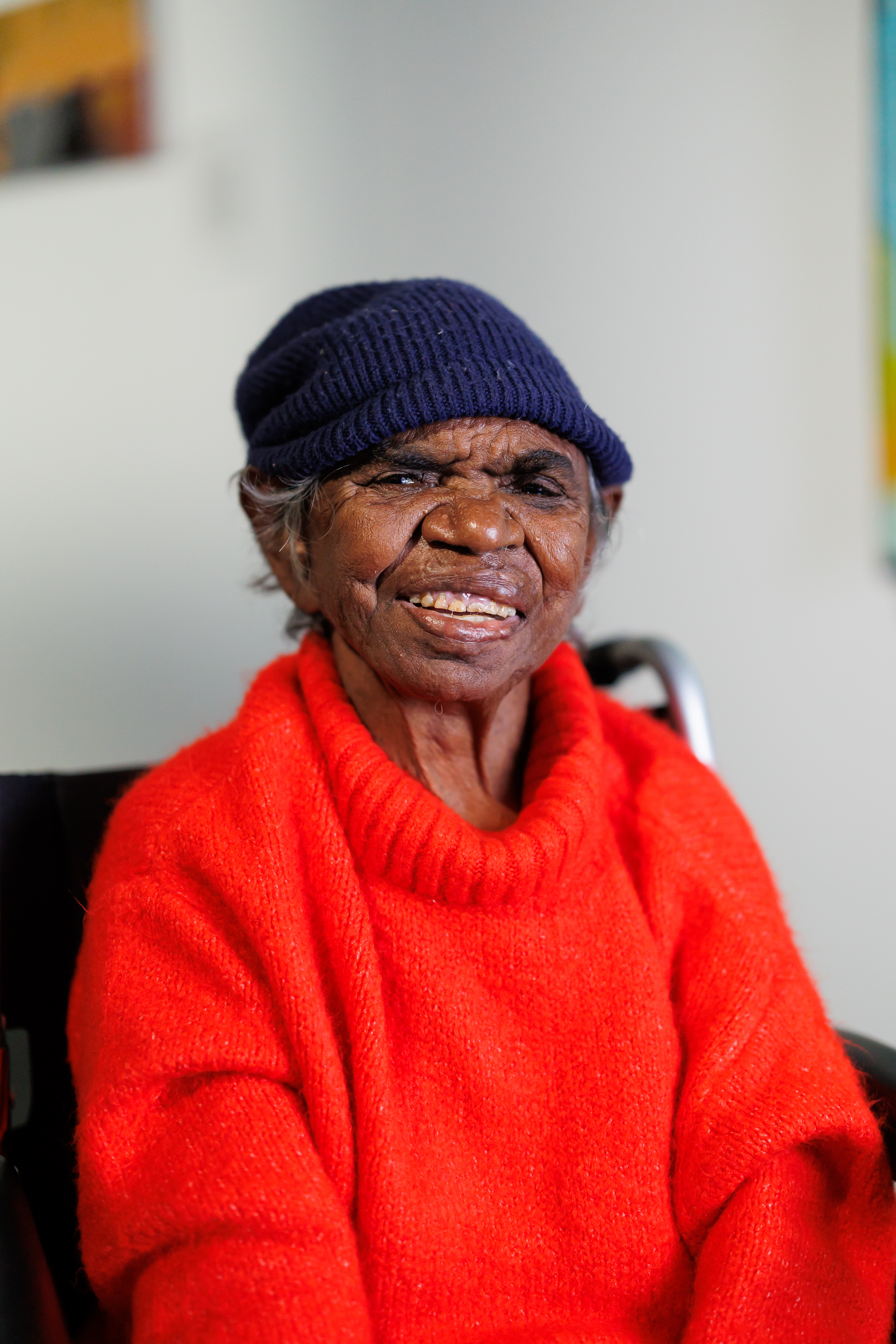
The Telstra Bark Painting Award was won by Wurrandan Marawili, a Yolŋu Matha Traditional Owner who lives in Yirrkala, NT, for Rumbal, the body/the truth, an earth pigment work on stringybark.
Rumbal is the Yolŋu word for body but also means 'true'. This design is for a person affiliated to the Maḏarrpa clan of the Yirritja moiety. It shows the estate known as Baraltja, a mangrove creek where the Lightning Snake Mundukul resides.
Milminyina Dhamarrandji's Dhambadiny – Death Adder 2, highly commended by the judges in this category.
The Telstra Work on Paper Award went to Shannon Brett, Wakka Wakka, Butchulla and Gooreng Gooreng artist, for An Australian Landscape.
"Through this artwork, I want to reframe the way that we receive racism – I want those who do these cruel things to see the pain in themselves, to learn that this is not the way. I want to share with them that my message is one of respect for all First Nations people, to show everyone that we are still here living on our own sovereign lands as the true leaders of this place, as we always will be," Shannon said.
The Wandjuk Marika Memorial 3D Award (Sponsored by Telstra), went to Kuninjku man Obed Namirrkki, who is based in Maningrida, NT, for Kunkurra, an earth pigment and PVA fixative on stringybark work.
Kunkurra, the spiralling wind, is associated with several sites in the Kardbam clan estate. In this painting, Kunkurra also relates specifically to a site called Bilwoyinj, near Mankorlod Outstation. At this site, two of the most important Kuninjku Creation Beings, a father and son known as
na-korrkko, are believed to have hunted and eaten a goanna. They left some of the goanna fat behind at the site, which turned into the rock that still stands there today. The word Bilwoyinj, which is the name of this site, also refers to the fat of the goanna.
The judges said they "were drawn to the resolved presence of Obed Namirrkki's striking and very well-executed sculptural lorrkon (hollow log)".
"Drawing upon a rich family legacy of painters who have excelled in the medium for decades, the artist shows his own hand, honouring and reflecting the everpresent stories of Kuninjku Country. The contrasting bands of pitch black with un-uniformed white ochre dots are remarkable against the very finely and precise raark, painted predominantly in warm ochre reds, yellows and whites with moments of contrasting black. Just as the cultural story associated with this artwork is complex with many layers, the artist has managed to intertwine his own individual approach while honouring his family's painting legacy in this impressive lorrkon."
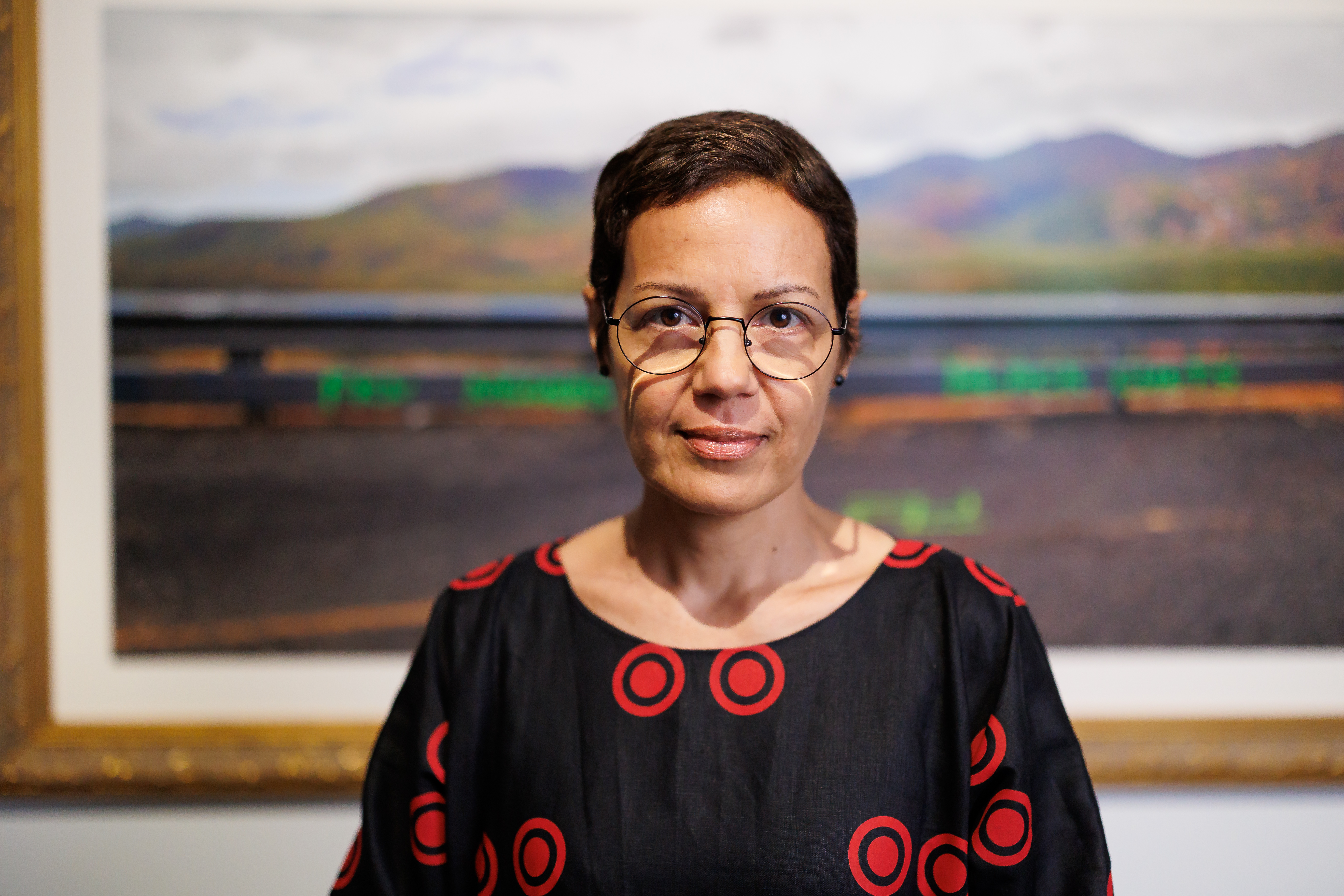
The Telstra Multimedia Award was won by Natalie Davey, a Walmajarri and Bunuba artist who lives in Fitzroy Crossing in WA's Kimberley region, for River report, a single channel video, also including a watercolour and pen on paper artwork.
The 10 minute video documents an extreme flooding event at Fitzroy Crossing.
Many more extreme events are happening, so we must continue recording and telling these stories," she said.
"I recorded my experiences as it was a case of moments you would not believe if not filmed. I was in disbelief as I filmed and did so to double check it was all real. Family has passed down stories reaching back to when a star fell in the desert; however, we did not have any references to guide us through this flood. Our entire community was affected; mine is one story amongst many."
Highly commended in the multimedia category was Dhukumul Wanambi's Gurka'wuy.
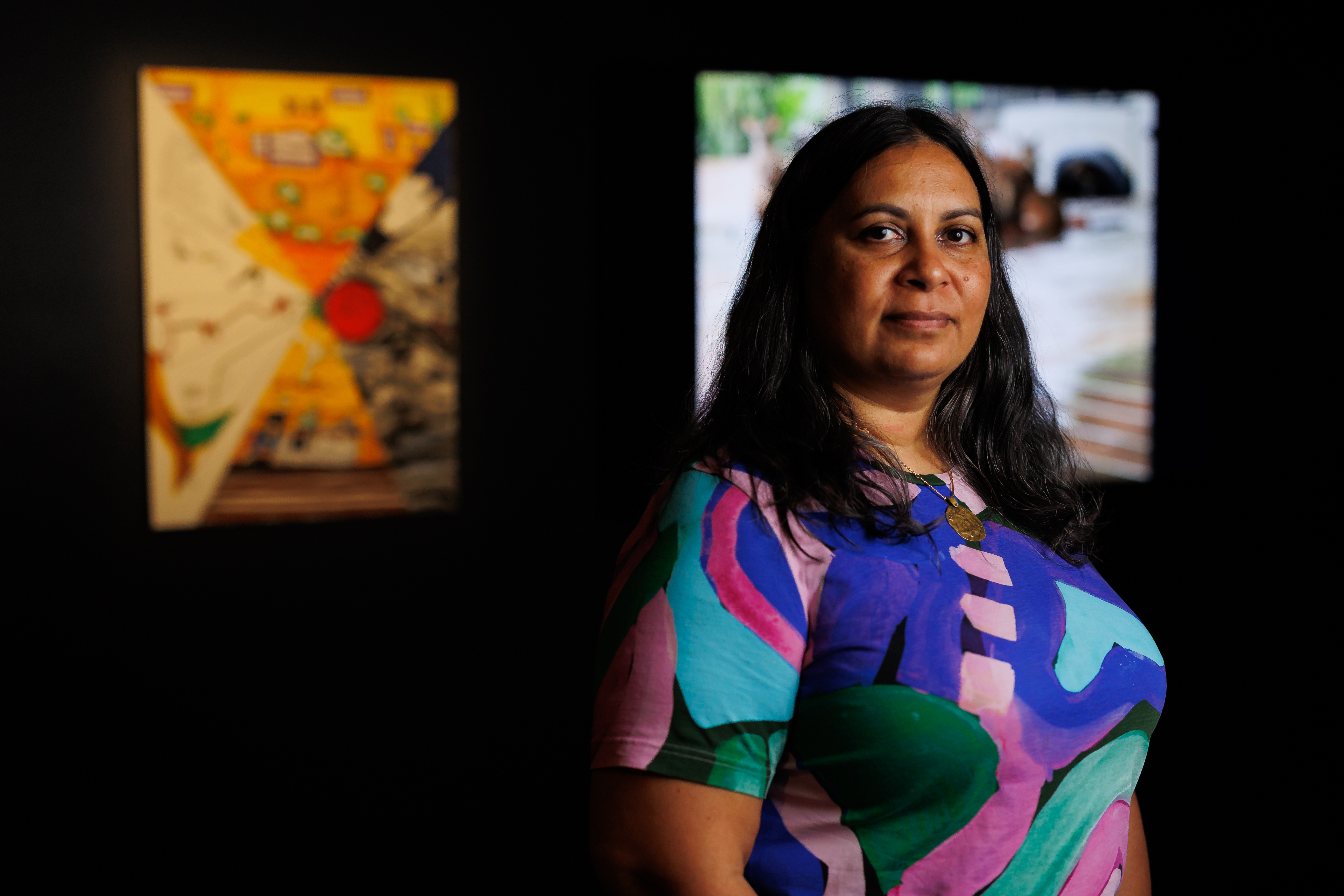
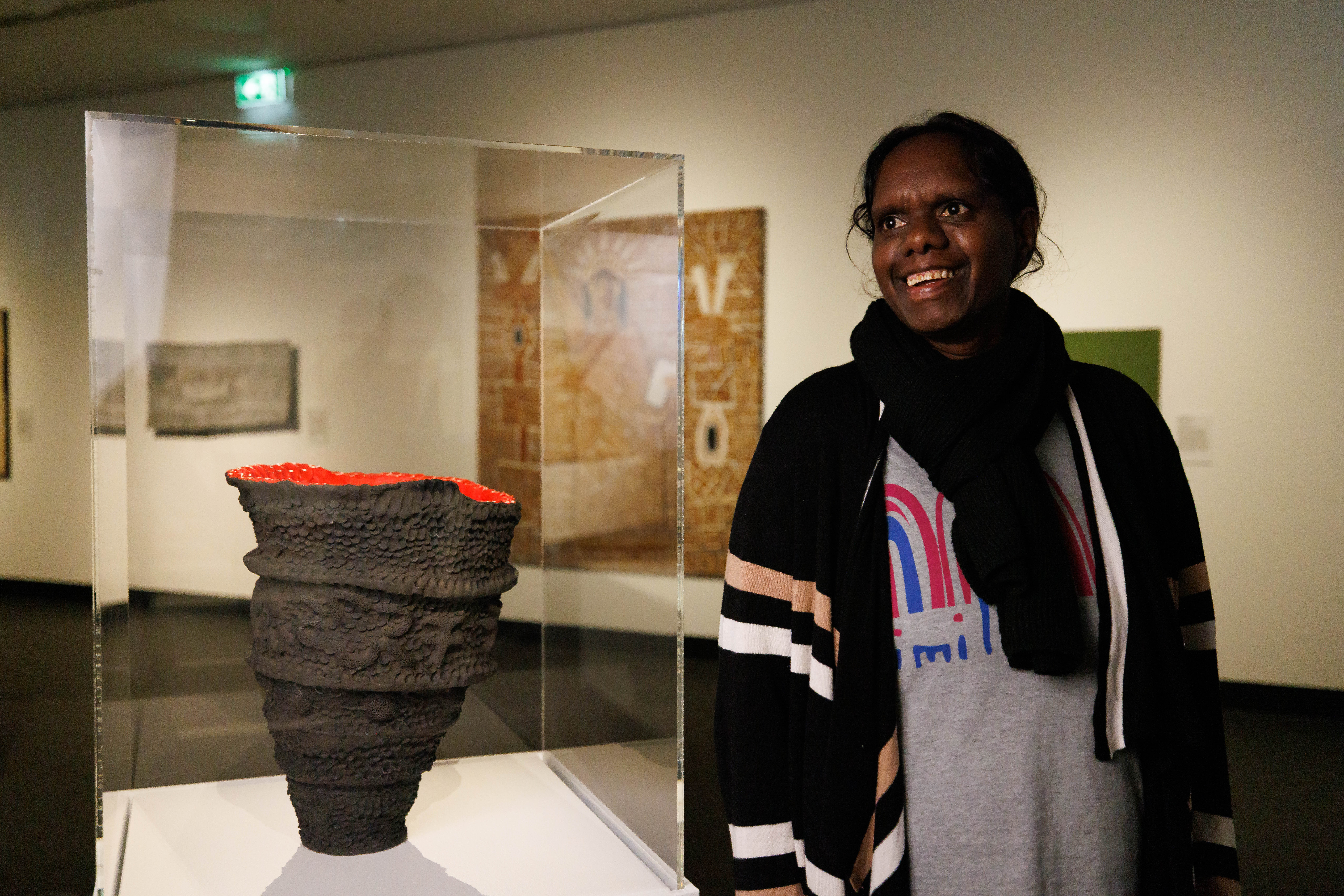
Pitjantjatjara language artist Josina Pumani was honoured with the Telstra Emerging Artist Award.
The Adelaide based artist's Maralinga, a clay and underglaze pot, tells the story of Maralinga, the site of British nuclear tests in the mid-1950s, which covered an area of 3,300 square kilometres across the remote north of South Australia. The effects of Maralinga were severe and have had lasting impacts on the Aṉangu people whose lives, lands and livelihoods were destroyed.
"Maralinga hurt our lands and people and our story needs to be told ... we think about it all the time. Why did this happen to us?" she said.
Nearly 70 years on the damage still informs the lives of Aṉangu people on the APY Lands.
The highly commended emerging artist was Julieanne Gitjpulu Malibirr for Gunga Djama (pandanus work).
Telstra NATSIAA is Australia's longest running and most prestigious art award of its kind, presented on Larrakia Country (Darwin) by the Museum and Art Gallery of the Northern Territory (MAGNT) and Principal Partner, Telstra.
Now in its 41st year, the 2024 Telstra NATSIAA features Aboriginal and Torres Strait Islander artists from across the nation, sharing incredible works reflecting the strength of cultures, responses to current affairs and unerring connections to Country.
This year, 72 finalists from across Australia have been selected from a total of 238 entries.
The National Aboriginal and Torres Strait Islander Art Awards were established by MAGNT in 1984 to recognise and promote appreciation and understanding of the quality and diversity of Aboriginal and Torres Strait Islander art throughout Australia.
The Awards have been a career changer for many of the finalists and winners throughout its 40 years. This year we celebrate a 33-year long partnership with Telstra.



