




Walmajarri man Terry Murray carefully lowers a large cut of beef into a pit dug from the red pindan, as boys from Fitzroy Crossing, a regional town in WA's Kimberley region, watch his every move.
Mr Murray tells the children attending the Kimberley Aboriginal Law and Culture Centre's (KALACC) NAIDOC men's artefact-making program that this was how Walmajarri people traditionally prepared meat in the Great Sandy Desert.
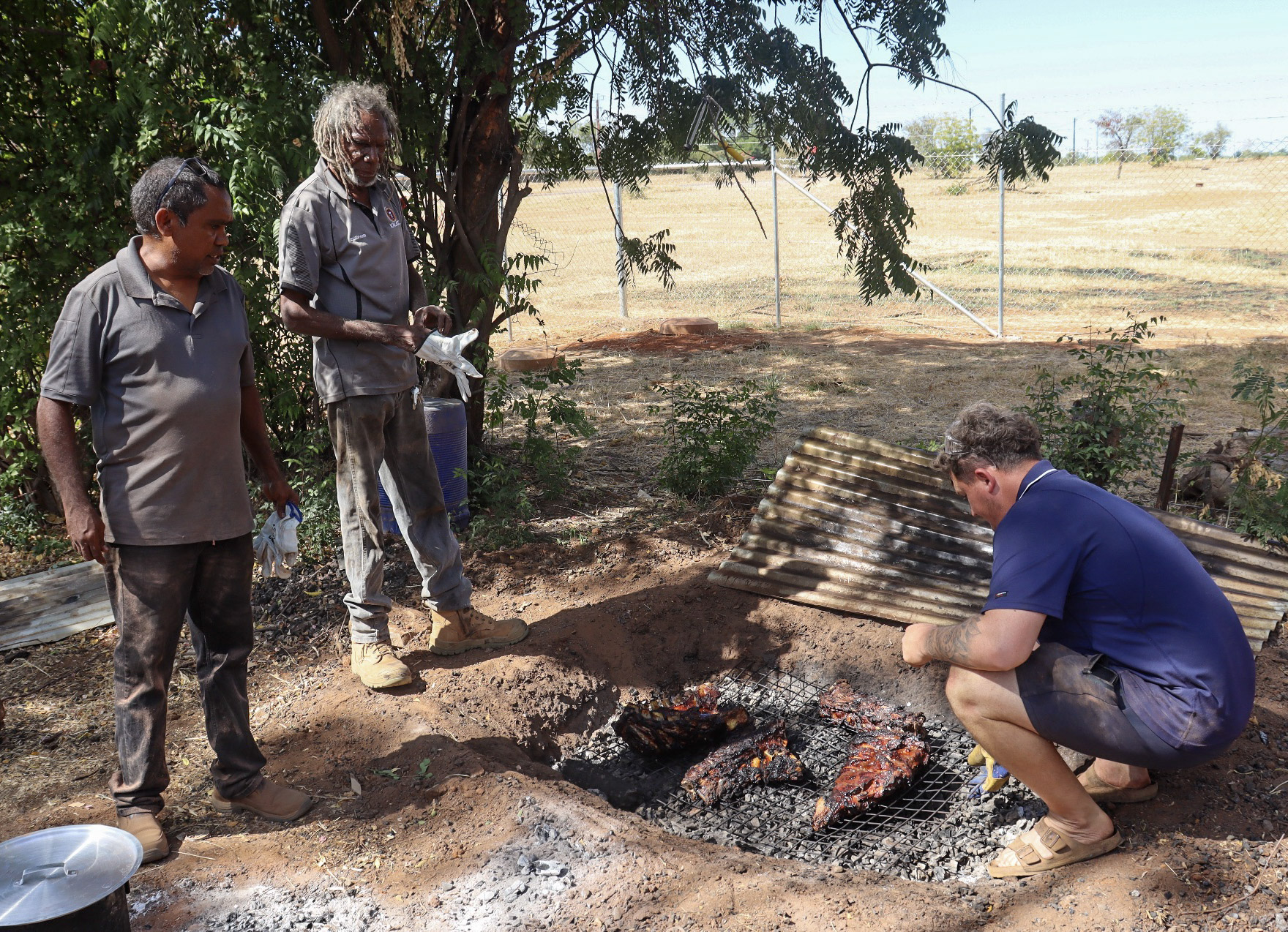
As the slabs of meat are covered, Mr Murray, who is also a support officer for KALACC'S Men's Empowerment Program, explains that he burns a specific log as a timer; when it burns out, it signals that the meat is perfect and ready for lunch.
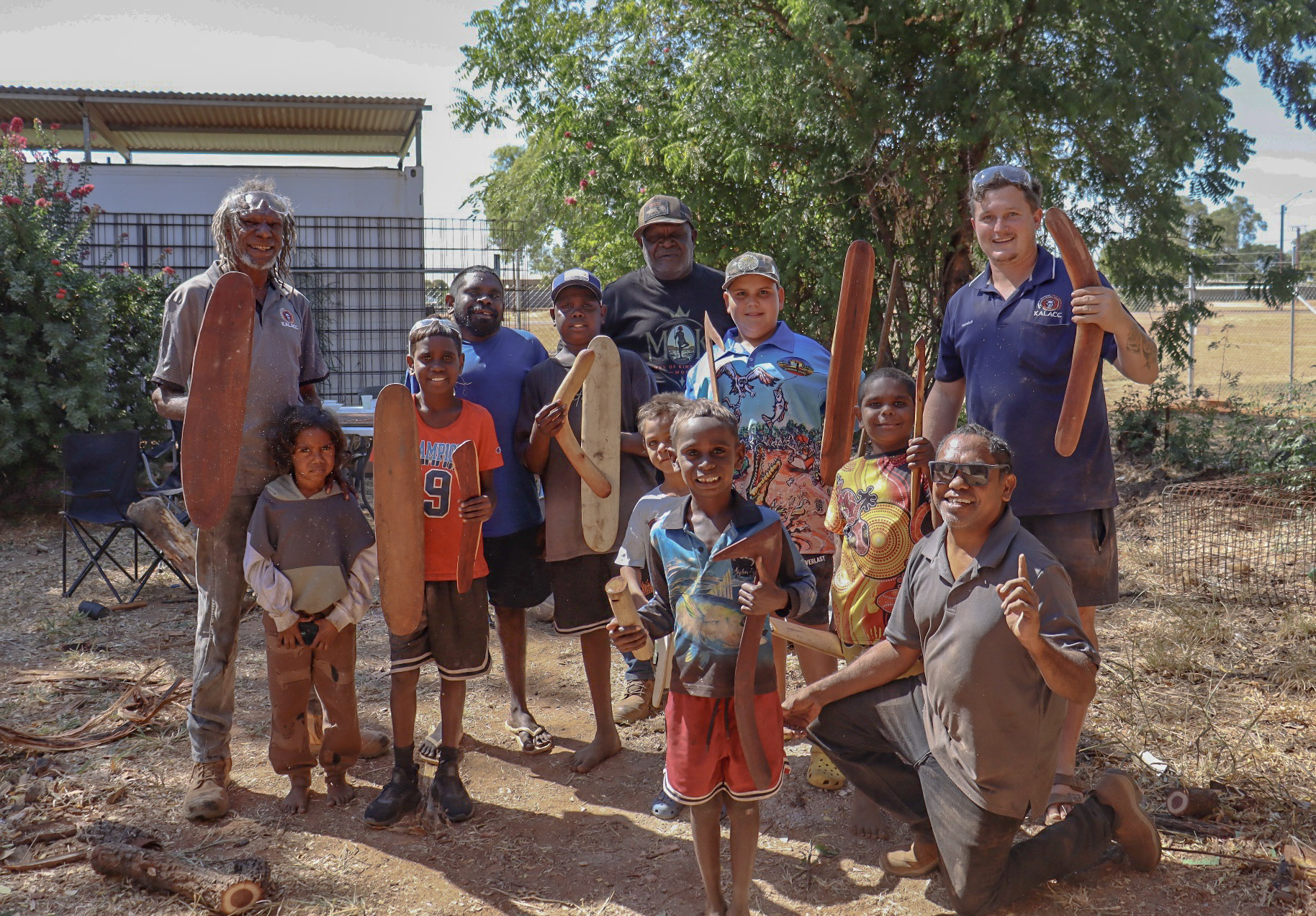
While the fire does its work, KALACC cultural advisors guide the boys in carving, shaping and painting artefacts once used by their ancestors across millennia.
"My favourite is the boomerang," 12-year-old Leondre exclaims, his enthusiasm sparking a smile in KALACC cultural advisor Putuparri Tom Lawford as he carves wood into a Jarrah/shield.
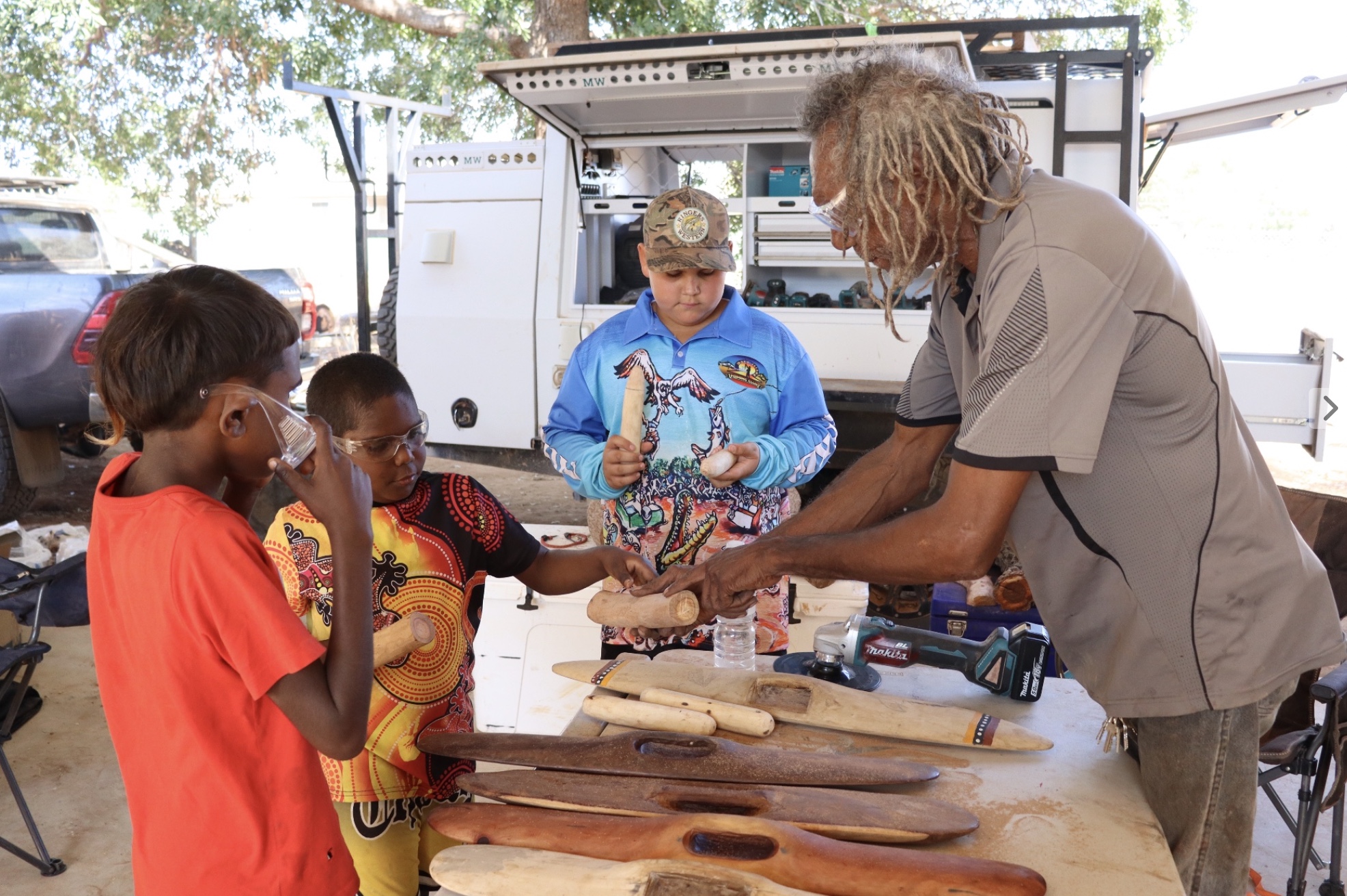
Putuparri, a Walmajarri and Wangkatjungka man, says he grew up in a time when the "bush was his classroom", learning from his old people which tree was right to use to carve a boomerang in the Fitzroy Valley.
"You use the black bark tree; you can't just cut down any tree for Boomerangs," he says.
Across the KALACC grounds, women are also sharing knowledge handed down through generations, preparing bush medicine and crafting jewellery as part of NAIDOC Week.
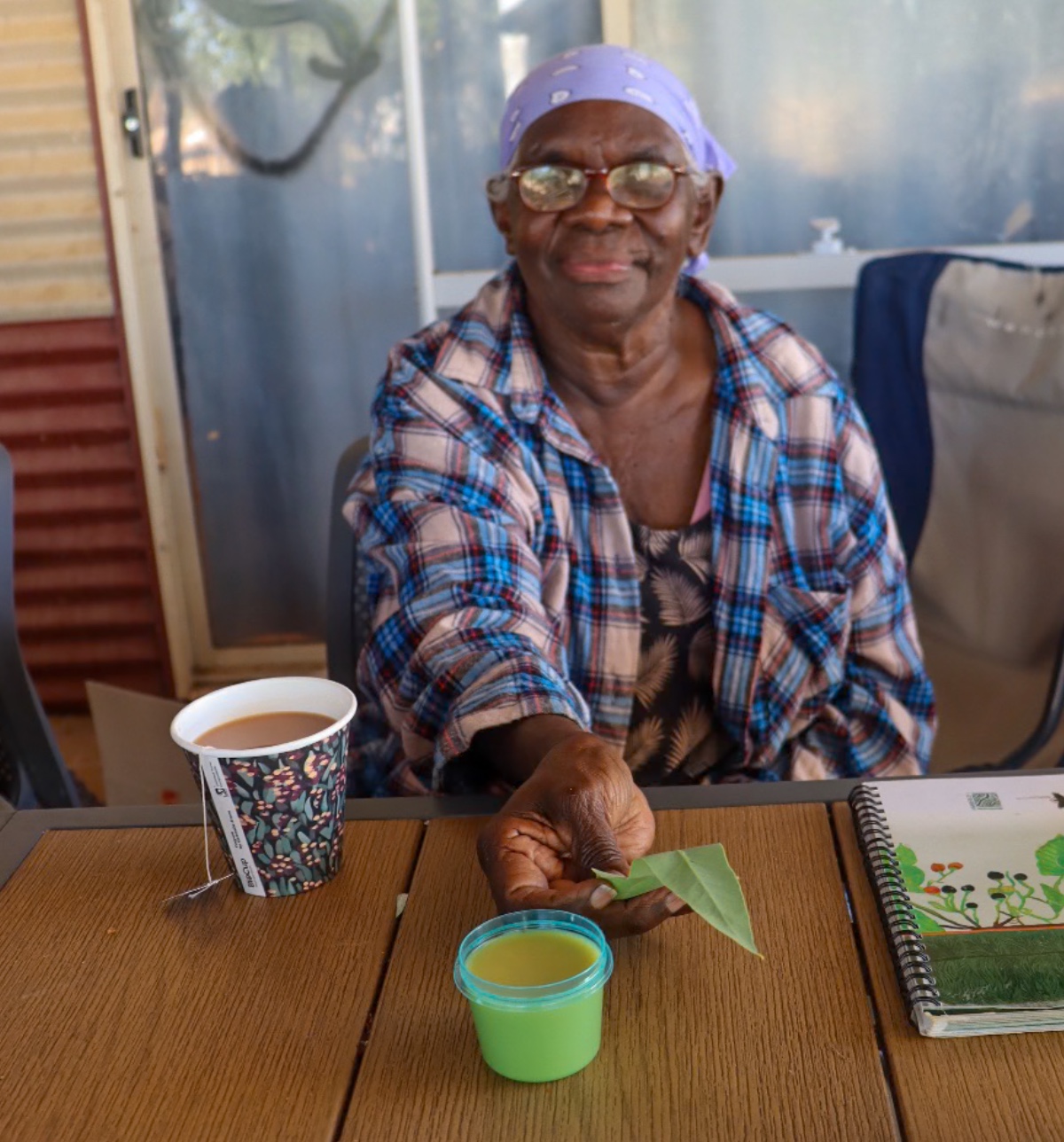
Bunuba, Walmajarri and Gooniyandi woman Diane Chungal, Gooniyandi woman Suzanne Hoad and Bunuba woman Janet Herbert sort river gum leaves, ready to be simmered in olive oil and made into bush medicine.
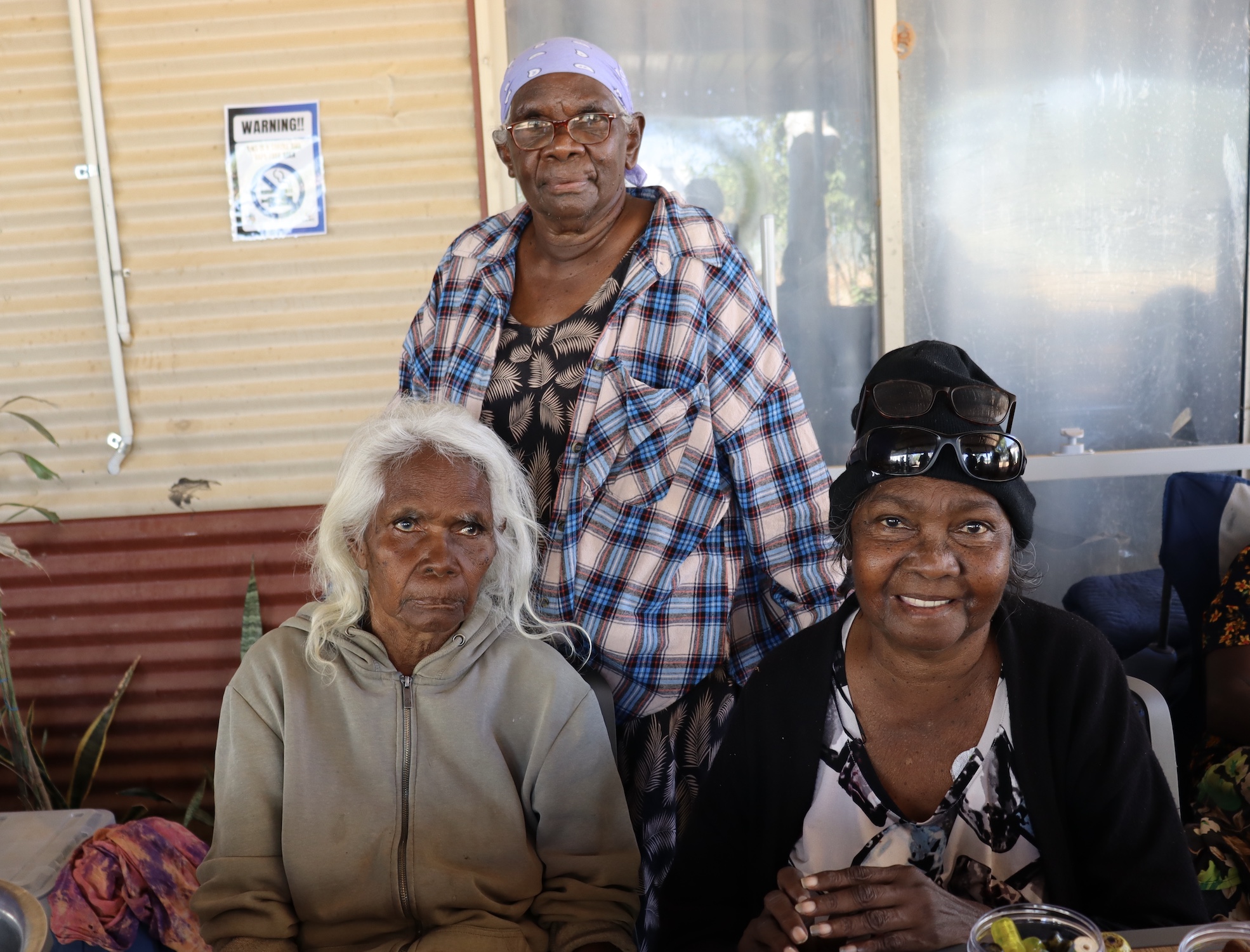
Ms Chungal explains that river gum has long been valued by the valley's four language groups—Bunuba, Gooniyandi, Walmajarri and Wangkatjungka—for its power to fight colds and chest infections.
She says continuing to use bush medicine is critical to the health of future generations.
"You see our old people before us lived on the bush medicine, and they lived longer than this generation," Ms Chungal said.
Nearby, other women lower seed-laden poles over a thin bed of glowing coals as small flames curl around them.
Nyikina and Walmajarri woman Marlingala Lynley says the seeds, known as Ininti in Walmajarri, are used to make jewellery and hold an important place in women's lore and ceremony.
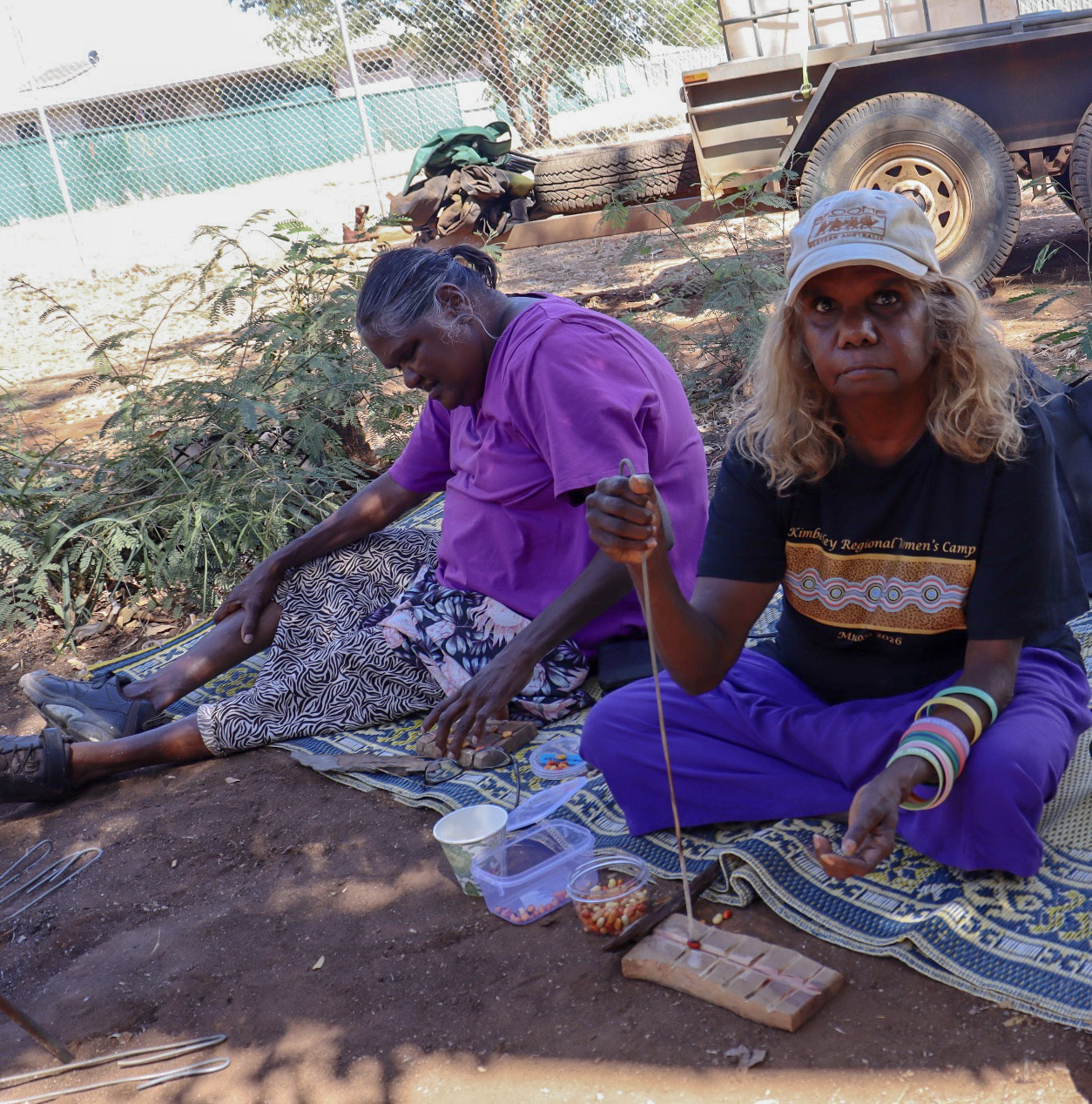
As she looks across the space, toddlers play with yarn used for weaving baskets, elders sip hot cups of tea while making bush medicine, and young women bush-dye T-shirts. She says it is empowering to see women of all generations taking part in the practices during NAIDOC Week.
It's a sentiment echoed by Walmajarri, Gooniyandi and Nyikina woman Bianca Nargoodah, who works as a youth and women's support officer at KALACC and organised KALACC's women's NAIDOC events.
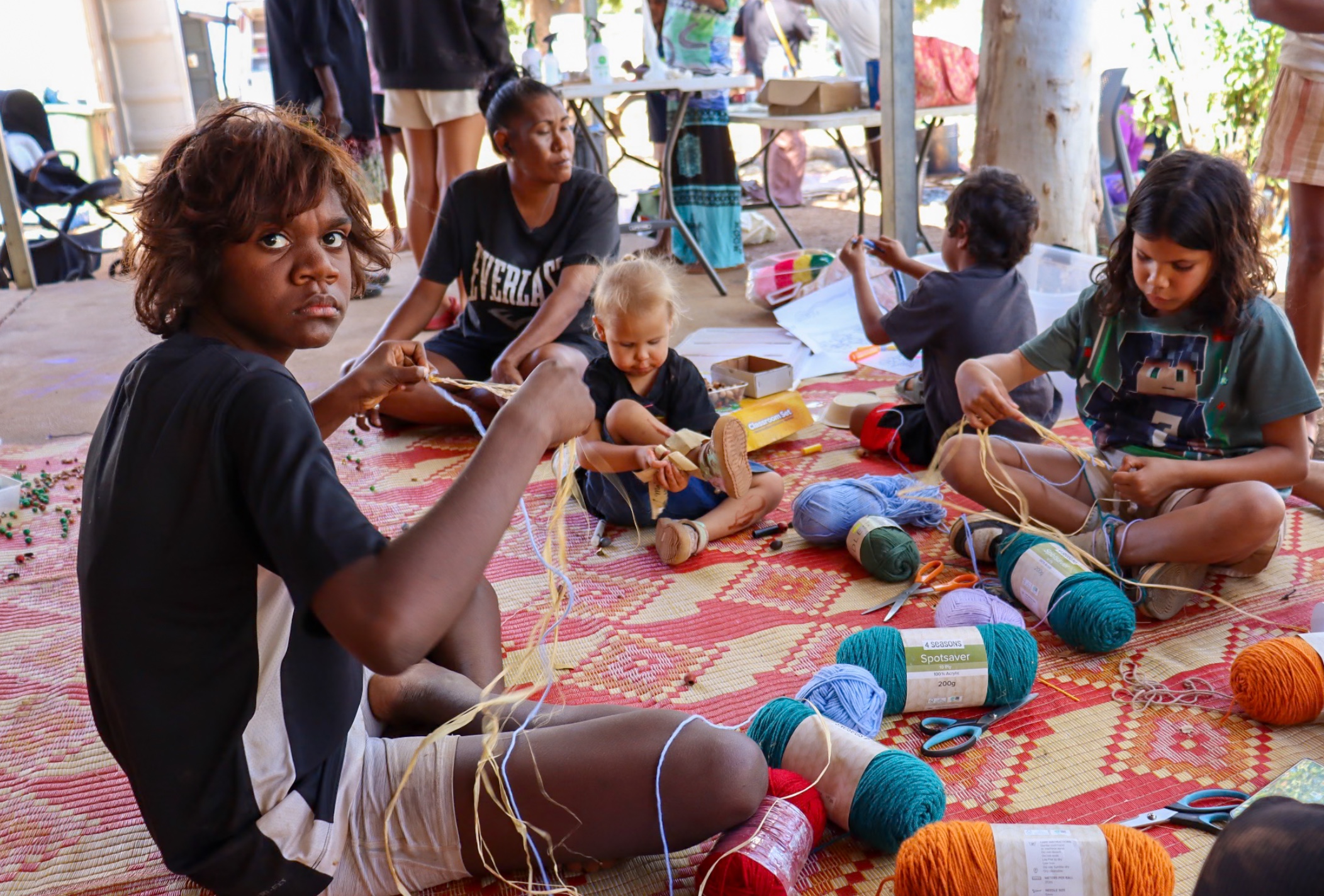
"It's been an honour and a pleasure putting all of this together; I enjoy working with both my elders and young people," Ms Nargoodah says.
The sun bears down on Fitzroy Crossing as the meat is unearthed, providing a nutritious lunch. Artefact making is hard work, but Putuparri says there is no room for fatigue when it is for the children and the people of Fitzroy.
The significance of NAIDOC Week for the valley is at the forefront of his mind: "Today is a very important celebration for my people, for Aboriginal people, to celebrate our resilience."
Yet, he says, government recognition of Aboriginal culture remains incomplete.
"Each year, Government changes its rules, then Government changes who is in power from Labour to Liberal. But our culture has never been changed; it's been there from the dream time until today; that's how we live," he said.
"The Government needs to listen to us."



