




Victoria Police have revoked a controversial decision to declare Melbourne's CBD a "designated area", days before a Federal Court challenge to the declaration was due to be heard.
In November, police made the declaration until late May, granting officers expanded stop-and-search and move-on powers across central Melbourne.
At the time, Victoria Police said the decision would provide an "invaluable tool in assisting police with removing weapons from the streets, as knife crime in Victoria has risen". It drew strong criticism from legal and Indigenous organisations, with many raising concerns about alleged racial profiling by Victoria Police.
On Friday, Assistant Commissioner for the North West Metro Region Brett Curran, acting as a delegate of the Police Commissioner, revoked the designation more than four months ahead of schedule. The declaration will now end at 11.59 pm on Friday.
Victoria Police did not provide a reason for the decision.
However, the announcement comes only days before the Federal Court was scheduled to hear an urgent legal challenge to the declaration on Monday, brought by Gunditjmara, Yorta Yorta, Bindal and Meriam community organiser Tarneen Onus Browne and activist Benny Zable.
They argued the designation raised serious concerns about "basic human rights and safety" in Melbourne and breached the Victorian Charter of Human Rights and Responsibilities, including the rights to peaceful assembly, privacy, freedom of expression, and protection from arbitrary arrest and detention.
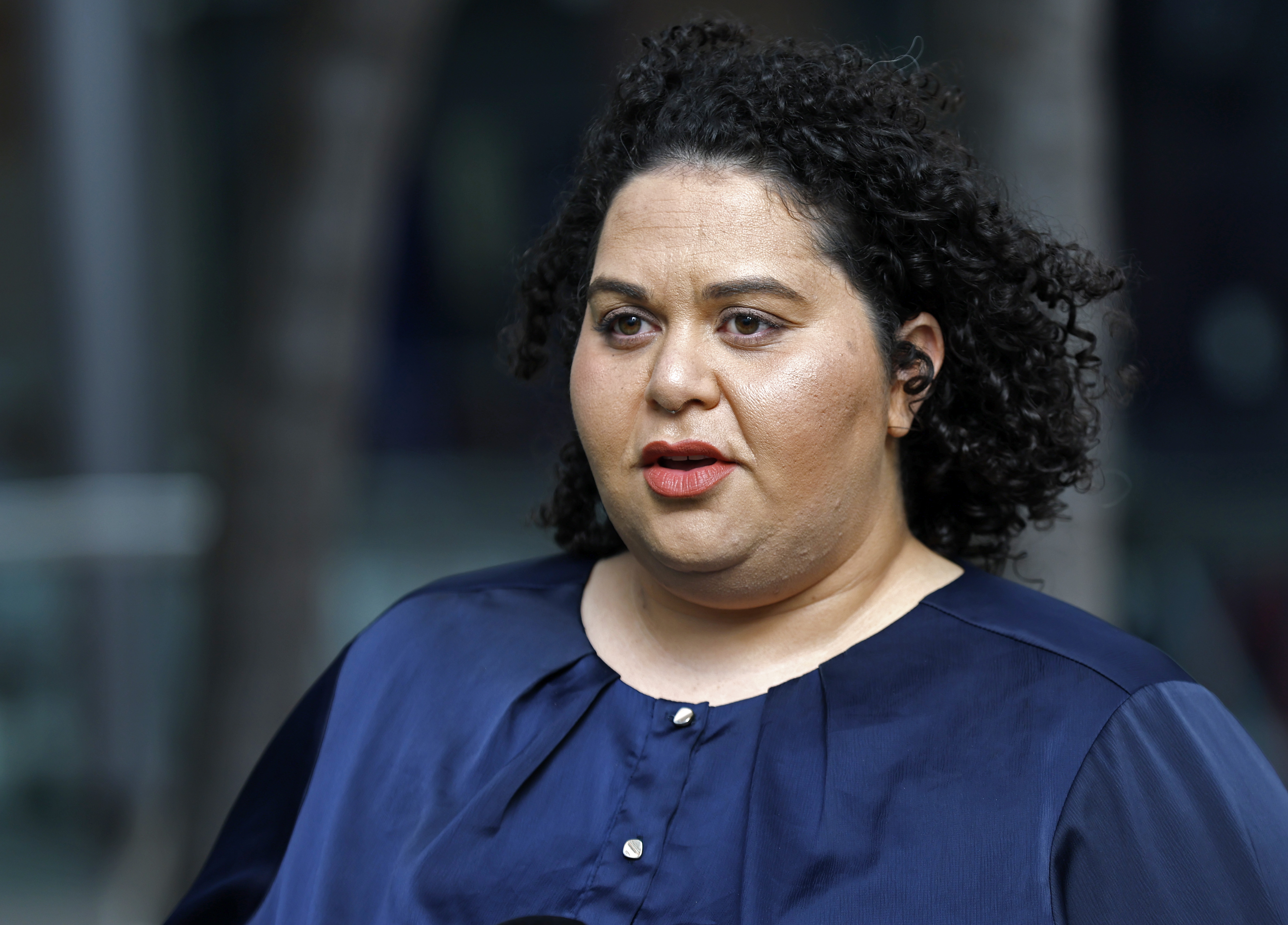
Onus Browne — who regularly helps coordinate the annual Naarm protest on January 26 — last month said they feared the new powers would have an impact "not just on Blackfullas, but on anyone who comes into the CBD".
"I've been organising the Invasion Day rallies for the last 10 years, and see this as our national day of protest, marking the stealing of our land and our ongoing resistance and survival," they said.
"What does it say that Victoria has just signed a Treaty but are now expanding the powers for police to harm us and stop us from speaking up about our history and resistance?"
Under the legislation, it is an offence to prevent or resist police conducting a "pat down" search, electromagnetic wanding, or the removal of items of outer clothing, including headwear, scarves or jackets.
Police may also require a person to remove a face covering if they reasonably believe it is worn primarily to conceal identity or "protect from the effects of crowd-controlling substances", and can direct people to leave a designated area.
"What it means is that a police officer or protective services officer can stop and search anyone, no questions asked, at any time in the CBD and its surrounds," Inner Melbourne Community Legal CEO Nadia Morales told Guardian Australia in November, describing the powers as "overkill".
"People who are stopped randomly by police tell us it is humiliating and makes them feel like they have done something wrong."
View this post on Instagram
Many Aboriginal people live in Melbourne's inner suburbs, which are also home to a number of Aboriginal-controlled organisations. Reacting to the declaration when it was announced, Independent Senator Lidia Thorpe said Premier Jacinta Allan had thrown Victorians "under the bus".
"This is unprecedented police powers," she told ABC Radio. "We know that racial profiling is a massive problem in Victoria."
Last year, National Indigenous Times reported on data showing Aboriginal people are 15 times more likely to be searched by Victoria Police than Caucasian people.
Despite racial profiling being banned in 2015, Freedom of Information data showed Victoria Police were also 10 times more likely to use force against a person they perceived as Aboriginal than someone they perceived as White in 2024, and 10.6 times more likely to use force against an Aboriginal woman than a White woman.
"There's been a recent report which the premier has seen from the Centre Against Racial Profiling that clearly points out that police profile black and brown people in Victoria," Senator Thorpe said.
"So I see a lot of harm being done from these ridiculous powers. Police have enough powers, and we see through that report that Aboriginal people, particularly, are 15 times more likely to be searched than white people."
A Victoria Police spokesperson told this publication at the time the force "has zero tolerance towards racial profiling".
"Our officers are well trained to police in response to a person's behaviour, not their background," they said. "If you aren't carrying a weapon, you don't have anything to worry about."



