


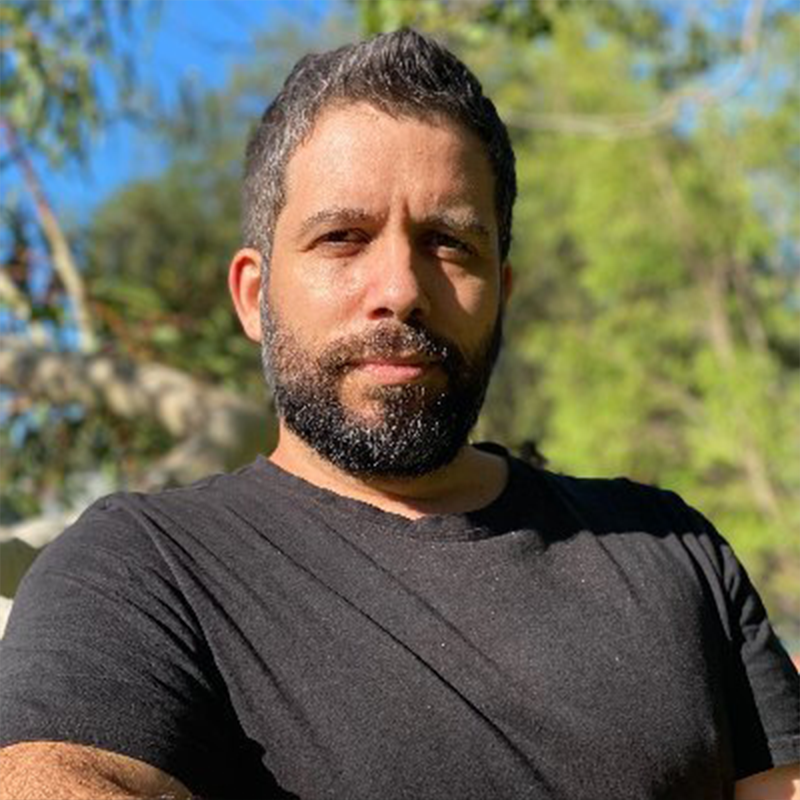

When a world-leading Oxford sleep scientist visited Sāmoa and Aotearoa as part of a prestigious Hood Fellowship, Li'amanaia Dr Roannie Ng Shiu was already thinking beyond sleep.
From the villages of Savaia and Leone in Sāmoa with international research collaborations spanning Oxford, Auckland and Apia, Dr Ng Shiu is helping shape a new Pacific-led approach to youth mental wellbeing
The University of Auckland academic and co-director of Te Poutoko Ora a Kiwa, the Centre for Pacific and Global Health, is on the threshold of research looking to improve the mental wellbeing of Pacific young people.
Dr Ng Shiu is co-leading a project with University of Auckland chronobiology scientist Dr Nicola Ludin, exploring how sleep and circadian rhythms could help address anxiety, depression and other mental health challenges among Pacific youth.
The project has attracted international attention through collaboration with Professor Russell Foster, one of the world's foremost circadian neuroscientists from the University of Oxford, whose recent visit to Aotearoa / New Zealand and Sāmoa was supported by a Hood Fellowship.
The research team is also set to feature prominently in an upcoming TVNZ documentary on sleep and circadian rhythms, expected to screen later this year, bringing the innovative work to a wider public audience.
Dr Ng Shiu says the project grew naturally from previous research examining mental health among adults in Sāmoa.
"Since then, that's been the main thing. It's off the back of the mental health baseline study we did for adults in Sāmoa and now moving towards young people," she said.
While the science behind circadian rhythms can seem complex, Dr Ng Shiu sees its appeal in its simplicity.
"What we liked is the fact that it's a non-pharmacological intervention," she said. "It's about improving mental health and addressing anxiety and depression without having to go to pills."
'A fundamental pillar for supporting mental health'
For Pacific communities, she believes that approach has particular significance.
"Everyone has to sleep. If we can get sleep right, it's the same as eating well and exercising. Sleeping well becomes a fundamental pillar for supporting the mental health and wellbeing of our young people," Dr Ng Shiu aid.
The collaboration has brought together expertise from multiple disciplines and countries. During Professor Foster's visit, University of Auckland researchers travelled to Sāmoa to meet academic and government leaders and discuss the role sleep could play in improving youth wellbeing, literacy and educational outcomes.
Dr Ng Shiu noted the project is currently focused on preparing culturally relevant resources for Sāmoan communities while seeking funding for future data collection.
Working alongside Professor Foster, the team is adapting existing educational resources for Sāmoan populations and engaging directly with communities and decision-makers.
"We've spoken to community people and ministers, and they're all really interested," she said.
One challenge has been reframing the conversation.
"People automatically think the project is about sleep disorders. We've moved the focus away from sleep and instead we're saying we want to improve mental wellbeing for kids, and we're going to do that through good sleeping habits," Dr Ng Shiu said.
Connections between emerging science otraditional Pacific knowledge systems
The project aligns with Dr Ng Shiu's wider work as a Pacific public health researcher, advocate and international leader. Alongside her University of Auckland roles, she continues to contribute to Pacific health initiatives as Executive Director for the Pacific Academy of Sciences, including work connected to the Lancet Commission and regional policy development.
She recently accepted an invitation to speak at an international conference in Palau, building on previous Pacific research collaborations and highlighting the growing global interest in Pacific-led approaches to wellbeing, sustainability and health.
Dr Ng Shiu also sees connections between the emerging science of circadian rhythms and traditional Pacific knowledge systems.
Working alongside Pacific health leaders, including Dr Epaggelia Efu in Sāmoa, she believes the research reflects values and practices that have long existed within Pacific communities.
"This fits 100 percent into some traditional knowledge and practices that we have," she said. "I think it's more about reviving that more."
As funding applications progress, Dr Ng Shiu remains focused on building momentum and growing interest in a project she hopes could eventually be rolled out beyond Sāmoa. For now, the goal is clear: "creating evidence-based, culturally grounded solutions" that help Pacific young people thrive.
"We're just trying to get this right here," she said. "Then we can roll it out everywhere else."
As a researcher, Dr Ng Shiu is balancing leadership roles, international collaborations, community partnerships and a growing public profile, the project is another example of the commitment to find innovative Pacific solutions to some of the region's most pressing health challenges. The research could show that something as fundamental as a good night's sleep could help transform the wellbeing of a generation.



