


NAIDOC's origins belong inside a longer history of Aboriginal resistance to the economic architecture of colonial Australia. It emerged from Aboriginal protest against colonisation that had taken land, controlled labour, withheld wages, and denied Aboriginal people ordinary citizenship rights.
In the 1920s and 1930s, leaders William Cooper, Jack Patten and Bill Ferguson organised against protection boards and the laws that regulated Aboriginal life. Their efforts culminated in the 1938 Day of Mourning, held on 26 January to coincide with the 150th anniversary of British occupation.
While official Australia celebrated settlement, Aboriginal activists named the deeper truth: colonisation had dispossessed Aboriginal peoples of Country, self-government and economic independence.
That protest evolved into what became NAIDOC. Its origin matters. NAIDOC was born from a demand for redress, not sentiment. Its early claims were about citizenship, wages, representation, freedom from state control, and the abolition of white institutions that managed Aboriginal people as labour reserves, wards and dependants.
Seen in that context, the 1966 cattle industry Equal Wages case was not an isolated industrial dispute. It was another front in the same economic struggle. Pastoral employers and government agencies had played roles in a system that converted Aboriginal land and Aboriginal labour into settler wealth while preventing Aboriginal people from accumulating property, wages, capital or political authority of their own.
This is the Aboriginal part of the larger story of modern Australia. It was not built only through prejudice or exclusion. It was built through extraction of aboriginal resources, labour and assets.
Land was taken and converted into pastoral leases, mining tenements, towns, ports and private estates. Aboriginal people were moved, confined or employed according to the needs of that economy. Their labour was used when cheap labour was required. Their presence was controlled when it interfered with settlement. Their rights were resisted when they threatened the transfer of value to non-Indigenous interests.
The Australian cattle industry was a created, financed largely from London and managed through corporate interests in Melbourne and Sydney, and built on the back of the labour of indigenous workers.
It was the North Australian Workers Union that forced the pastoral sector to confront one of its central assumptions: that Aboriginal land and Aboriginal labour could be used to build national wealth without Aboriginal people sharing properly in that wealth.
That is the economic issue at the heart of this history.
The same economic pattern had already been tested in the Pilbara two decades earlier. In 1946, Aboriginal pastoral workers in Western Australia challenged a system of forced labour and wage suppression that had held people to stations through law, police power and employer control.
During the Pilbara strike, Don McLeod, Clancy McKenna and Dooley Bin Bin were arrested under the Native Administration Act, which made it unlawful to encourage Aboriginal workers to leave their employer and restricted association between Aboriginal people and non-Aboriginal supporters.
The arrests exposed the real function of the law: it did not simply regulate employment; it protected the Aboriginal labour supply of the pastoral industry.
In towns, threats of arrest pushed some people back to work. On stations, concessions were mixed with repression to fragment the campaign. But the underlying lesson endured. Aboriginal labour was not treated as free labour in any modern sense. It was controlled labour, attached to landholding interests, policed by the state, and made available to pastoral capital on terms that denied Aboriginal people both market wages and economic agency.
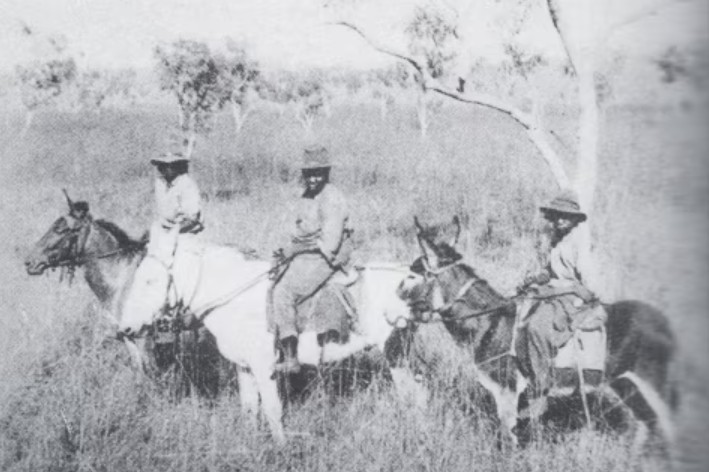
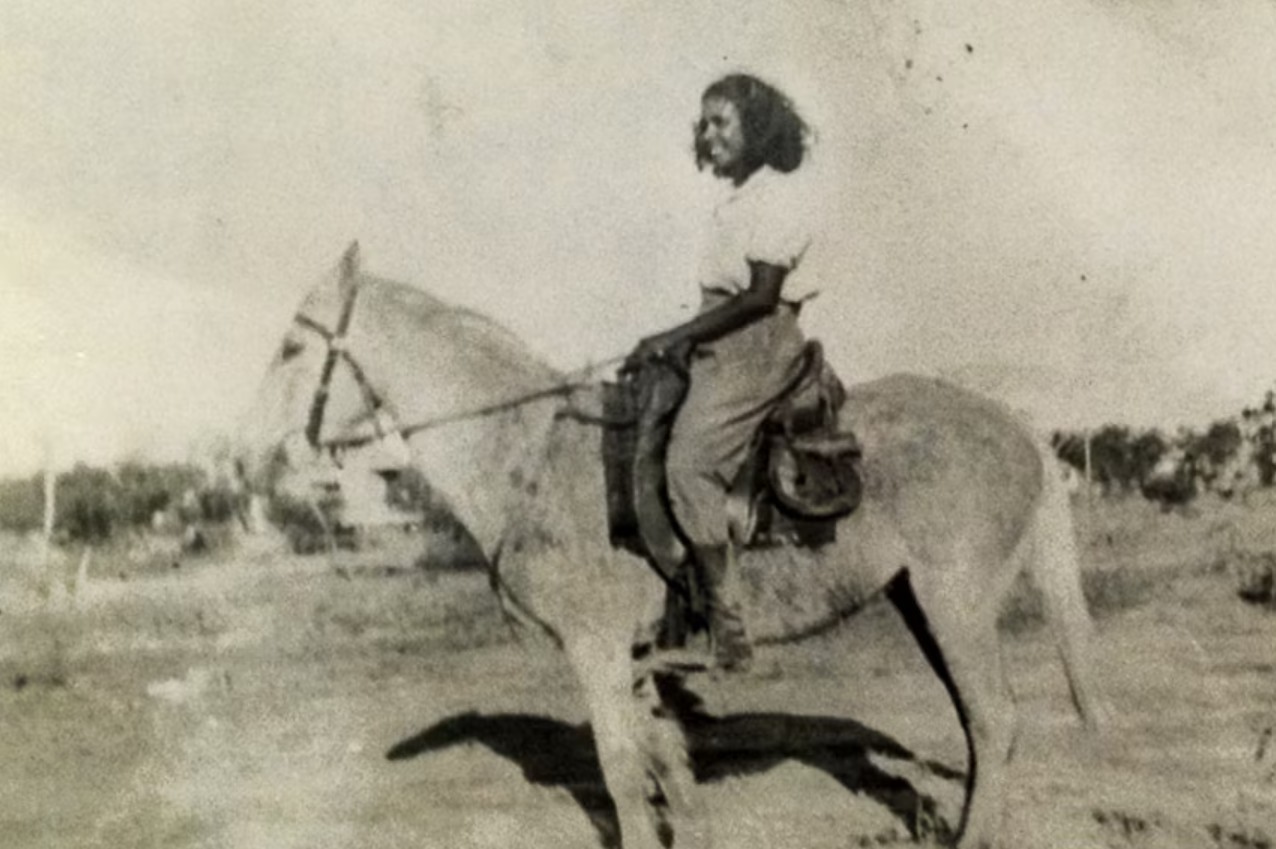
For generations, Aboriginal people worked the northern cattle industry as stockmen & women, station hands, ringers, domestic workers, drovers and labourers. Much of that work occurred on or near their own Country. Aboriginal knowledge made the industry possible across difficult terrain, long distances and remote conditions. Yet Aboriginal workers were deliberately excluded from ordinary wage protections and were paid a fraction of what white workers received. In today's dollars, an aboriginal worker grossed $105 per week where the white workers were paid $535.
This was not a marginal irregularity. It was part of the operating model.
The pastoral industry benefited from three forms of economic exploitation. First, Aboriginal Country was converted into pastoral leasehold and used as the land base for private production. Second, Aboriginal labour was supplied at artificially low cost through law, administration and coercion. Third, Aboriginal people were excluded from the ownership, wages, banking access and capital accumulation that would have allowed them to build wealth from their own labours.
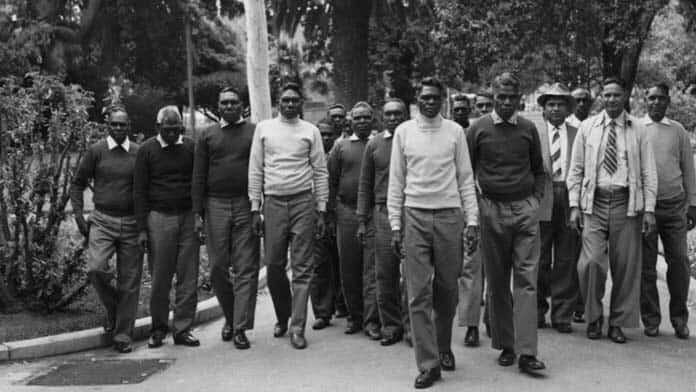
That is why the equal wages case matters. It did not create a problem for the cattle industry. It revealed one.
Whilst the Commonwealth Conciliation and Arbitration Commission accepted the principle of equal wages it also created the notion of "slow workers" to justify underpayment and the implementation of the decision was delayed until 1968. That delay gave pastoral operators time to reorganise. Many chose to dismiss Aboriginal workers rather than pay award wages. Families and whole communities were then pushed off properties where they had lived and worked for generations.
This is how thousands were forcibly moved into towns like Alice Springs. This is why town camps formed - mass forced migration to places where no houses existed and the local white council enacted restrictions on Aboriginal people within the city limits.
This is sometimes remembered as a social tragedy. It was also an economic transfer.
The cattle industry had received the value of Aboriginal labour for decades at below-market cost. When the subsidy was challenged, the cost of adjustment was not carried by the industry that had benefited. It was shifted onto Aboriginal families, town camps, welfare systems and future generations.
The phrase "sit-down money" created as a slogan to entice Aboriginal workers and their families to move-off cattle stations with inducement to more permanent and just arrangements including work. Today, Noel Pearson and Andrew Forrest use the phrase to infer that Aboriginal people had chosen welfare over work and, by implication, are not entitled to their own earnings and a chance at lives above the poverty-line.
A more accurate account is that Aboriginal people had worked for generations in the pastoral economy and were then displaced when equality became a labour cost. Welfare became the receiving system for people excluded from the industry that had relied on them.
That is the sober economic reading. Aboriginal poverty in this context was not cultural failure. It was the predictable outcome of economic exclusion from land ownership, wage theft, asset formation, capital markets and institutional power.
This is also why remedy will be found in economic reconciliation.
Social policy in central and northern Australia was reactive to an economic force - the correction is also economic. With the opposite of poverty being prosperity. Australia needs to move from managing Indigenous disadvantage to capitalising Indigenous opportunity. That means Indigenous people, communities and institutions having the balance sheets, investment vehicles, enterprise platforms and ownership structures required to participate in the economy as owners, employers, producers and investors.
This is the practical meaning of economic reconciliation.
It is not charity. It is not welfare. It is not symbolic inclusion. It is the deliberate rebuilding of an Indigenous-led economy that has been structurally under-capitalised for a couple of hundred years.
The historical record shows that Aboriginal land, labour and knowledge helped build Australian prosperity. The question before us today is whether Indigenous people will now be given the just capital, institutional space and commercial authority to build prosperity for ourselves.
Equal wages were not the problem. Land rights were not the problem. Indigenous economic ambition is not the problem. The problem has been an Australian economy willing to use Indigenous assets while denying Indigenous people the means to accumulate wealth from them.
That proposition is not new. It reaches back to the original Aboriginal campaigners whose work eventually gave rise to NAIDOC. William Cooper, Jack Patten, Bill Ferguson and their contemporaries were not asking merely for recognition. They were demanding the economic foundations of citizenship: the abolition of protection boards that controlled Aboriginal labour and wages; access to pensions, maternity allowances and social services; equal rights in education and employment; political representation; and the freedom for Aboriginal people to manage their own lives, families, property and futures.
Their claim was not only that Aboriginal people should be treated with dignity. It was that Aboriginal people should no longer be locked out of the economic machinery of the country built on their land.
A serious country should be able to face that history without defensiveness. A confident country should be able to correct it without fear. The next phase is not simply reconciliation in language. It is economic reconciliation in practice: Indigenous capital, Indigenous enterprise, Indigenous ownership and Indigenous prosperity on our own lands.
Thanks to everyone that makes NAIDOC Week.
Darren Godwell is the chairperson of Indigenous Business Australia



