




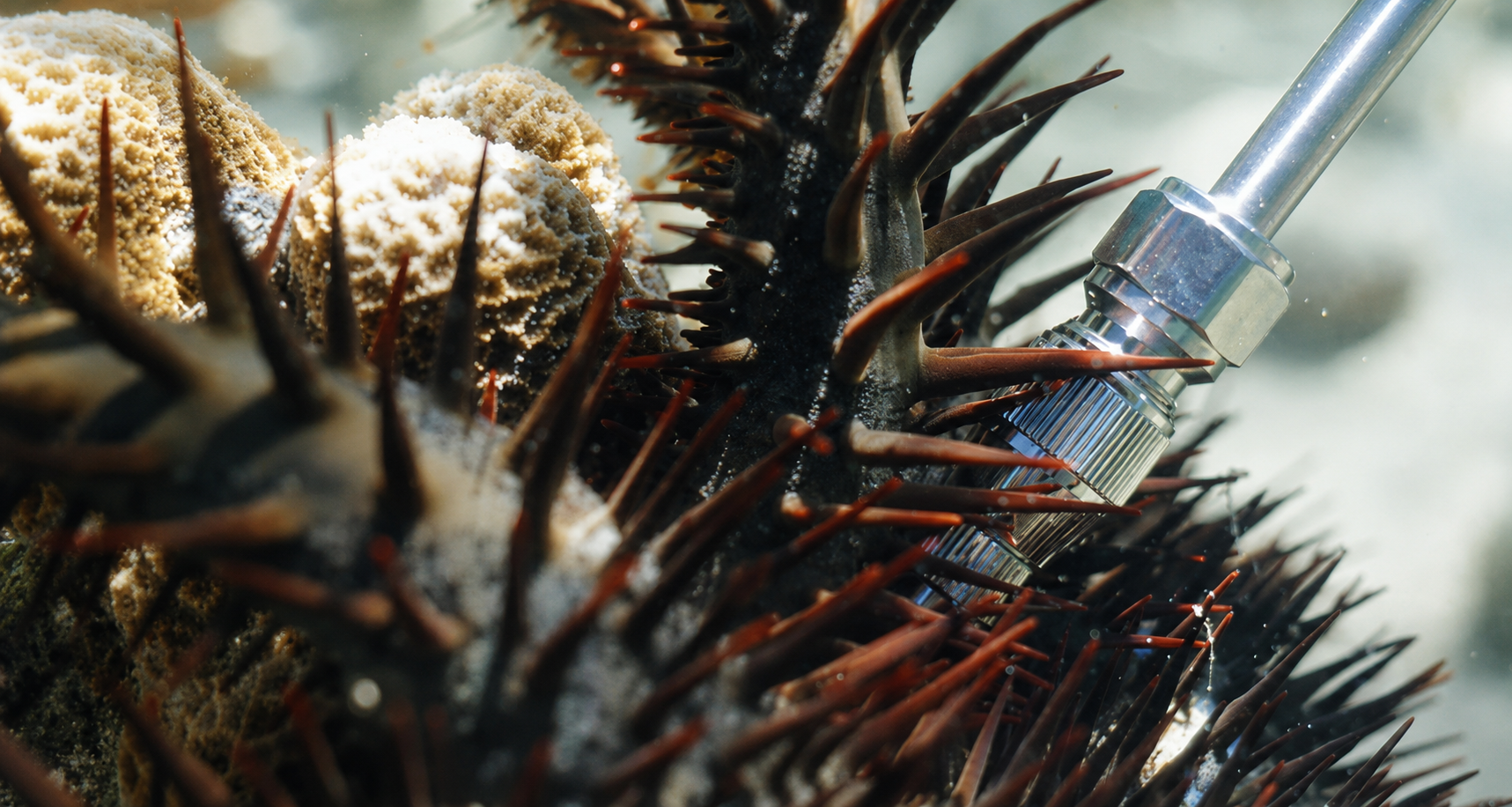
Nearly $1 million in funding is set to support work to reduce crown-of-thorns starfish outbreaks and strengthen coral resilience across Torres Strait Sea Country.
Queensland's Natural Resource Management Expansion Program has allocated the funding to NRM Regions Queensland, working in partnership with the Torres Strait Regional Authority.
Across 1,750 hectares of Sea Country, the project will target crown-of-thorns starfish densities, coral resilience and threatened species habitat.
Badulaig, Goemulaig, Saibailaig, Mua and Erub man and TSRA chairperson, George Nona, said the funding was needed to protect reefs in the Torres Strait.
"This investment is not only welcome, it is essential for the survival of coral reefs in the northernmost part of the Great Barrier Reef in the Torres Strait," Mr Nona said.
"This funding enables Torres Strait Traditional Owners, communities and rangers to continue leading critical on-Country work supported by Western science and government partnerships to control the crown-of-thorns starfish outbreaks currently threatening our waters."
Operation Urmemeg, TSRA's $2 million pilot program, removed more than 10,000 crown-of-thorns starfish in the eastern Torres Strait through a First Nations-led approach combining traditional knowledge and Western science.
Partnering with Traditional Owners, the pilot supported local school and community awareness and funded training and employment opportunities, including for 12 local divers.
Recent TSRA-supported surveys have confirmed active crown-of-thorns starfish outbreaks above sustainable levels, including within Erub and Mer Sea Country.
Without management, those outbreaks could cause severe coral loss and threaten reef habitats that support livelihoods, food security and cultural identity across Torres Strait communities.
A new TSRA video has also been released to highlight the region's reefs and the work being done to protect them.
Operation Urmemeg culled 10,100 crown-of-thorns starfish, recorded 1,477 hours in the water and completed 305 reef health impact surveys.
Crews also carried out 119 hours of surveillance, spent 109 days on water and visited 56 reefs.
Local capacity was strengthened through the training of 12 divers, consultation with 10 communities and involvement of six cultural advisors.
Delivered by TSRA's Land and Sea Management Unit, the environmental management program supports communities to protect biodiversity while recognising the connection between people, islands and sea.
Local jobs, including ranger roles, are supported through work that brings together traditional knowledge and Western science to care for land, sea and culture.
Community aspirations and cultural protocols are also supported by TSRA's Sea Team across projects, surveys and monitoring.
Activities include crown-of-thorns starfish management, marine turtle monitoring, dugong monitoring, marine debris clean-ups, migratory bird surveys and ranger-led seagrass monitoring.
Stretching from Bamaga and Seisia in the Northern Peninsula Area to the outer islands bordering Papua New Guinea, the Torres Strait region covers 48,000 square kilometres.
More than 270 islands and reefs sit within the region, which forms the northernmost part of the Great Barrier Reef.
Marine life across the region includes six of the world's seven marine turtle species, large dugong populations and some of the largest seagrass meadows in the world.



