



An Indigenous artist has spoken out after a Hobart councillor 'liked' a comment on social media which insinuated her recently completed mural should be vandalised with red paint.
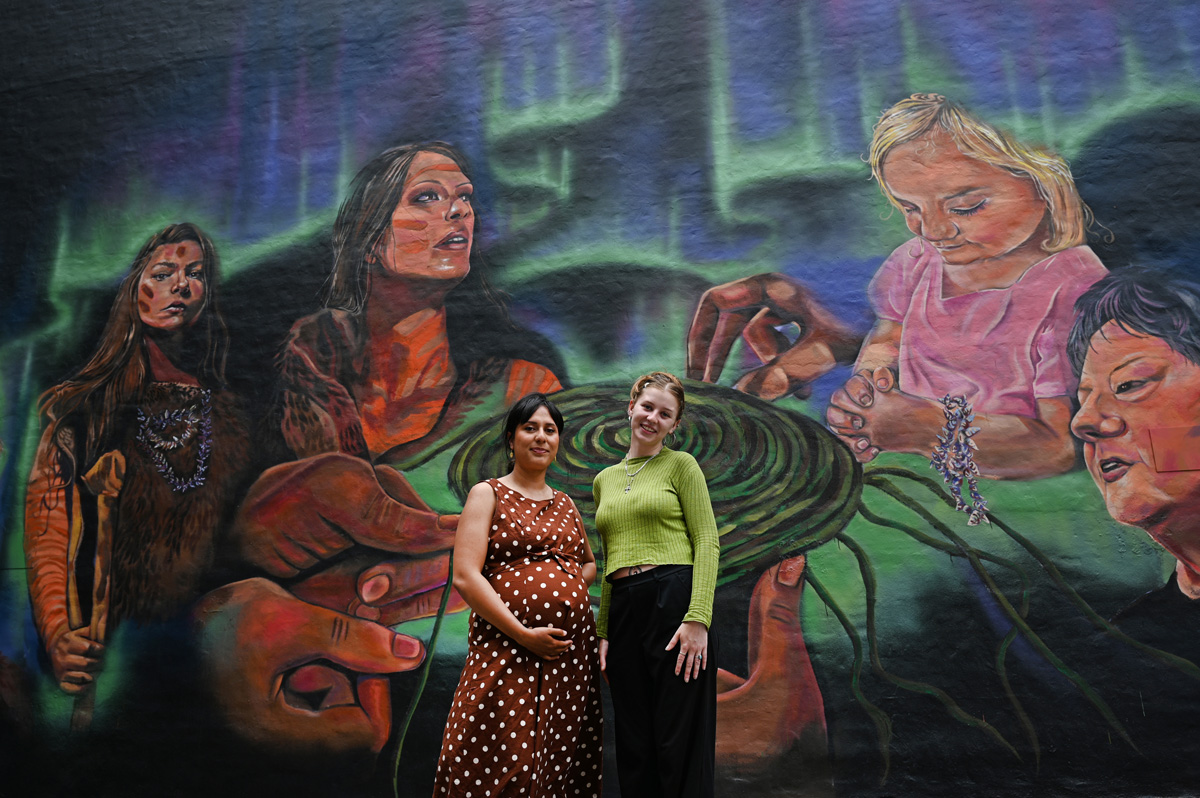
The City of Hobart-funded mural, by Wiradjuri/Tongan artist Brandi Salmon and University of Tasmania art school graduate Phoebe Diggle, was unveiled in the city's CBD this week.
Council commissioned the pair to complete the mural, which depicts five Tasmanian Aboriginal women adorned in traditional skins, shells and ochre, as part of its Urban Art Walls project.
Amid celebrations of the completed piece, Ms Salmon became aware of online commentary about the mural, one of which Hobart councillor Louise Elliot had 'liked'.
The comment on Facebook by user Geoff Cato read "So if we cover it in red paint will that be OK? #ticfortat".
"This is sooo shamejob!" Ms Salmon wrote in response on her Facebook page, Brandi Salmon Artist.
"I've got local Hobart politicians liking hate comments encouraging people to throw red paint at my mural.
"This is probably the least controversial artwork I've ever done too."
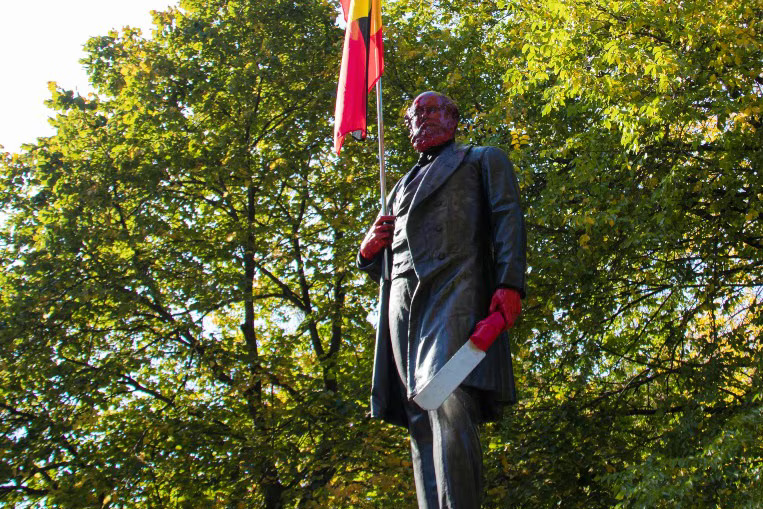
Ms Elliot said the comment was in reference to the 2024 vandalism of Franklin Square's William Crowther statue and vote by Council to remove the statue two years previous.
The statue was previously pained red and draped with the Aboriginal flag as part of Council's Crowther Reinterpreted Project in 2021.
"I was supporting the hypocrisy that the comment was highlighting," Ms Elliot said, The Mercury reports.
"Some people's heritage is apparently fine to deface, like the Council did to Crowther.
"The community hasn't forgotten the Council-facilitated defacement of the Crowther statue or the smear campaign that led pathetic and intolerant people to cut the statue down."
Crowther cut off and stole the head of Aboriginal man William Lanne from a Hobart morgue in 1869.
According to content shared by Ms Salmon on her page, Ms Elliot also appeared to question Tasmanian Aboriginal people's use non-traditional items in her criticism of the mural.
"I didn't realise the Palawa had hair straighteners and tweezers before European arrival?" Ms Elliot wrote on a Pulse Tasmania article about Ms Salmon's mural.
"Learn something new everyday. Seems odd there wasn't a Tasmanian Aboriginal artist available to do the work, bit of a lost opportunity."
Council first voted to remove the statue in 2022, a decision upheld after passing a final Council vote the following year.
It was then vandalised with red paint and toppled in 2024, the day before the Tasmanian Civil and Administrative Tribunal (TASCAT) was scheduled to hand down its final decision for removal.
"I fully support more public art that accurately tells Aboriginal history and that this be treated with respect," Ms Elliot said.
"The community comments that I support are highlighting this double standard and hypocrisy.
"Colonial and Aboriginal heritage must both be respected, but it's a one-way street at the moment."
Ms Salmon said the large-scale artwork highlights "the importance of family in the passing down of culture, knowledge and strength across generations".
"At its heart, the mural centres women," Ms Salmon said. "Created by women, it challenges misrepresentation and asserts the authority of self-representation, past, present and continuing. Always was, always will be, Aboriginal land."
Hobart lord mayor Anna Reynolds said the artwork adds to the city's growing collection of community-driven public art.
"Public art helps us tell a range of stories about Hobart and this mural features Palawa women and their stories," she said.
"The Hobart community have told us that they love seeing public art around the city and they're also interested to see more representation of First Nations culture."
Ms Elliot confirmed she did "not condone or encourage anyone" to vandalise the mural, saying she "doubted" her support of the of comment would cause anyone to do so.



