



Maisie Harkin was just a child when police began hunting her family through the bush.
Born in 1937 in the Great Victoria Desert east of Laverton, the Nanatadjarra woman was identified as the daughter of a white man — a status that made her a target under government policies which authorised the removal of Aboriginal children from their families.
Eighty-seven years later, Ms Harkin has finally received the document that should have marked her existence from the start, a birth certificate.
For most of her life, she lived without it.
"I didn't have that identification," she says. "I was disappointed."
The absence followed her through a long, full life.
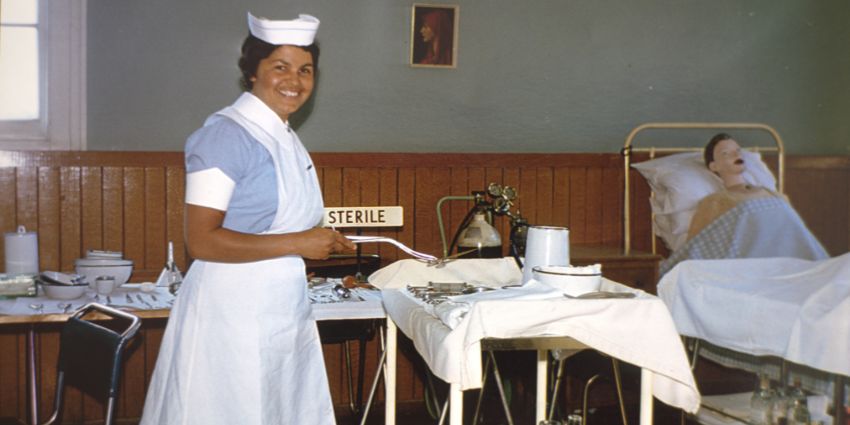
Ms Harkin grew up on missions, trained as a nurse, worked in Perth and Melbourne, married, raised children, and now has grandchildren and a great-grandson.
Her image appears in anthropological records. Her movements were tracked by the state. Yet her birth was never formally registered.
It was something she only fully confronted in 2007 after moving to Kalgoorlie-Boulder and trying to join a church group travelling to Israel.
"The others, they went," she says. "Being brought up at the mission you were taught Christianity and being taught the Bible, we wanted to see what's over there."
Without a birth certificate, she could not apply for a passport.
Ms Harkin says she was born with the help of Aboriginal midwives while her family moved constantly through Country to avoid police.
"We were in the bush, and the police were after us," she says. "They knew we were around, but our people kept moving. To avoid the police."
Police raids routinely took children to institutions such as Mount Margaret Mission, near Laverton, or Mogumber — also known as the Moore River Native Settlement.
Mount Margaret was both a mission and a ration depot, a place where families could access food and supplies but where authorities also kept records.
A 1941 letter from the mission's administrator to the Commissioner of Native Affairs notes that Maisie's family had "decamped and we know not where. They seemed to be frightened." It is signed: "Yours for Christ and the Natives."
Sometime after that, Ms Harkin herself became a resident.
"I know it was a grey, funny, rainy day," she recalls. "Not heavy rain — but not very pleasant — when I got in there."
She was placed in the care of older children and remained at the mission for more than a decade.
Ms Harkin describes mission life as "terrible".
"We were stuck in this yard," she said. "We were the 'part Aboriginals'. We weren't allowed to go out."
During her teenage years, Ms Harkin was photographed and catalogued by anthropologists Norman Tindale and Joseph Birdsell during a 1953 expedition.
In the images, she is posed with an identifying number, smiling in one photograph and sitting in profile in another.
Her age is marked with an incredulous "15!".
A researcher's notes record she was bound for Bunbury High School and describe her as "socially very well adjusted".
She was later housed at Roelands Native Farm near Bunbury and went on to train as a nurse.
Despite the extensive paper trail, her birth remained unregistered.
That changed only recently, after Ms Harkin was put in touch with Marnie Giles from the Registry of Births, Deaths and Marriages through a Department of Transport remote services team.
"There are still lots of people whose birth isn't registered," Ms Giles says.
"Across the full spectrum of ages — from babies right through to someone of the wonderful age of Maisie."
Like many similar cases, the search turned to Aboriginal History Research Services which can access archival records from missions and government departments. Initial checks still failed to provide enough evidence.
This time, however, a researcher uncovered an overlooked admission record from Mount Margaret Mission.
"Within that, we were able to find a date of birth and her mum and dad," Ms Giles explained. "And we were able to register from that."
She rang Ms Harkin with the news.
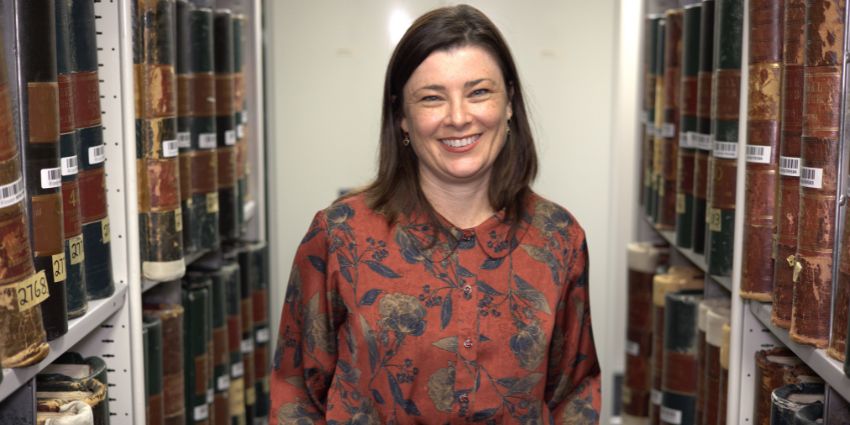
"She was really pleased," said Marnie Giles, Senior Community Engagement Officer at the Registry of Births, Deaths and Marriages.
"I was amused," Ms Harkin says. A friend later joked that she was no longer an "alien".
The document means Ms Harkin can finally travel without piecing together multiple forms of identification.
Most importantly, it has allowed her to return to her Country.
"I'm connected to that land," she says. "And it's important. That's why the people go back to the land."



