


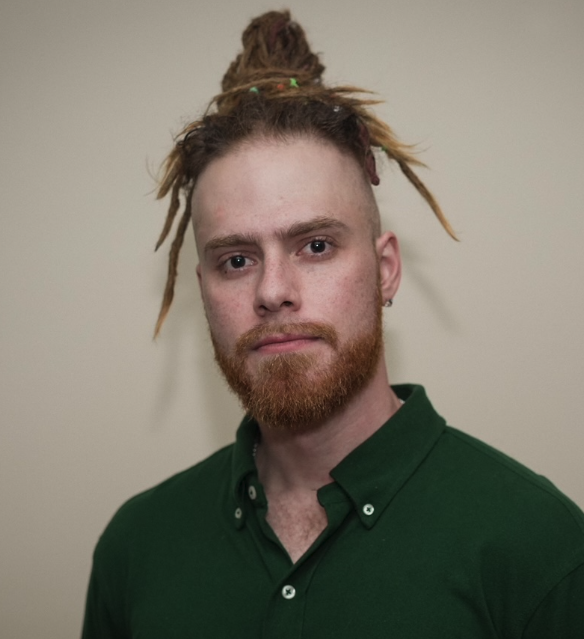

Kiwi have returned to the hills surrounding Wellington in Aotearoa / New Zealand for the first time in 150 years through a project involving iwi, community members and landowners.
More than 250 manu, the Māori word for birds, have been translocated to the region through the Capital Kiwi Project, following years of predator control, relationship building and community education.
Rāwiri Walsh, (Taranaki Whānui ki Te Upoko o Te Ika, Ngā Rauru Kītahi, Ngāti Raukawa ki te Tonga and Te Āti Haunui-a-Pāpārangi), is the project's Kaimanaaki Kiwi, or kiwi guardian and iwi liaison.
Speaking on the Mongabay Newscast, Mr Walsh explained the iwi agreements required before birds can be moved.
"For any species translocation, the government entities and Department of Conservation have to have sign-off or agreement from the tribes that it affects, so in their areas," he said.
"From a Māori perspective, we just had to agree with the iwi that we were receiving from, and they had to agree with us that they wanted to give us kiwi."
The process involves a tono, a request to iwi for the birds, followed by a pōwhiri, (welcoming ceremony), when they arrive in their new community.
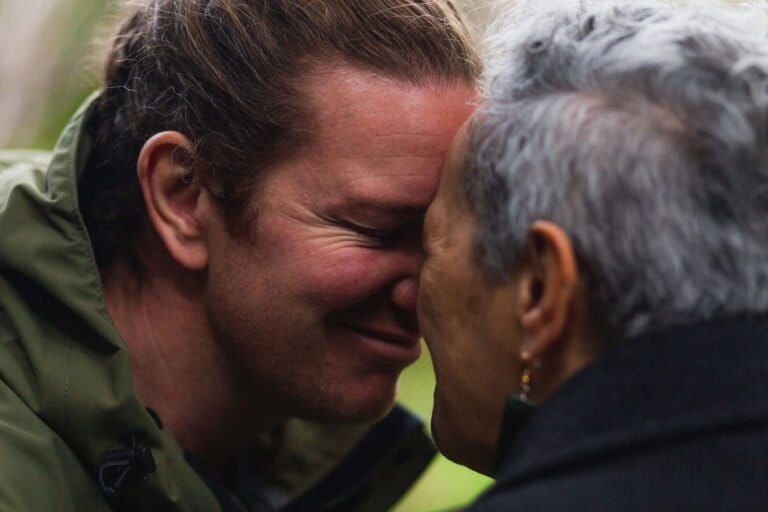
Ngāti Koroki Kahukura woman Poto Davies, from Sanctuary Mountain Maungatautari, gifted manu to Capital Kiwi and encouraged Mr Walsh to follow the tono process.
Mr Walsh described how responsibility for the birds changes hands.
"What we were able to do when moving kiwi is ... welcome the people, both the sanctuary workers as well as the iwi, onto the lands that they were bringing the birds," he said.
"And then ... the responsibility and the onus to the birds would switch ... we would do the pōwhiri or the ceremony, and then there would be a process where they would be handed over."
The final kiwi translocation ceremony this year took place at New Zealand's Parliament.
For Māori involved in the project, returning the birds also connects their work with whenua, or land.
"When you take that bird, and you release it, and you're placing it in a burrow, you're putting something back into that whenua," Mr Walsh said.
"And for us as a people, we believe that we're an integral part of that whenua, and when we are able to go out there and release kiwi or go out there and do that work on that land, that we're putting ourselves and something back into that environment that has ... a net positive benefit."
Preparing the hills involved deploying more than 5,300 traps across about 24,000 hectares to remove stoats, which prey on chicks before they reach a "fighting weight" of one kilogram.
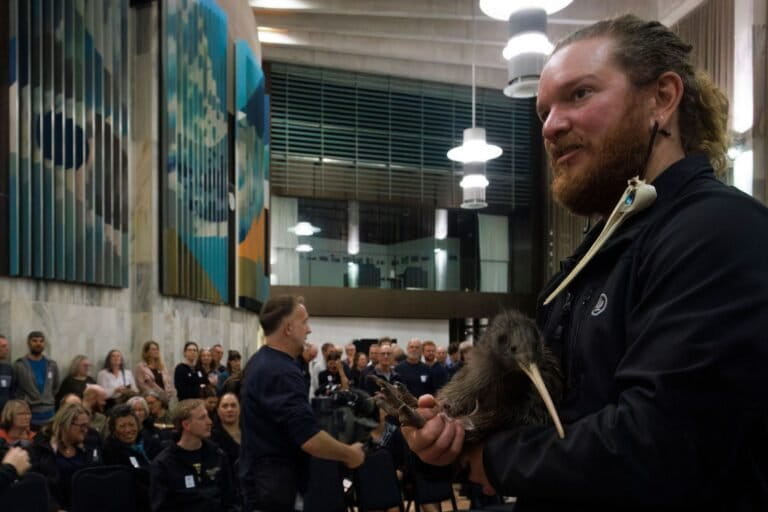
Community education also formed part of the work, with many participants having never seen a kiwi in person.
Project founder and lead Paul Ward described those relationships as the foundation of the work.
"The three legs on which this project are based are those relationships with iwi, with Māori, the relationships with the communities, and the relationships with the landowners," Mr Ward said.
"And if you pull one of those legs off, the tripod falls over."
Communities now share responsibility for caring for the birds.
Mr Ward linked their survival with people maintaining a connection to them.
"This is a relational project as much as it is what you might traditionally call a conservation project," he said.
"And I think at a fundamental level that if we lose our relationship with these animals, with these manu ... they risk becoming a museum species."
More than 90 per cent of newly hatched chicks have reached fighting weight, with Mr Ward estimating the local kiwi population now exceeds 300.
The project provides a model for returning other species, though Mr Ward identified complacency as the next challenge.
"Ten years ago, [the] challenge probably would've [been] 'Are we being too ambitious?'" he said.
"I think now that challenge is one of complacency."
"We're leaning into those relationships with our partners, with our iwi, our landowners, and our communities to explore what other taonga [property] species might be returned to these environments."



