




A coalition of Indigenous and legal organisations has criticised Victoria's proposed second tranche of bail reforms, calling it a politically motivated "tough on crime" response that targets marginalised communities.
Last week, the Victorian Government introduced the Bail Further Amendment Bill 2025 to Parliament, prompting a snap rally slamming the proposed changes.
The government claims the legislation will make it "almost impossible" for repeat offenders to get bail, extending changes made earlier this year.
The reforms include a "second strike" rule for individuals already on bail who commit further offences, and a broader bail test based on controversial New South Wales laws — but which will apply to both adults and children.
On Wednesday, a coalition of organisations — including the Victorian Aboriginal Legal Service (VALS), the Koorie Youth Council, the Aboriginal Justice Caucus, Federation of Community Legal Centres, Human Rights Law Centre, and the Law and Advocacy Centre for Women — said the laws would see more people jailed unnecessarily.
"As a collective voice and part of the state-wide Bail Saves Lives campaign, we have been very clear that locking people up is not the way to achieve community safety," the groups said in a joint statement.
"This Bill is irresponsible in the context of escalating remand numbers, deplorable prison conditions and a corrections system at breaking point."
The coalition criticised the proposed "high degree of probability" bail test, describing it as a form of "automatic pre-trial detention" that would require both adults and children accused of non-violent offences to meet a higher threshold than those facing charges of murder or rape.
VALS Chief Executive Nerita Waight said the reforms were "bad, ill-informed, [and] dangerous" and accused the government of risking Aboriginal lives for political gain.
"I worry what message this sends to our young people, to our women, to our families," she said.
"The colonial legal system was made to disenfranchise us, to demoralise us and to dehumanise us, so this week is no different."
Earlier this year, National Indigenous Times reported a record number of lockdowns at Victoria's only maximum-security women's prison due to staffing issues, with several suicide attempts also recorded. The government was criticised at the time for appearing to celebrate the rising number of people on remand.
The state budget includes plans to expand the prison system by almost 1,000 adult beds and add 88 more places in youth justice centres. The government also pledged to increase support services across the prison system to reduce reoffending.
Premier Jacinta Allan last week defended the reforms, arguing Victorian's are "rightly disgusted with repeated, violent offending".
"Now, our bail laws are the toughest in the country, because community safety will always come first," she said.
However Koorie Youth Council chief executive Bonnie Dukakis says the new bail laws "recklessly" endangered children and young people under the guise of public safety.
"I can tell you now, our kids are not safer," she said.
"As feared, the number of Aboriginal children and young people behind bars has skyrocketed since the last piece of poorly thought-out bail reform was rushed through earlier this year."
Aboriginal Justice Caucus co-chairs, Aunty Marion Hansen and Chris Harrison said the reforms ignore the recommendations of the 1991 Royal Commission into Indigenous Deaths in Custody.
"Once again, the Victorian Government has shown blatant ignorance towards Aboriginal communities who continue to call for an end to the overincarceration of our peoples," they said.
Human Rights Law Centre First Nations Director, Maggie Munn, described the laws as both "dangerous" and "discriminatory", which will "condemn Indigenous people to the damage and trauma of police and prison cells – without even being found guilty of an offence".
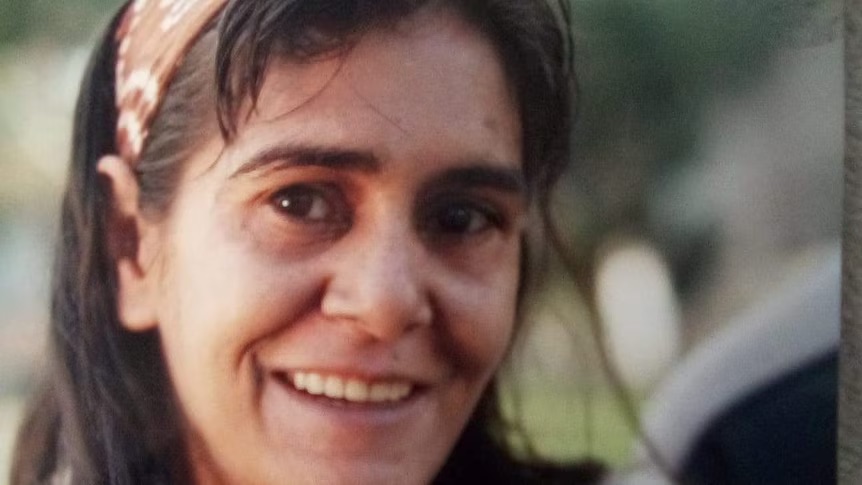
Previous bail reforms — introduced following advocacy from the family of Veronica Nelson, a Gunditjmara, Dja Dja Wurrung, Wiradjuri, and Yorta Yorta woman who died in custody in 2020— came after the state's bail laws were described as an "unmitigated disaster" which disproportionately impacted First Nations people and women.
The changes — welcomed by Indigenous groups afer years of campaigning — were labelled "wrong" by Premier Allan earlier this year.
While the new laws consider pregnancy and caring responsibilities in bail decisions, the coalition is calling for further expansion to include homelessness and family violence.
Law and Advocacy Centre for Women chief executive, Elena Pappas, said, despite "countless" inquiries into Indigenous deaths in custody, "governments continue to ignore these recommendations".
She argued there is "no doubt" the laws will see more mothers and carers incarcerated, which can have "devastating long-term effects".
"We know that children whose mothers are in prison are more likely to have disrupted education, poor health and unstable housing," Ms Pappas said.
"It is these factors, of course, that heighten the risk of a young person entering the justice system, further entrenching the care-to-prison pipeline."
In a separate statement on Wednesday, the Law Institute of Victoria (LIV) also criticised the bill, calling for a shift in focus toward prevention and community-based support.
"More individuals on remand does not achieve long-term community safety," LIV's Criminal Law Section co-chair Jarrod Behan said.
"Reactive and punitive responses are only likely to further entrench young people in the criminal justice system rather than keep the community safe."



