




Traditional Owners from eight groups are set to have their native title rights formally recognised over more than 4,000 square kilometres of country in Central Australia, including the birthplace of renowned Aboriginal artist Emily Kame Kngwarreye.
On Tuesday, at a homeland in the Utopia region, about 160 kilometres north of Mparntwe / Alice Springs, the Federal Court will hand down a consent determination recognising native title over the Mount Skinner and Woodgreen station areas.
Justice Stephen Burley will deliver the determination at a site near Atneltyey (Boundary Bore), marking the end of a native title claim lodged by the Central Land Council in 2023.
The claim area includes Country frequently depicted in Kngwarreye's internationally acclaimed artworks — particularly her paternal grandfather's country of Alhalker and the Dreaming story, Kame (pencil yam seed), after which she was named.
One of the 20th century's most acclaimed and significant painters, her work celebrated the rich ecosystem of the Country she lived throughout her life.
Kngwarreye's granddaughter, Jennifer Purvis, said the determination would be celebrated through art and ceremony.
"I draw yam seed dreaming," she said.
"I draw line ones, sometimes dot painting. We will dance too. It's right. You can come look, we can dance for our Country."
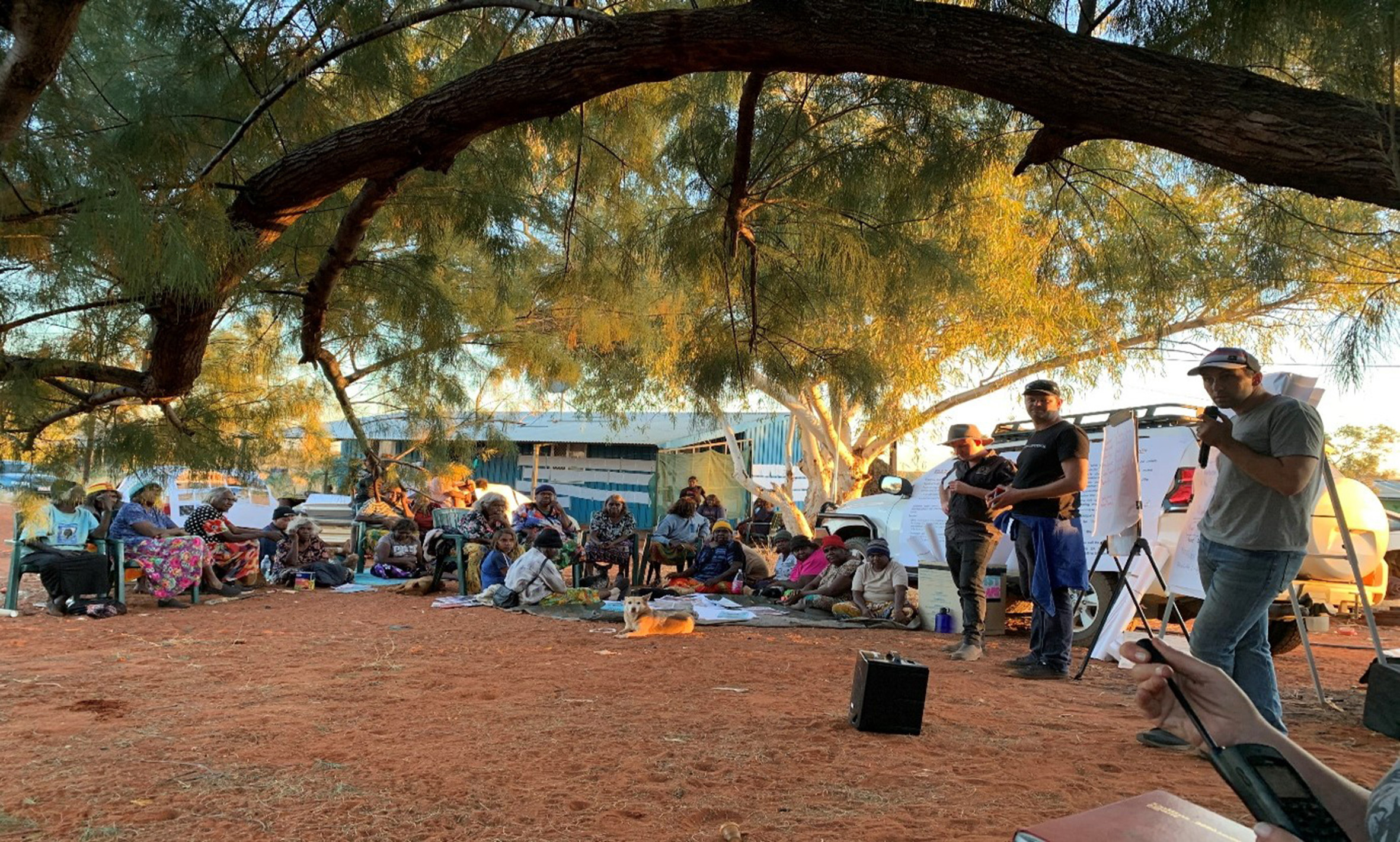
The determination recognises native title holders' rights to access and live on their country, to conduct cultural activities, and to protect sacred sites.
It includes a 20-square-kilometre area adjoining the Utopia homelands where exclusive native title rights apply, giving Traditional Owners the right to possess and occupy the land and control access.
The determination ceremony will be held within this area.
Across the remainder of the claim area, non-exclusive native title rights will allow Traditional Owners to access and remain on country, carry out cultural activities and protect sacred sites alongside the rights of other land users.
The recognised native title rights and interests will be managed by the Altyerr Anwekantherrenh Aboriginal Corporation as the prescribed body corporate.
Central Land Council (CLC) native title manager Francine McCarthy said the determination established important rights but differed from Aboriginal land rights.
"The determination allows the native title holders to hunt, gather, conduct cultural activities and ceremonies in the area, as well as sell resources and negotiate commercial agreements," she said. "But unlike under the Aboriginal land rights act, they have no veto right."
Native title holder and CLC delegate Graham Long said the recognition would allow families to reconnect with country and pass cultural knowledge on to younger generations.
"It's important for us to go and look around, visit our country and take our kids to learn our culture and our foods — like go hunting, camping [and] look around water holes," he said.
Traditional Owners had long sought recognition over Mount Skinner Station to overcome barriers preventing access to important ceremonial sites used for men's business and sorry business.
Mr Long hopes the determination will allow him to take his children onto country and teach them cultural practices alongside Western education, saying it is important they learn "both ways".
"We're living outside, but our sacred sites [are] inside," he said. "We can't do nothing cultural way."



