




Warning: Aboriginal and Torres Strait Islander readers are advised the following article contains the name of a person who has died.
The Aboriginal mother of five who died last month in a Northern Territory watch house has been identified, as lawyers representing her family call on the Territory Government to be held accountable.
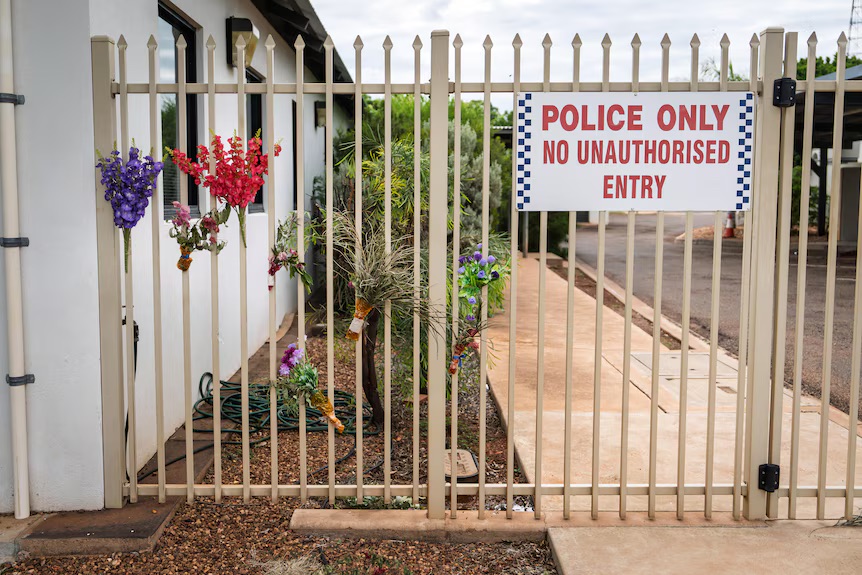
Kumanjayi Dempsey, 44, was originally from north-west Queensland and had moved to Tennant Creek to live with her partner. She died at the Tennant Creek watch house on December 27, two days after being arrested on Christmas Day.
Northern Territory Police say Kumanjayi was found unresponsive inside the facility almost 30 minutes after CCTV footage showed her falling to the ground. An initial post-mortem conducted on Friday listed the cause of death as undetermined.
The investigation into her death is being led by the Northern Territory Police Major Crime Unit, with oversight from the force's Professional Standards Command (PSC).
View this post on Instagram
In a statement this week, Sydney-based firm O'Brien Criminal and Civil Solicitors confirmed it is representing Kumanjayi's family.
"We extend our sincere condolences to Kumanjayi's family, friends and loved ones and ask that their privacy be respected during this trying time," the statement said.
Kumanjayi became the fourth Aboriginal person to die in custody in the Northern Territory in 2025, with the firm describing the figures as a "devastating indictment of systemic failure, 34 years after the 1991 Royal Commission into Aboriginal Deaths in Custody".
"We are concerned about the ongoing inadequacy of the conditions of cells in Tennant Creek Watch House, and Northern Territory detention facilities more broadly," O'Brien Criminal and Civil Solicitors said.
"Kumanjayi's death is particularly harrowing given the NT Government's recent refusal to allow the UN Working Group on Arbitrary Detention to conduct its scheduled inspection of Northern Territory detention centres, including watch houses, in breach of Australia's international human rights obligations under the Optional Protocol to the Convention Against Torture (OPCAT).
"The NT Government must be held accountable."
View this post on Instagram
A report last year by acting Ombudsman Bronwyn Haack was highly critical of conditions in Northern Territory watch houses, stating "no prisoner, regardless of their offence, should be held in such conditions". The report found watch houses have effectively been used as de facto prison cells since 2023 because of severe overcrowding in correctional facilities.
United Nations inspectors were barred from entering Northern Territory prisons and watch houses, with the government citing "operational capacity, safety and workforce resourcing priorities". At the same time, a delegation from the United Arab Emirates was granted access to some Territory-run detention facilities.
No nurse in Tennant Creek
Following Kumanjayi's death, it emerged there is no nurse stationed at the Tennant Creek watch house, with all detainees instead assessed through a police-led health check.
An inquest into the 2012 death of 27-year-old Kwementyaye Briscoe in the Alice Springs watch house — who died after what was described as "completely inadequate and unsatisfactory" treatment by police — recommended "custody nurses" be employed at watch houses on a daily basis.
While nurses are based at watch houses in Darwin, Katherine, Palmerston and Alice Springs, there is no nurse stationed at the Tennant Creek facility.
"All circumstances surrounding the death of the woman, from the policy and procedures that govern watch house care to the medical history of the deceased, will form part of a comprehensive brief of evidence that will be supplied to the Coroner," Northern Territory Police Assistant Commissioner Peter Malley said following Kumanjayi's death.
The ABC reported multiple sources saying Kumanjayi suffered from severe health issues associated with rheumatic heart disease (RHD). Police say no medical disclosures, including RHD, were made when she was taken into custody.
Assistant Commissioner Malley said all deaths in custody are "thoroughly investigated" by Crime Command detectives and overseen by the PSC.
"In this instance, the investigation has also engaged the Cultural Reform Command, who are on the ground in the community," he said. "Police have been in constant communication with the deceased's family in Tennant Creek, keeping them up to date with how the investigation is progressing.
"While further testing is required to determine a formal cause of death, the current information suggests that the woman suffered a medical event alone in her cell."
In 2025, 33 Aboriginal and Torres Strait Islander people died in custody — the highest number of Indigenous deaths in a 12-month period since records began in 1979.
The continued use of internal police investigations has drawn sustained criticism from Aboriginal organisations and advocates, who argue it undermines public confidence.
North Australian Aboriginal Justice Agency chief executive Ben Grimes told Guardian Australia last week that internal investigations do not give communities confidence, describing them as insufficient to ensure accountability — a view long shared by politicians, lawyers and advocates.
"Aboriginal families and communities have repeatedly said they do not trust a system where police are effectively investigating themselves after a death," Mr Grimes said.
"Independent, transparent investigations are critical not only to uncovering the truth, but also to maintaining community trust and preventing future deaths. Without genuine independence, the cycle of harm, mistrust and unanswered questions will continue."



