



A program linking traditional knowledge with sleep science is being expanded to treat obstructive sleep apnoea (OSA) in regional Indigenous communities.
An extension of the Let's Yarn About Sleep program (LYAS), the OSA program will be rolled out by the University of Queensland's Poche Centre for Indigenous Health.
Associate Professor Yaqoot Fatima said one in four Aboriginal and Torres Strait Islander people have the largely untreated condition, known as OSA, to a moderate or severe level.
"When a person's airway is blocked during sleep, there are sudden drops in blood oxygen levels and frequent wakefulness affecting restorative sleep and straining the cardiovascular system," Dr Fatima said.
"People who don't sleep well are more likely to be overweight and at risk of diabetes, heart disease and mental health issues like depression and anxiety."
The program has been made possible through a $4.06 million allocation from the Medical Research Future Fund and is based on Let's Yarn About Sleep's partnership with the University of Queensland, which runs a co-designed sleep health program for young Indigenous people in north west Queensland.
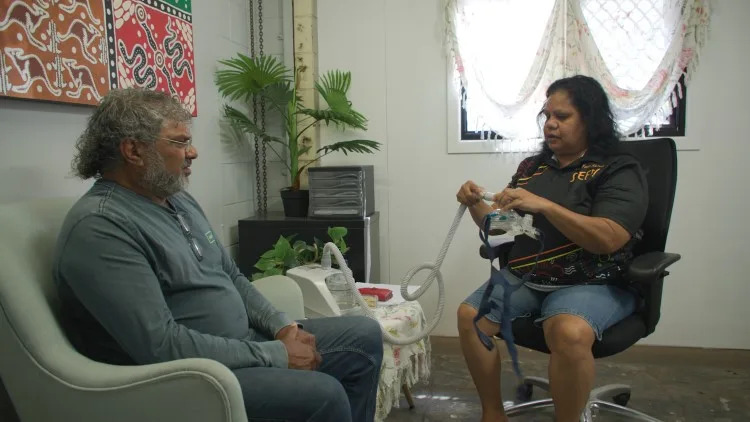
LYAS sleep coach Karen Chong talks about sleep apnoea with Neil Dunne, a steering committee member and program participant. (Image: University of Queensland)
Dr Fatima said after commencing, LYAS focused on the sleep health of teenagers however during community consultations, Elders were vocal about the lack of community-based sleep health services.
"Sleep is a biological necessity for good health and brain function, and it affects spiritual health – in First Nations culture it is an important time to connect with ancestors, country and cultural knowledge," Dr Fatima said.
"Consulting with community members and up to 100 service providers we will identify what's contributing to poor sleep and upskill local health workers to improve the diagnosis and treatment of OSA and other sleep health conditions.
"People meeting the criteria for a home-based sleep study will be visited by trained Aboriginal Health Workers and moderate to severe cases will be managed locally while complex cases will be referred to specialist services."
Mount Isa LYAS program coordinator, Roslyn Von Senden, said the sleep program for young people had ignited interest in the importance of sleep and communities including Cloncurry, Doomadgee, Normanton, Burketown, Yarrabah and Wujal Wujal were becoming involved.
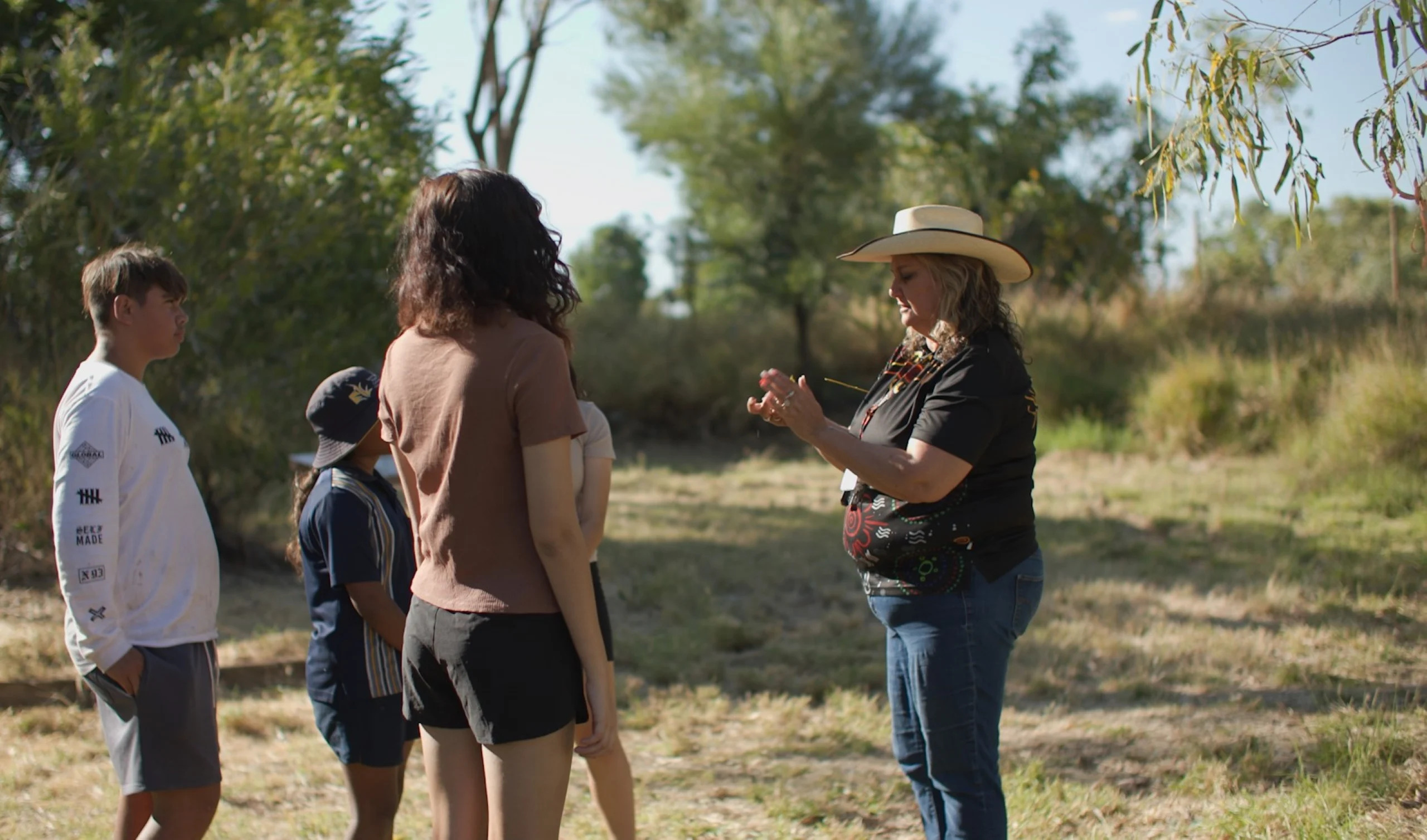
Roslyn Von Senden leads a Walk on Country talking about the use of plants and relaxation techniques as part of the LYAS program for young people. (Image: University of Queensland)
"A part of my role is actually moving to each community and talking to people about what we're doing and then having steering groups from these communities set up," Ms Von Senden said.
"They have a lot of knowledge and a lot of skills to make sure that the foundations are laid in the way that we do things with respect and integrity."
Sleep coach Karen Chong has been running the program in Mount Isa and will be upskilling for the sleep apnoea project.
"I feel that our culture will be lost if our children don't sleep properly because when we're sleeping, all our messages and everything comes through our dreams and without proper sleep, we could lose our culture," Ms Chong said.
"I'm going to be training to be a sleep technologist and I will be doing on the job training with my people out in the communities and in Mount Isa and, similar to the young people, I would like to educate them on how to prevent these chronic diseases and have a longer life."
The Let's Yarn About Sleep Obstructive Sleep Apnoea program has also been made possible through partnerships with Ngak Min Health, Mithangkaya Nguli,Sleep Health Foundation, Gidgee Healing and North West Hospital and Health Service.



