




Indigenous rangers are celebrating the return of koalas to the Minyumai Indigenous Protected Area, south of Evans Head, in the Northern Rivers region of New South Wales.
Minyumai rangers feared koalas — known as Boorubee — had perished in the flames of the 2019-20 bushfire season which saw 90 per cent of the IPA burned.
It was an absence Minyumai's Traditional Owners, the Bandjalang people, felt deeply.
"My great grandfather was a revered Elder who knew many of the old stories handed down. One story was that Boorubee were never to be hunted, but protected," Bandjalang Elder Auntie Bonnie Wilson said.
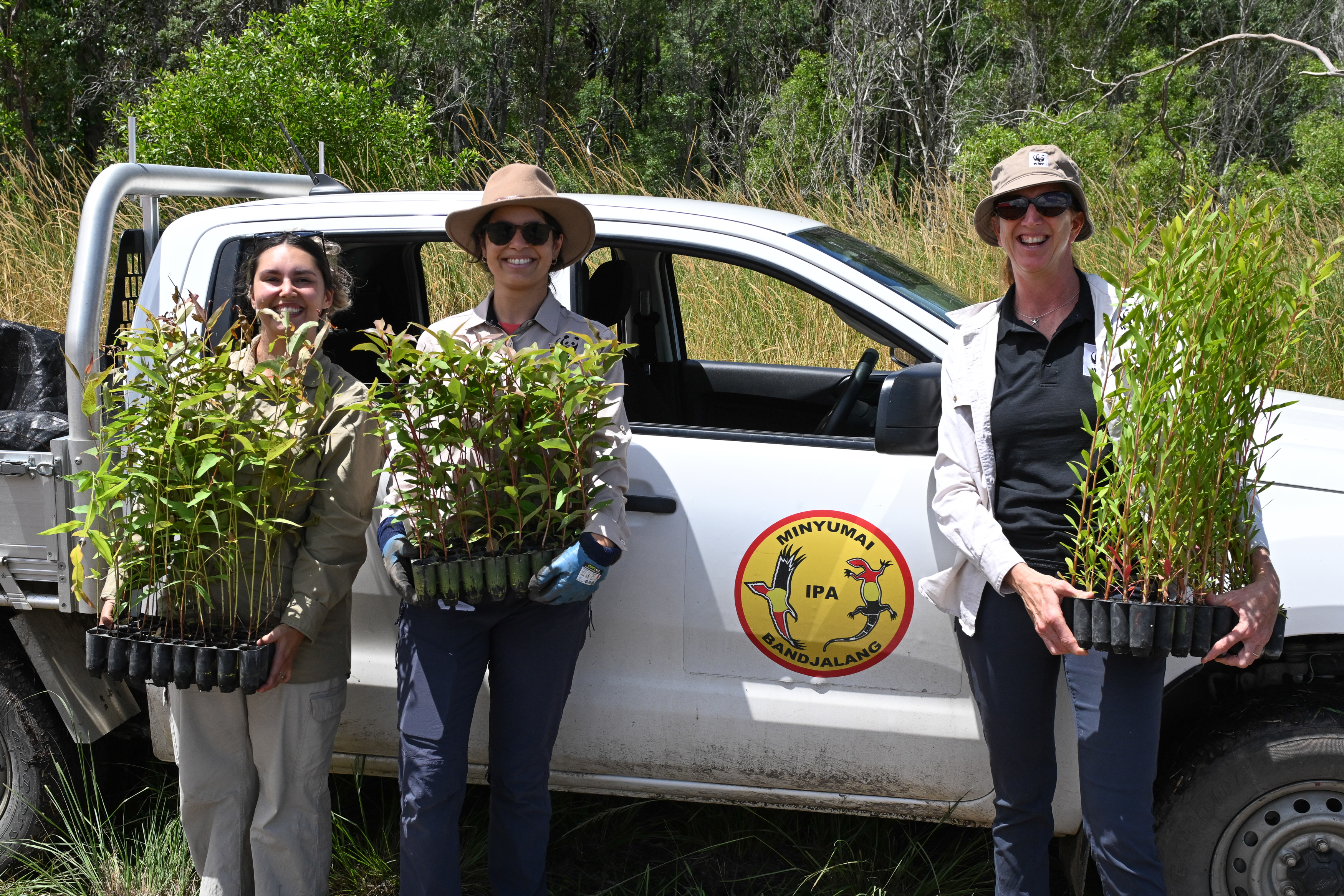
Senior Minyumai Ranger Maitland Wilson, left, and WWF staffers Maria Borges, centre, and Tanya Pritchard, right, with seedlings to be planted to support Boorubee (koalas) and other wildlife. (Image: supplied)
After being last sighted in 2018 a breakthrough came in June 2023, with a ranger's wildlife camera capturing Boorubee — an individual they dubbed "Rubee".
"We were going through the photos and then we came across the koala and we were freaking out," Senior Minyumai Ranger Maitland Wilson said.
"We had no idea they were here. We were just so stoked. I knew then and there that I wanted to protect them. I wanted them back on Country and to conserve them and give them the feed and habitat trees they needed."
The discovery was a huge boost for the Boorubee Monitoring and Recovery Project, which is assisted by the World Wide Fund for Nature Australia with funding support from furniture brand Koala and led by Minyumai's women rangers.
So far the project has seen rangers plant 2,500 koala food and shelter trees, map existing koala habitat, clear lantana to enable Boorubee to access trees, and conduct cultural burns to reduce fuel loads to minimise wildfire risk and enable Boorubee and other species to move more easily through the landscape.
"It feels really good doing cultural burning on our property. Having that connection to Country and doing it the way our ancestors did it," Minyumai Ranger Supervisor Harry Wilson said.
The project also saw the inclusion of thermal drone surveys, with night flights identifying six Boorubee in 2024 and nine last year.
Rangers used the survey data to collect koala scats and send them off for analysis, with results showing Minyumai's koala's are chlamydia-free — a disease which impacts some NSW koala populations with infection levels of nearly 80 per cent.
"That makes me feel warmhearted and positive about the next generation of koalas living on Minyumai. It's amazing," Ms Wilson said.
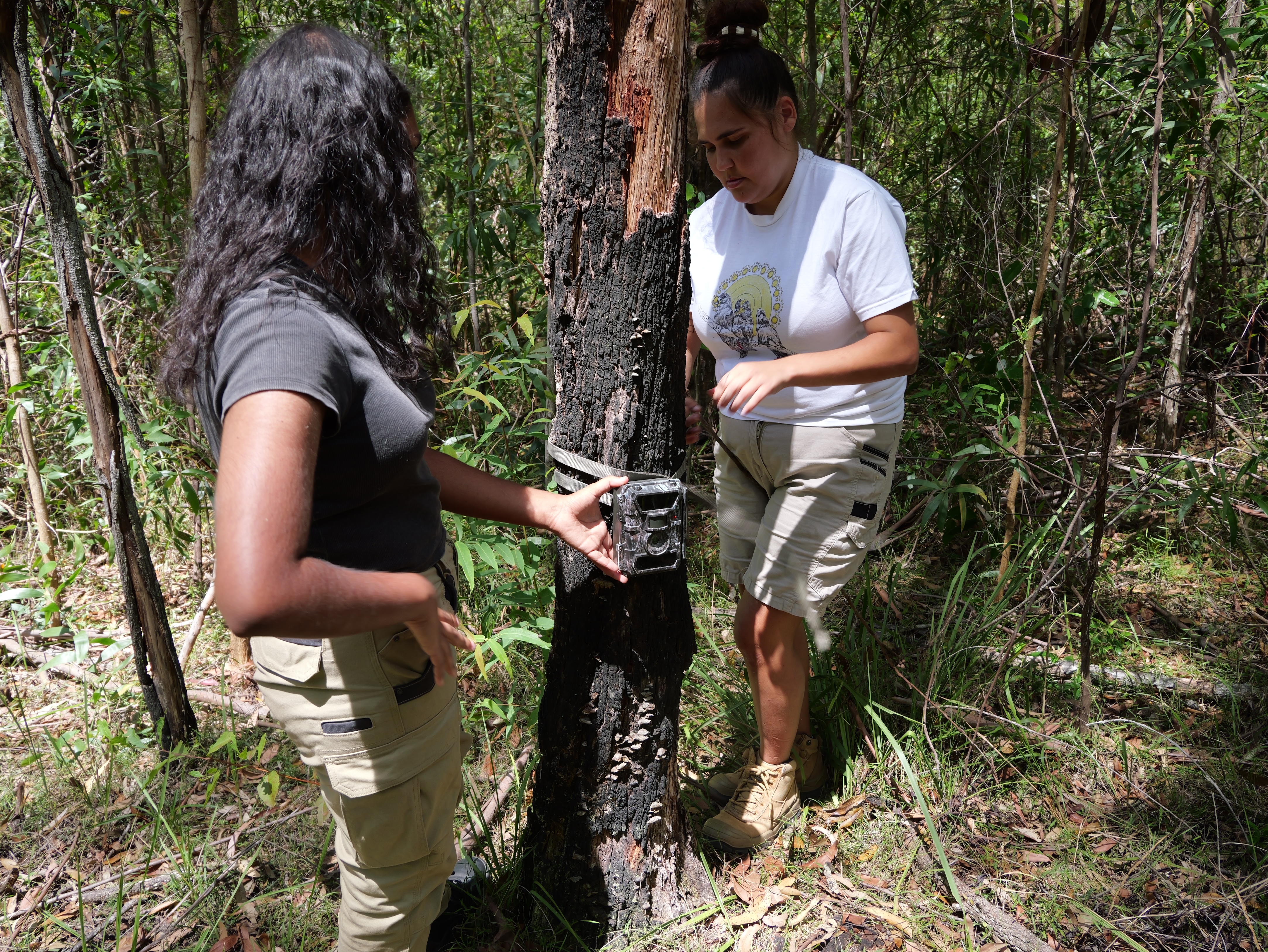
Minyumai Rangers set up a trail camera to monitor Boorubee (koalas). (Image: supplied)
Bandjalang language teacher and cultural advisor at Minyumai, Simone Barker, said she was optimistic for the future of Minyumai's Boorubee.
"Boorubee are important to all Aboriginal people," she said. "Minyumai is a sanctuary for them.
"It's a place where we can keep them protected from roads, from people, from dogs. Hopefully they'll thrive here. That's what we want."
WWF's Senior Manager of Koala Recovery, Tanya Pritchard, said supporting Indigenous-led restoration is critical if koalas are to be pulled back from the brink of extinction.
"The Minyumai rangers are combining Traditional Knowledge and methods such as cultural burning with technology such as drone surveys and scat analysis," Ms Pritchard said.
"This innovative and holistic approach will help recover koala populations."



