




For countless generations, the Boab tree has held great significance in the traditions and spiritual beliefs of the Lingka clan in the northwest region of Australia.
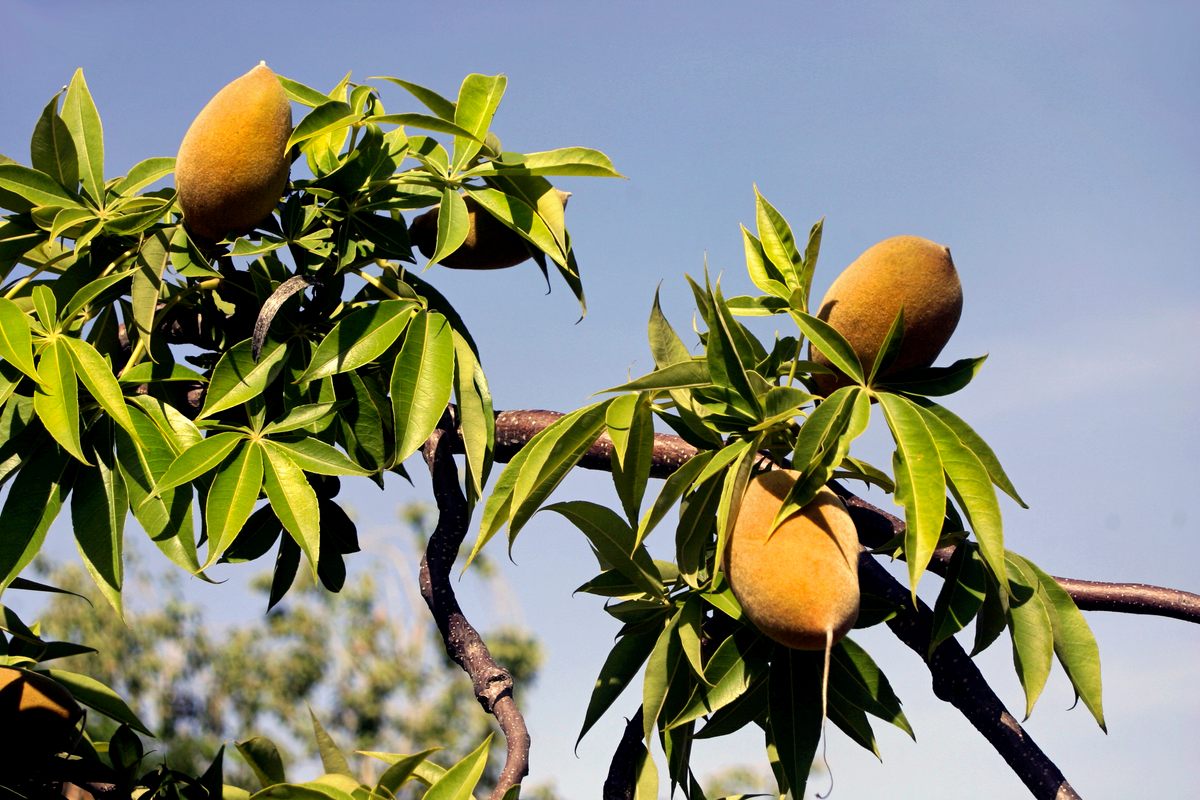
The Boab is an extremely versatile tree, serving many purposes for the traditional owners.
It's roots can be woven into string, the sap provides medicine, seeds grow and provide nutrition and the bulbous trunk can store as much as 100,000L of water at a time.
Another piece of information that gives us a look into the past are the carvings seen on many of the Boab trees, commonly used as identifiers in Lingka lore.
These markings are commonly referred to as Aboriginal dendroglyphs - motifs and images which are carved into tree bark rather than stone.
Susan O'Connor, an archaeology professor at the Australian National University in Canberra, warns that the Boab trees are currently facing a critical moment.
Due to the impact of a changing climate and human actions, many of the Boab trees that were previously documented through photographers can no longer be located.
O'Connor is collaborating with the local Indigenous community to document and preserve the remaining Boab trees before they disappear entirely.
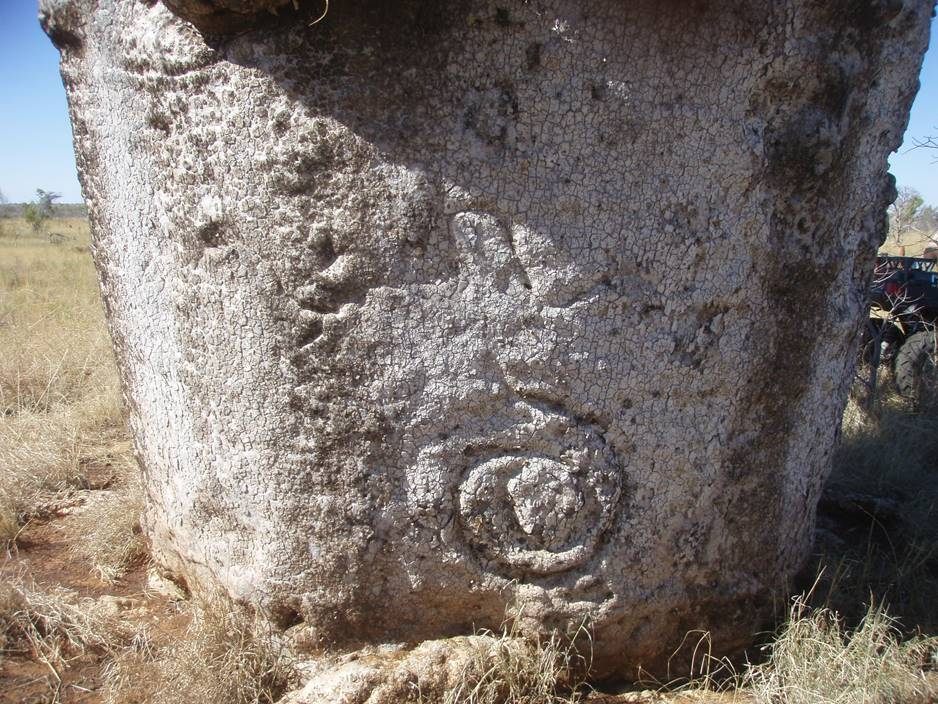
Records show that the carved trees were identified by colonial settlers in 1855 but it wasn't until 1960 that archaeologist Ian Crawford made the first systematic attempt to photograph the Boabs dendroglyph's in the Tanami Desert.
The trees, along with their markings often represent much more than landmarks as Jane Balme, professor emeritus at Perth's University of Western Australia said.
"They are physical representations of stories associated with narratives within the landscape, including cultural practices that ensure the regeneration of resources."
The Lingka people shared in the late 1980's that the Tanami Desert dendroglyph's, featuring king brown snakes, emus, kangaroo footprints and other symbols such as anthropomorphic and zoomorphic figures, lines, arcs and oblong shapes, are tied to the Dreaming and usually found 1.5 to 6.5 feet from the ground.
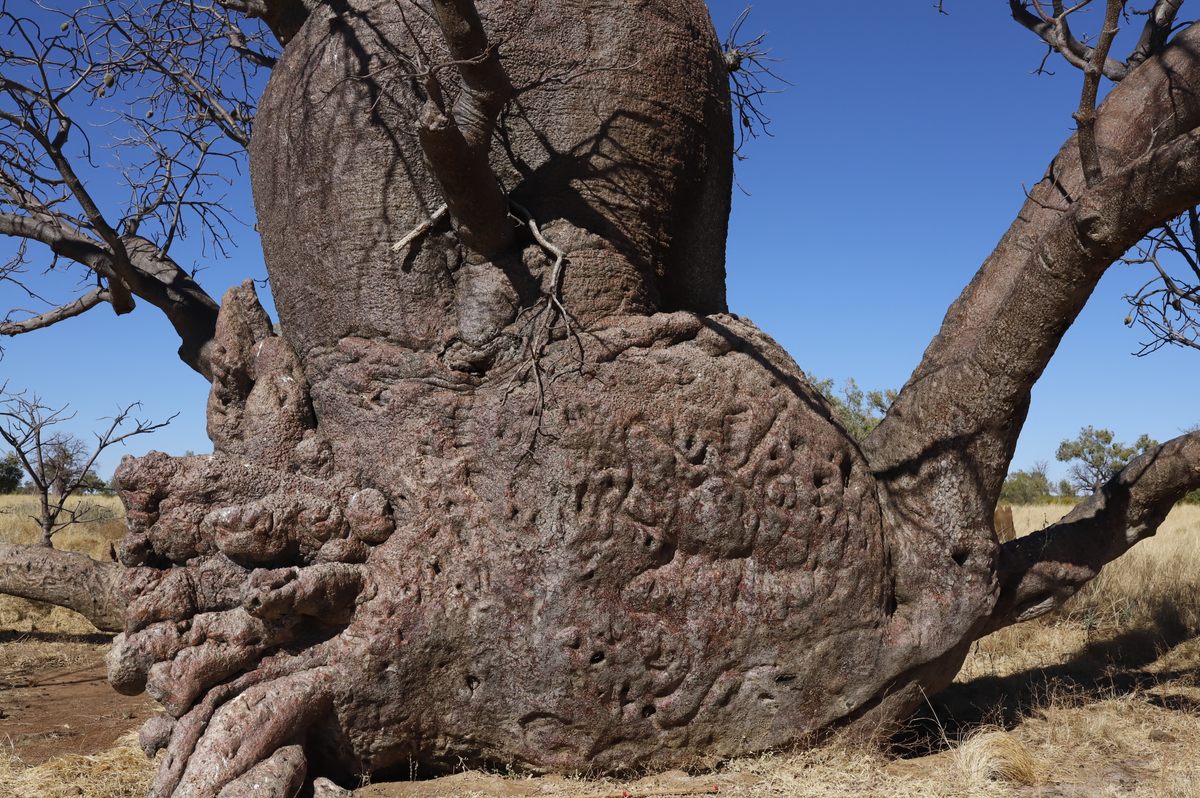
In modern times, the Lingka people no longer use dendroglyph's, though they wish to preserve the language that remains in spite of the warming climate.
Due to the massive size of the Boab, they are particularly vulnerable to lightning strikes which often destroys carved Boabs.
"When they are hit by lightning the tree collapses and because the inner wood is soft and fibrous, it quickly disappears," O'Connor said.
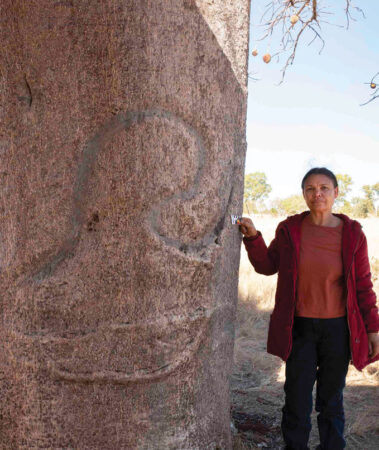
As a result, not much be done to keep the trees, and their carvings, safe. The landscape where these trees are found is arid and isolated, making recording keeping no easy feat.
"It really isn't possible to conserve the trees, so our aim is to do the best quality recordings possible so that these can be archived for the future," O'Connor said.
The research team is aware of ten other carved boab trees that once stood sentinel; however they were unable to access them during their survey due to the need for off-road vehicles with "endless" tires.
"Boabs are such special trees, they all have remarkably distinctive growth shapes and they live for so long that they must have witnessed so many changes," says O'Connor.
"We need to go back to find the others." she said.



