




A rare spade-toothed whale is being dissected in New Zealand in a world-first examination of a complete specimen.
The whale, a five-metre-long male, washed ashore in Otago in July, sparking interest among scientists and local Māori.
Spade-toothed whales, named for their distinctive teeth, are one of the least known whale species, with only seven specimens recorded since the 19th century.
Most have been discovered in New Zealand, with all previous knowledge based on bones or tissue samples.
The dissection, which began at Invermay AgResearch Centre near Dunedin, involves international scientists and members of Te Rūnanga o Ōtākou.
Tūmai Cassidy said Māori involvement in the process reflects the cultural significance of whales as taonga (sacred treasures).
"Whales are incredibly important animals in our culture … our arrival to Aotearoa (New Zealand) is deeply tied to whales, and like other cultures around the world, we utilise different parts of their bodies," he said.
Mr Cassidy said the collaboration with Western scientists was an "epic privilege" and a chance to share Indigenous knowledge.
"To be part of that process is a huge thing for our hapū but also for our iwi … so that when these events occur, we have local people who can take on some of that responsibility and do it justice," he said.
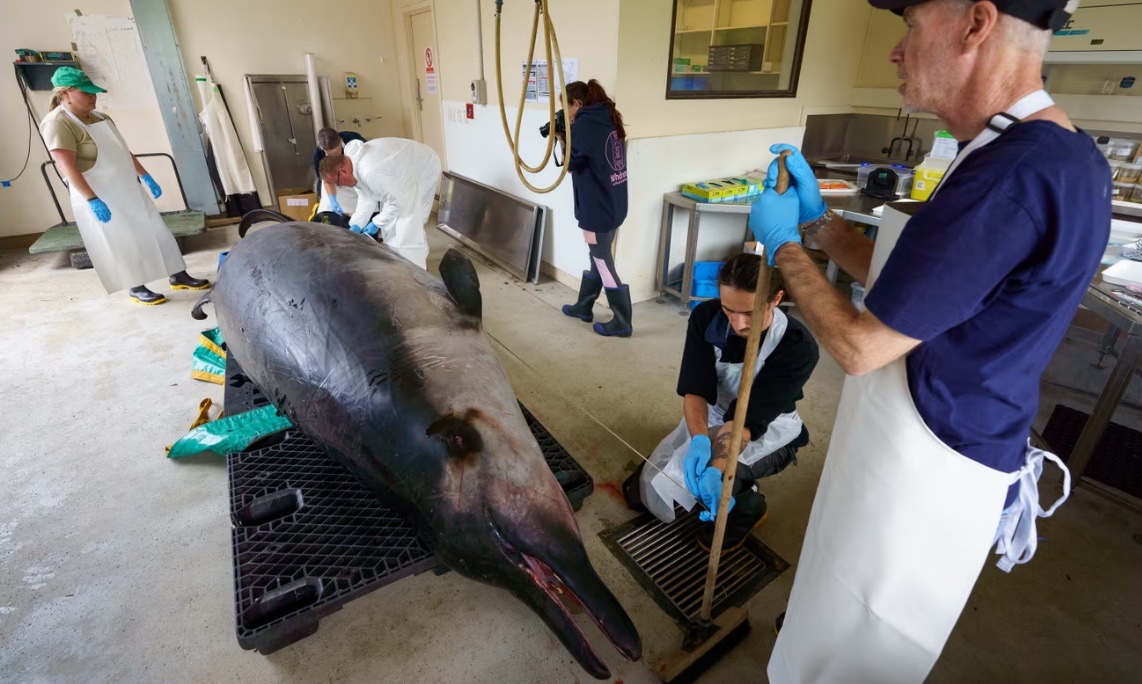
The dissection aims to uncover details about the whale's anatomy, including its throat structure, stomach layout, blubber weight, and vertebrae.
This information will help researchers better understand the species' life in deep ocean trenches and its unique adaptations as an "exceptionally deep diver".
Scientists are also studying the whale's sound production and feeding habits.
The species was first identified in 1874 from a jawbone and teeth found in the Chatham Islands.
More recently, tissue from two specimens discovered in 2010 allowed researchers to describe the species' physical characteristics.
The current dissection offers a rare chance to learn more about the living animal and its role in marine ecosystems.
When the study concludes, the whale's skeleton will be gifted to Otago Museum, while Ōtākou Māori will retain the jawbone for cultural purposes.
"This is a huge opportunity to combine science and tikanga (customs)," Mr Cassidy said.
The dissection is expected to take five days, with findings that could shape future conservation strategies.



