


A significant event happening in Sydney this month is the 21st Triennial General Assembly and Scientific Symposium of ICOMOS (International Council on Monuments and Sites).
ICOMOS is the principal advisory body on cultural heritage to the United Nations Educational, Scientific and Cultural Organisation's (UNESCO) World Heritage Committee and from the 31st August to 9th September, Sydney will host more than 1400 experts from across the globe who will engage in a full program of what is promised to be thought-provoking site visits, functions, workshops, lectures, designed to bring world heritage perspectives to the forefront of our nation.
Ahead of the weeks proceedings, ICOMOS Australia president, Professor Tracy Ireland, said that heritage issues and the future of heritage are more important than ever, and the General Assembly and related Scientific Symposium (GA2023) will encourage discussion on these issues as well as showcase innovative practices from across the globe.
"GA2023 will provide a platform for Traditional Owners from around Australia, and First Nations communities from across the globe," Professor Ireland said.
"It will also foster understanding of how conservation of heritage places is part of building resilient communities and ensuring the sustainability of the world's scarce resources."
A highlight of the program is prominent Climate Change Activist Mr Maina Talia from Vaitupu, Tuvalu, who delivered a keynote presentation at the 'Indigenous Voices on Culture, Heritage and the Climate Crisis' workshop.
Mr Talia is no stranger to the impact of climate change as he is witnessing first-hand the devastating effect this is having on his home country.
He has been an active member of the Pacific Representative to the International Indigenous Peoples Forum on Climate Change (IPFCC) and has been raising awareness of climate change for ten years, having attended several COP events.
Mr Talia has a wealth of cultural knowledge and has recently completed his doctoral studies at Charles Sturt University, which explored the concept of good neighbours in the context of climate change and geopolitics.
He regularly speaks on topics of climate change, oceans, sea-level rise, seabed mining, migration and traditional knowledge.
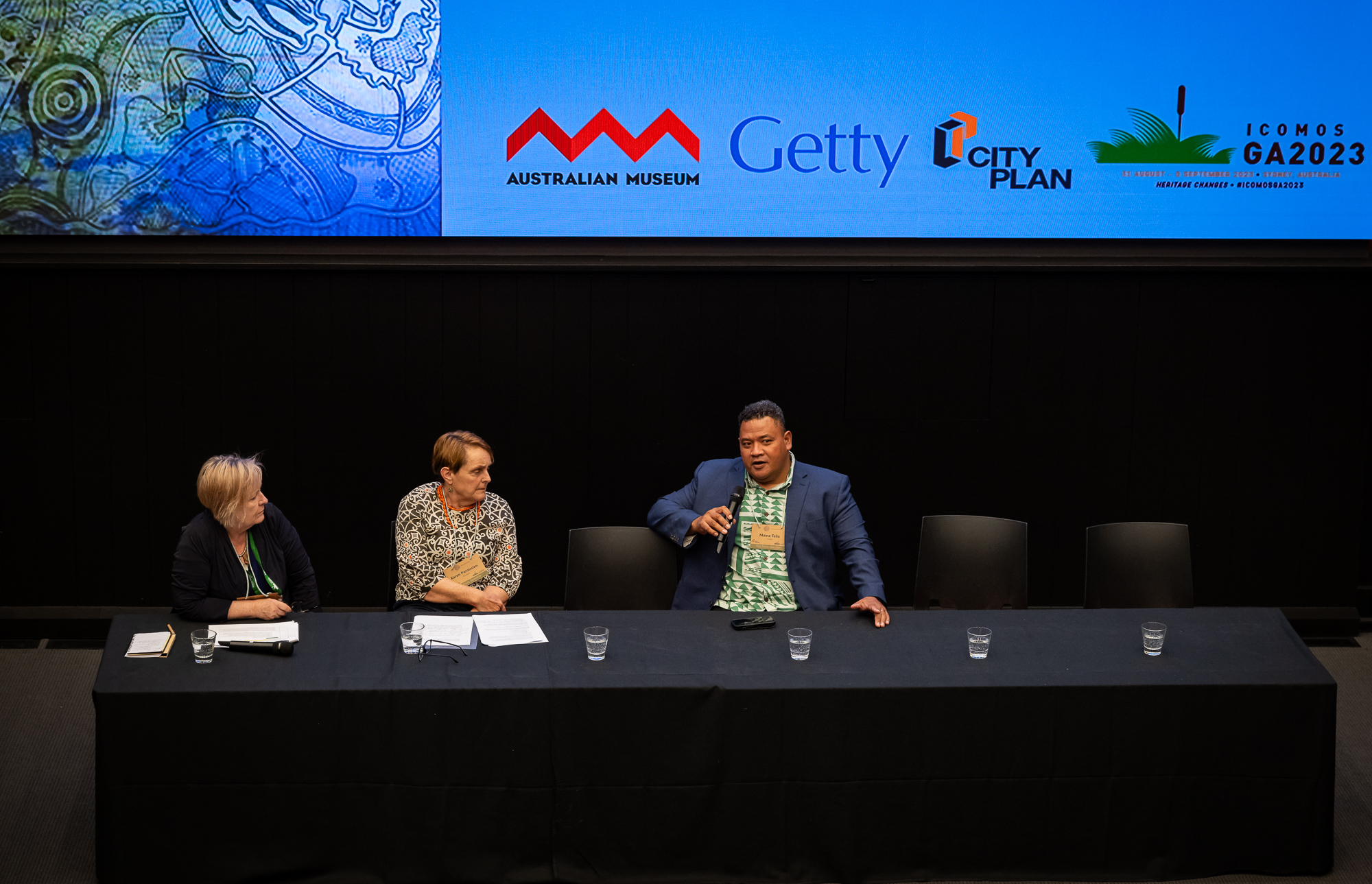
Devoted to speaking truth to power and holding the privileged accountable for their actions, his message was strong and clear, climate change related sea level rising is a matter of life and death for his people and culture, and Australia needs to do more.
During his presentation, Mr Talia shared the major issues facing Tuvaluans which included but was not limited to the risk of losing cultural identity, drought, food security, displacement and finance.
He also posed the question of whether his people will be climate refugees or be able to migrate with dignity.
"It was a significant platform and it was good to have the opportunity to share my story with the world," Mr Talia told National Indigenous Times.
Referring to the Pacific region, Mr Talia said that the effects of climate change and related sea level rising are intensifying, and it is having a negative impact on his people, especially Tuvalu where the highest point of the island is not two meters above the sea.
"It is hard to see Australia at the same time opening up coal mines" he said.
Mr Talia has previously spoken about water sanity following cyclones which are now becoming more prominent and unpredictable, stating "A lot needs to be improved for the community to access clean water during disasters".
On Australia's relations with our own First Nations, he said that there is a need for a platform where First Nations voices can be heard and he feels that Australia continually neglects their own First Nations people.
Continuing his plight for his people and country, Mr Talia will be attending the Climate Summit in New York, he said that he is feeling fatigued after years of fighting, but that he is feeling optimistic for change.
For more information or to register for this week's events is available via the ICOMOS 2023 website.



