




The New South Wales Aboriginal Land Council is considering the extraordinary step of withdrawing from shared decision-making forums with the state government over a contentious land rights bill.
In recent months, the state's peak Aboriginal land rights body has been highly critical of proposed changes to Crown land legislation in NSW, warning they could undermine more than 40 years of progress in Aboriginal land rights.
Introduced in March, the Crown Land Management Amendment (Statutory Review) Bill 2026 was initially described by Lands and Property Minister Steve Kamper as involving "minor procedural changes".
However, the NSW Aboriginal Land Council (NSWALC) argues the legislation would have far-reaching consequences for Aboriginal land rights by expanding retrospective powers, undermining established legal principles and weakening the integrity of the Aboriginal Land Rights Act 1983.
On Thursday, NSWALC chief executive Clare McHugh said the bill's "discriminatory elements", coupled with what she described as a lack of shared decision-making by the NSW Government, had prompted the organisation to reconsider its participation in key forums — including those linked to the Closing the Gap agreement.
While no formal decision has been made, it is understood that an extraordinary council meeting involving representatives from the state's nine regions is expected to take place next week.
Ms McHugh said the government's handling of the legislation had reinforced the council's concerns.
"Aboriginal people have no level of involvement in decisions affecting Aboriginal peoples and the recognition of Aboriginal rights and interests," she said. "This cannot continue.
"The bill seeks to restrict Aboriginal access to Crown Land and opportunities across the State, effectively hollowing out the compensatory and good intent of the Aboriginal Land Rights Act."
A NSW Government spokesperson told National Indigenous Times closing the gap was a "top priority" for the government, arguing they are "committed to working in partnership with Aboriginal Peoples to realise their aspirations and improve outcomes".
"The NSW Government and Aboriginal Stakeholders in NSW signed up to the national agreement to focus efforts on our shared goal of closing socioeconomic gaps between Aboriginal People in NSW and others," the spokesperson said. "We remain committed to that goal and continuing to work in partnership with Aboriginal stakeholders to meet it."
It is understood that amendments to the bill have been drafted and will be circulated to all NSW Aboriginal Land Councils shortly.
It is not expected to be debated in parliament until August.
Last month, NSWALC chair, Dr Raymond Kelly, said the bill represented not only a weakening of land rights but also a failure of integrity by lawmakers.
"Let me be clear about one thing. This is not just about land rights. This is about the rule of law," he said.
"You can't introduce a bill which makes it lawful and then change it somewhere through the process, deceitfully and under the cover of darkness. If you've got to do this, then come have a conversation with us."
According to NSWALC, just 0.2 per cent of land in New South Wales has been returned to Aboriginal people. The organisation has previously highlighted a backlog of 43,000 land claims, some dating back to the 1980s, that remain unresolved.
As a founding member of the NSW Coalition of Aboriginal Peak Organisations (CAPO), Ms McHugh said NSWALC would always "remain a committed member", describing the coalition as a "united Aboriginal voice advocating for structural reform, Aboriginal rights and self-determination in NSW".
However, she argued the legislation had progressed without "genuine partnership or shared decision-making", despite the "substantial concerns" raised by Aboriginal communities, NSWALC and the wider Aboriginal Land Rights Network.
"This approach undertaken by the NSW Government is inconsistent with the national Closing the Gap Priority Reforms," Ms McHugh said, "which require our governments to strengthen shared decision-making, support the community-controlled sector and transform government institutions".
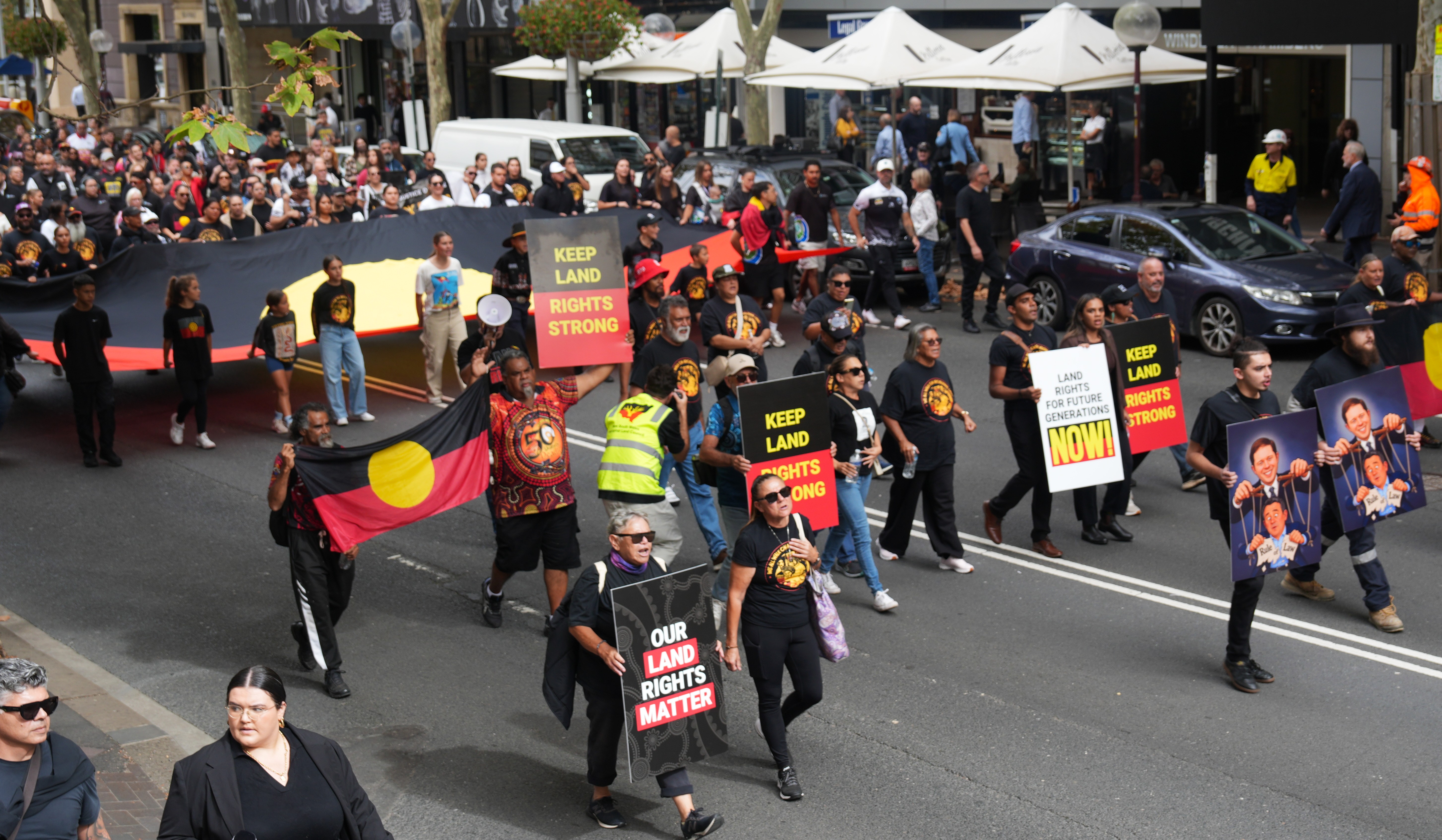
More than 92 per cent of Aboriginal Land Councils across New South Wales have condemned the bill as a threat to land rights, with hundreds rallying outside Parliament House last month in opposition. Over 100 letters opposing the bill were sent to Minister Kamper, Premier Chris Minns and Minister David Harris.
Additional reporting by Jarred Cross and Alexandra Giorgianni.



