




After almost two centuries, four historical Indigenous items have been returned to South Australia's Kaurna community from Germany.
Lutheran missionaries sent a kathawirri (sword), tantanaku (club or bark peeler), wirnta (spear), and wikatyi (net) to Germany - highly significant items for the Kaurna people - after being given them in an exchange at Pirltawardli (Possum Park) in 1840.
The items have been temporarily stored by the Australian Institute of Aboriginal and Torres Strait Islander Studies (AIATSIS) since they were brought back from Germany by Chairperson of Kaurna Yerta Aboriginal Corporation (KYAC), Mitzi Nam, in August of last year.
On Friday they were officially handed over to the Kaurna people during a celebration at Pirltawardl, with German Federal Minister for Foreign Affairs, Annalena Baerbock, in attendance.
Ms Nam said both KYAC and the entire Kaurna community were "thrilled" the items had been returned home.
"Home to where they were part of the lives of the Kaurna people that created them and where they were such integral parts of our lives," she said.
"These items may no longer be used in the day-to-day lives of the living Kaurna people, but they are part of our story, our culture and we share a deep and significant connection with them."
Ms Nam said she hoped the homecoming of the items was only "the beginning," of pieces of Kaurna culture and heritage coming back to where they belong.
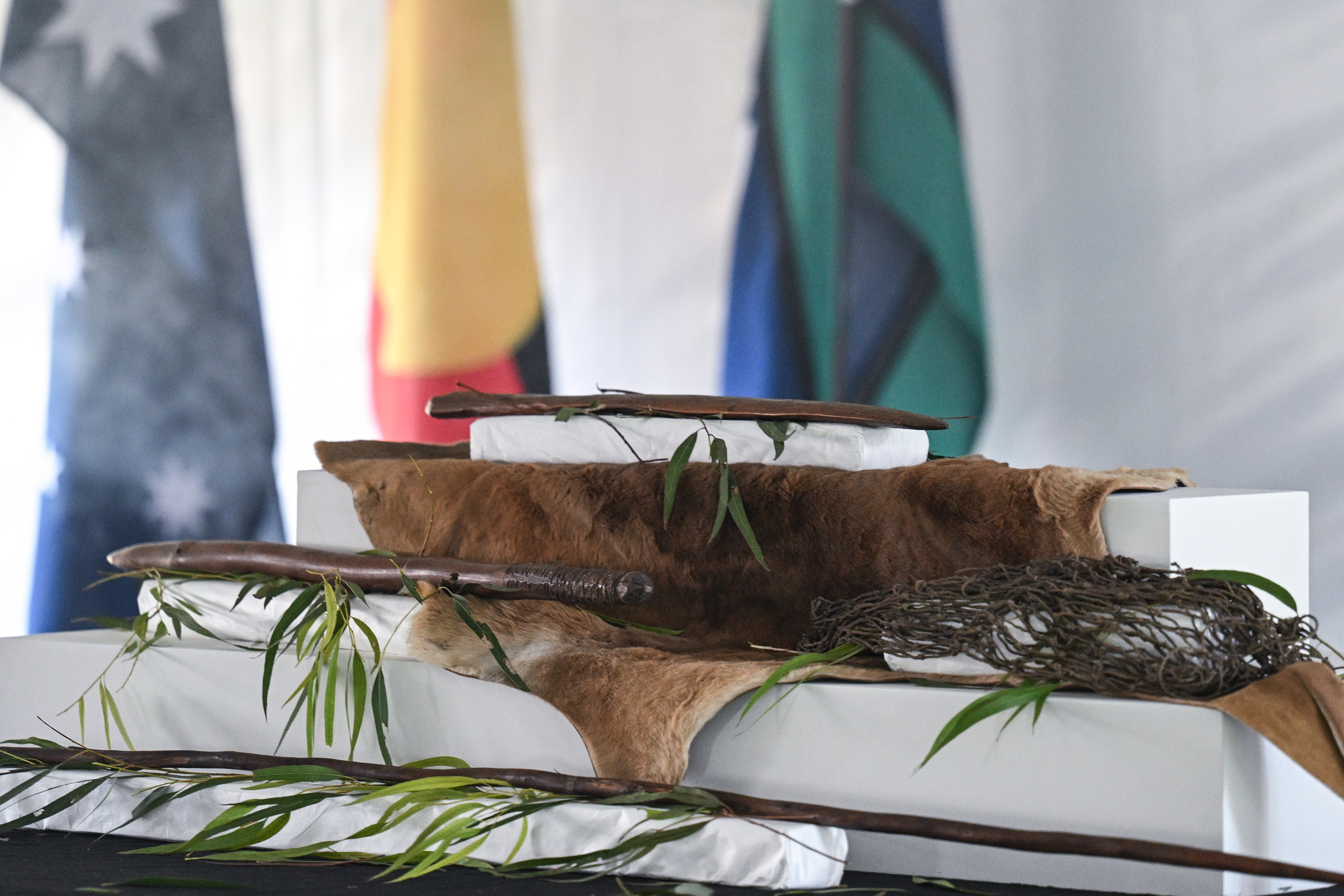
The Kaurna people and the Grassi Museum in Leipzig have been in discussions for five years over the return, after Senior Kaurna man Michael Kumatpi O'Brien submitted an application for their return on behalf of the Kaurna community.
AIATSIS interim chief executive, Leonard Hill said the achievement of bringing the historical items home was a result of the strong collaboration between the Kaurna people, the Grassi Museum, and the German Government, adding AIATSIS were "honoured" to have been entrusted with temporary care of the items.
"We recognise the importance of returning cultural heritage material to Aboriginal and Torres Strait Islander peoples to support cultural revitalisation and resurgence," Mr Hill said.
"AIATSIS sees this return as the beginning of an ongoing collaboration and is looking forward to continuing our conversations with German collecting institutions."
The Lutheran missionaries were researching and publishing Kaurna language and vocabulary lists when they were given the items, initially giving them to the Dresden historical museum in 1840.
Speaking on Friday, Minister for Indigenous Australians Linda Burney, said repatriation helps tell the full story of Australia's history.
"These items show us how Kaurna mob lived on – and with – Country over 180 years ago. A small insight into the 65,000-year-old connection Aboriginal and Torres Strait Islander people have to these lands, waters, and skies," Ms Burney said.
The Minister said the return of the historical items supported the transfer of cultural knowledge for future generations.
"Elders will share [their] story with their sons, daughters, nieces, nephews, and cousins; about these very items," she said.
"It is how our connection to culture remains strong."



