



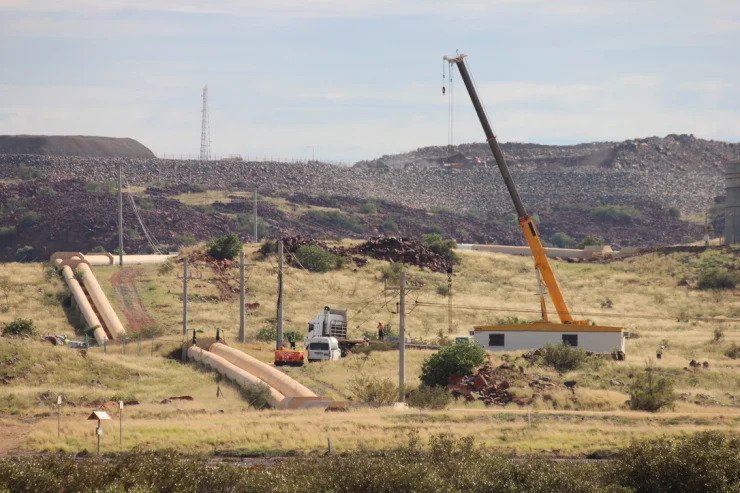
Authorities have carried out multiple searches of a photojournalist who captured images of the removal of ancient rock art from the site for a fertiliser plant in Western Australia's Pilbara.
Eliza Kloser, a journalist with Indigenous media outlet Ngaarda Media in Karratha, captured the images before being stopped by police further down the road.
Ms Kloser had told them she's a journalist and they let her continue, but was pulled over again several kilometres down the road by a second set of police who breathalysed her, conducted a search, and quizzed her again about her camera.
"They asked about my camera, what I was doing and what I was taking photographs of," Ms Kloser said.
"They did a full road safety standard check, looked at my spare tyre and looked in the car."
Ngaarda Media and the Media Entertainment and Arts Alliance (MEAA) said they were deeply concerned by the incident.
Last Friday, police searched Ms Kloser's home and personal items, seizing a memory card which contained images of the alleged removal of ancient rock art, also in connection with charges against her housemate and colleague, Gerard Mazza.
Mr Mazza is one of two individuals who have been charged with attempting to trigger a "stench bomb" and flares during Woodside's annual general meeting in Perth last week. Ms Kloser denies any involvement in the incident and has not been charged with anything.
She said the search involved eight to 10 local police and detectives, and continued for approximately an hour and a half.
WA Police Commissioner Col Blanch said the SD card has since been returned to Ms Kloser, and rejected suggestions police had targeted her despite not being able to explain why she was stopped while taking photographs on public property.
"The warrant was specifically in relation to two individuals who have been identified and charged with taking a noxious gas and flares into the [Perth] exhibition centre," Mr Blanch told ABC Radio.
"We were investigating that as a crime, and the search warrant was in relation to that crime.
"We don't consider people's status of employment when investigating crimes. We're looking for evidence that we have to provide before a court."
Ms Kloser said: "I understand that the search was related to my housemate, but it was interesting to say the least that I interacted with police three times that day and the only thing they took was the SD card of my work."
"They knew it was my camera, they knew they were my photos. Why confiscate my work material?
"It's something that you see in the movies, you know, and it was happening in my living room."
MEAA director Cassie Derrick said journalists and their sources needed to be protected from "disturbing raids" and "harassment" and that WA Police had urgent questions to answer.
"Police have seized and retained property on what appear to be questionable grounds," the journalists union director said.
"The bottom line is that this kind of police action utterly undermines journalism and the public's right to know."



