


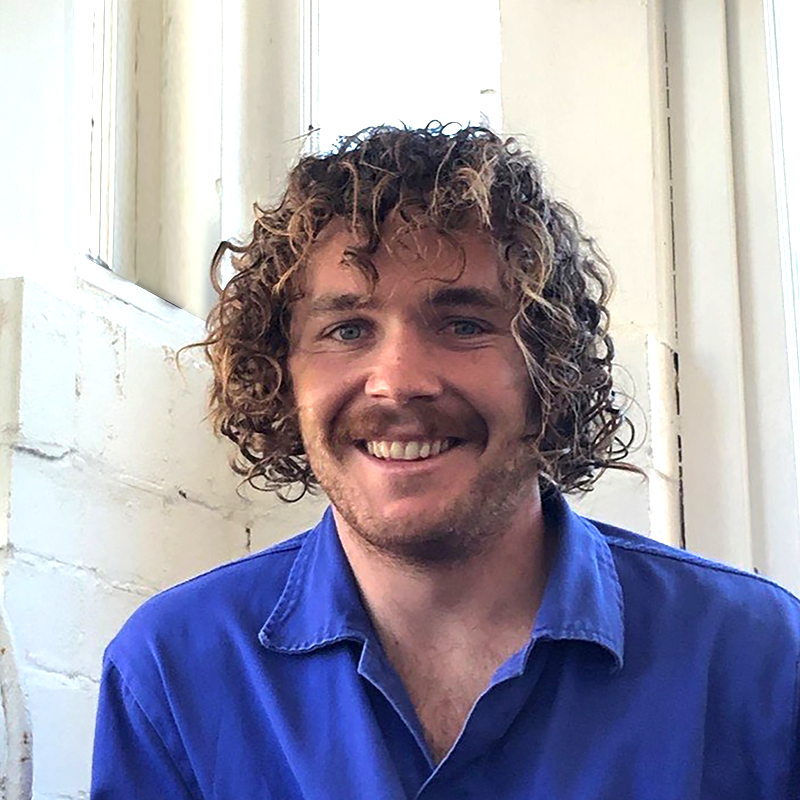

Professor Chris Lawrence reflects on those who came before him while looking to the future, the outer atmosphere and beyond, and what's possible for young Aboriginal and Torres Strait Islander people.
Professor Lawrence works in Monash University's Department of Human Centred Computing with a long background in academia.
In the early 1990s, while employed at the Environmental Protection Authority, he enrolled in a bridging course at Curtin University's Centre for Aboriginal Studies.
He started a teaching degree, spending time working and studying in the Northern Territory, before later completing Masters of Applied Epidemiology and PhD in Indigenous health and lifestyle choices.
More recently, STEM fields have become more central to his work.
"I was always one of those inquisitive people," Professor Lawrence told National Indigenous Times.
A 'love child' of the 1960s, born a "non-citizen" pre-1967 referendum, he spent his very early years on a mission in Western Australia's Wheatbelt region before moving with his grandparents to Perth and raised in the city.
He learned they were his grandparents and not biological mum and dad later in life.
"I was always processing things and I was always that sort of person. I'd always question things…needed to unpack things, needed to know the ins and outs of things," Professor Lawrence said.
"For me, growing up and thinking about where I was going to go and what I was going to do was always kind of constantly in my mind."
As a kid, Professor Lawrence dreamed about flying and space and was regularly in his Astro Boy t-shirt.
"I got in there by the skin of my teeth, to be honest with you," he said of his Masters, "but that was really based on lived experiences (and teaching)" working with sex workers, drug users and gender-diverse people and prisons while in Sydney before joking he went "kicking and screaming" into his PhD via a colleague's research grant.
It's now his time "to pass on my knowledge and my advice and my skills," he said.
On Friday, Professor Lawrence will be a guest speaker at the National NAIDOC Forum in Boorloo/Perth.
In 2023 he was appointed Monash University's first Dean of Indigenous Engagement for the Faculty of IT. His attention has in recent years turned to something further and higher away than before, literally; outer space.
He launched the National Indigenous Space Academy (NISA) with Monash, NASA and the Australian Space Agency - first set up in 2019.
NISA has invited students across Australia to apply for internships in California to build their knowledge across disciplines from planetary science to space exploration, robotics and astrophysics.
"At the forum, I'm going to talk about the future. What's our vision? Where do we want to see Aboriginal and Torres Strait Islander young people in the future and what are we really wanting them to do, or what should we be encouraging them to do?" Professor Lawrence said.
"Can we imagine Aboriginal and Torres Strait Islander people going into space? Can we imagine that we could have an Aboriginal and Torres Strait Islander astronauts up there working on the International Space Station, going to the moon, going to Mars, going to other planets? Because that's where we can be."
He feels alongside the potential being "in our DNA" as innovators, the current and future generations are strongly placed to take it on.
"Our people were the first scientists and technologists, engineers and mathematicians," he said.
"And I set (NISA) up in 2019 because I believe in Aboriginal and Torres Strait Islander people. And I believe in Aboriginal and Torres Islander young people, because they are switched on. They are using technology. They were born with technology.
"That has transformed the next generation, and that includes young Aboriginal and Torres Strait Islander people.
"What I'm taking from that is, how do we harness and capitalise on that the next generation of digitally, technology switched-on young Aboriginal and Torres Strait Islander people.
It's a seamless fit with 2025's NAIDOC Week theme; 'The Next Generation: Strength, Vision & Legacy'.
To him, Professor Lawrence said, every week is NAIDOC Week, but it's a chance to reflect on those who came before, like William Cooper, a personal influence he took early on in Charlie Perkins and others who carved out a legacy and future.
He said people took risks advocating and fighting in social and civil rights to help shape where Indigenous Australians are today.
Professor Lawrence likened the forum, and its importance to NAIDOC Week, to when the boss isn't in the room, and staff can have "open and transparent and honest discussion" with the shackles off.
"This forum is a bit like that scenario, where we're going to be in our own safe space, where we can have open dialog and be able to debate, or we don't have to agree on everything…because we're not homogenous, so we don't have to agree," he said.
"But the thing is, it gives people voices, and it gives people the opportunity to get up and ask questions and be able to, you know, to share some of those skills and knowledge and experiences that we've had, especially with the lineup of people.
National Indigenous Times is an official media partner of Perth's National NAIDOC Forum. Tickets can be purchased on Humantix.



