


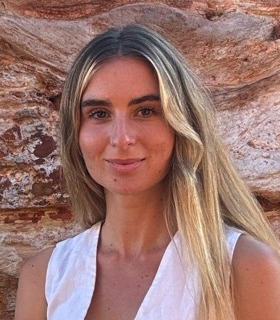

Jahna Cedar OAM, a proud Nyiyaparli woman from Western Australia's Pilbara region, has been selected to join the Australian delegation to the 70th Session of the United Nations Commission on the Status of Women, to be held in New York.
"As a woman from the bush, I'm excited to share that I've been selected to join the Australian delegation to the United Nations Commission on the Status of Women," Ms Cedar said.
The global forum will focus on access to justice for women and girls, and on dismantling the systems that entrench gender inequality.
The governance and leadership advisor said she would bring lived experience into conversations that have often been shaped without Indigenous women at the table.
"I've spent most of my life working alongside Aboriginal women — in community, in boardrooms, in business, and in spaces where decisions are made about us, often without us," she said.
Ms Cedar is the Co-Chair of First Nations x, Chair of First Australians Capital fund investment committee, and a board member of Western Australian Aboriginal Leadership Institute, Institute of Community Directors Australia Council and International Centre for Radio Astronomy Research.
On her first board at just ten years old, Ms Cedar said she was exposed from a young age to both the strength of Indigenous women's leadership and the barriers that remain.
Now a mother, she said her work is guided by the teachings of her Elders and by what she hopes to leave behind for the next generation.
"I want to respect and acknowledge the teachings of my Elders, whilst paving a legacy for my daughter to stand in her true authentic self — not defined by lateral violence, casual racism or inferiority," she said.
At the United Nations, Ms Cedar plans to speak on Indigenous women's leadership and governance, economic justice and access to capital, and the need for genuine systems change rather than symbolic inclusion.
She also hopes to highlight the cultural load and burnout carried by Indigenous women leaders, and the importance of creating pathways for young women to lead without leaving culture behind.
"The global focus is on systems change," she said. "That's where real equality begins."
The Commission on the Status of Women will convene in New York later this year.



