




Aboriginal and Torres Strait Islander leaders, mental health professionals, and community advocates recently came together on Larrakia Country in Darwin for Proud Futures, Gayaa Dhuwi's 2025 National Conference.
The gathering marked ten years since the launch of the Gayaa Dhuwi (Proud Spirit) Declaration, five years of Gayaa Dhuwi's operations, and the annual Gayaa Dhuwi Day.
Hundreds of delegates from across the nation attended the conference to reflect on a decade of progress in Indigenous social and emotional wellbeing (SEWB) and to chart priorities for the years ahead.
Its theme, Proud Futures, celebrated the strength and resilience of Aboriginal and Torres Strait Islander peoples and emphasised the responsibility of today's leaders to champion the next generation.
Gayaa Dhuwi CEO, Rachel Fishlock, said the Declaration had transformed national understanding of mental health over the past decade.
"It raised the profile of social and emotional wellbeing, leading to a Gayaa Dhuwi Framework and Implementation Plan, and a refreshed National Aboriginal and Torres Strait Islander Suicide Prevention Strategy," she said.
"For the first time, Aboriginal and Torres Strait Islander people were recognised as a priority cohort in the Fifth National Mental Health and Suicide Prevention Plan.
"Its biggest impact has been creating a shared reference point, with policy reviews and strategies now acknowledging cultural safety and community-led models as essential. The challenge is that while often cited, implementation has been patchy. The next decade is about moving from aspiration to enforceable standards and practice."
Ms Fishlock said the agenda was guided by community priorities.
"We work closely with our Member organisations, Councils, Collaborative Networks and Board, drawing on priorities identified through our ongoing work and engagements across the sector," she said.
"It reflected the voices and aspirations we hear every day: the call for stronger cultural leadership, youth voices, and a workforce and system that truly embody the Gayaa Dhuwi Declaration."
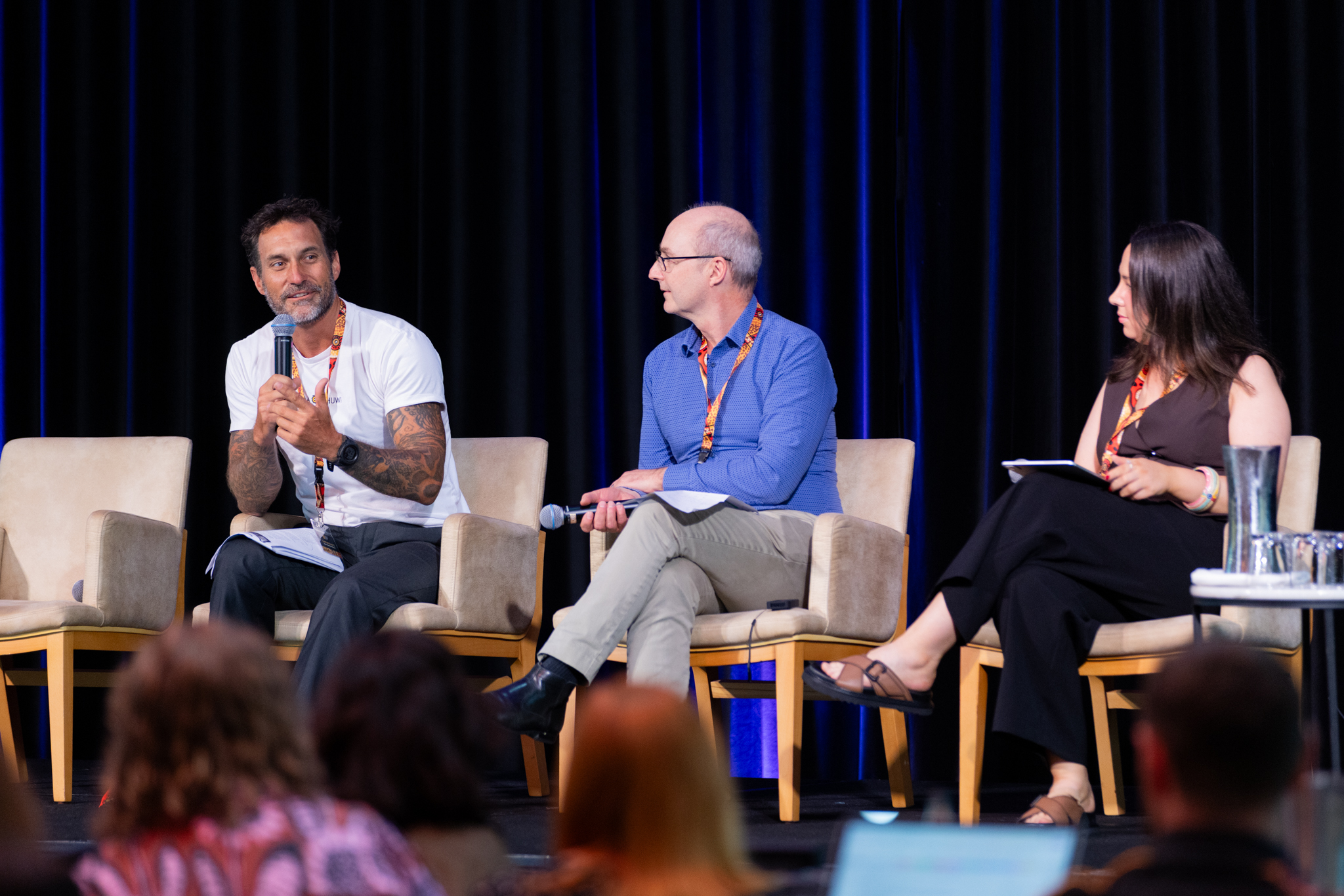
Associate Professor Clinton Schultz, Chair, Social and Emotional Wellbeing Policy Partnership - Gayaa Dhuwi (Proud Spirit) Australia, Gavin Matthews, First Assistant Secretary - Department of Health, Disability and Ageing and Rachel Fishlock, CEO - Gayaa Dhuwi (Proud Spirit) Australia
Delegates described the atmosphere of the conference as uplifting and hopeful.
Northern Territory Primary Health Network Regional Community Engagement Lead, Christine Butler, said she was especially inspired by the launch of a Youth Advisory Group.
"Considering the Conference theme is 'Proud Futures' I find this very fitting and this excites me," she said.
"Being in a culturally safe space with First Nations people and allies was incredibly valuable."
For Tanja Hirvonen, Clinical Psychologist, Thirrili Interim CEO and Black Dog Institute Board Director, the highlight was the strength gained from connections.
"Most valuable insight is how much joy and strength we get by connecting with each other. I always feel this strength, we all spoke about the need to prioritise this time with each other," she said.
She also pointed to the significance of the awards dinner.
"What stood out were each of the award recipients' speeches. Each person dedicated their award wins directly to the guidance of their families, communities and Elders," she said.
Gayaa Dhuwi Director and a pioneer in Indigenous mental health, Professor Pat Dudgeon, said the gathering stood out for its optimism and governance.
"This was an important Conference that brought together people from the community, Aboriginal community-controlled services, mainstream services and programs and governments to share their work in Indigenous mental health and SEWB," she said.
"Despite much of the content being about the mental health challenges that our people face, the Conference feeling/vibe was very optimistic and hopeful. It was one of the best Conferences of the year and as an Indigenous researcher, it provided excellent insights and networking opportunities."
She added that the inaugural Gayaa Dhuwi Awards were a particularly powerful moment.
"Often our people are not recognised for the great work that they do – usually beyond their paid roles, and this enabled us to celebrate those individuals and services in Indigenous mental health and SEWB," she said.
"This affirms our people's work and also provides positive role models. As A/Professor Grahan Gee said, 'To be recognised by your own people is a very special and meaningful experience'."
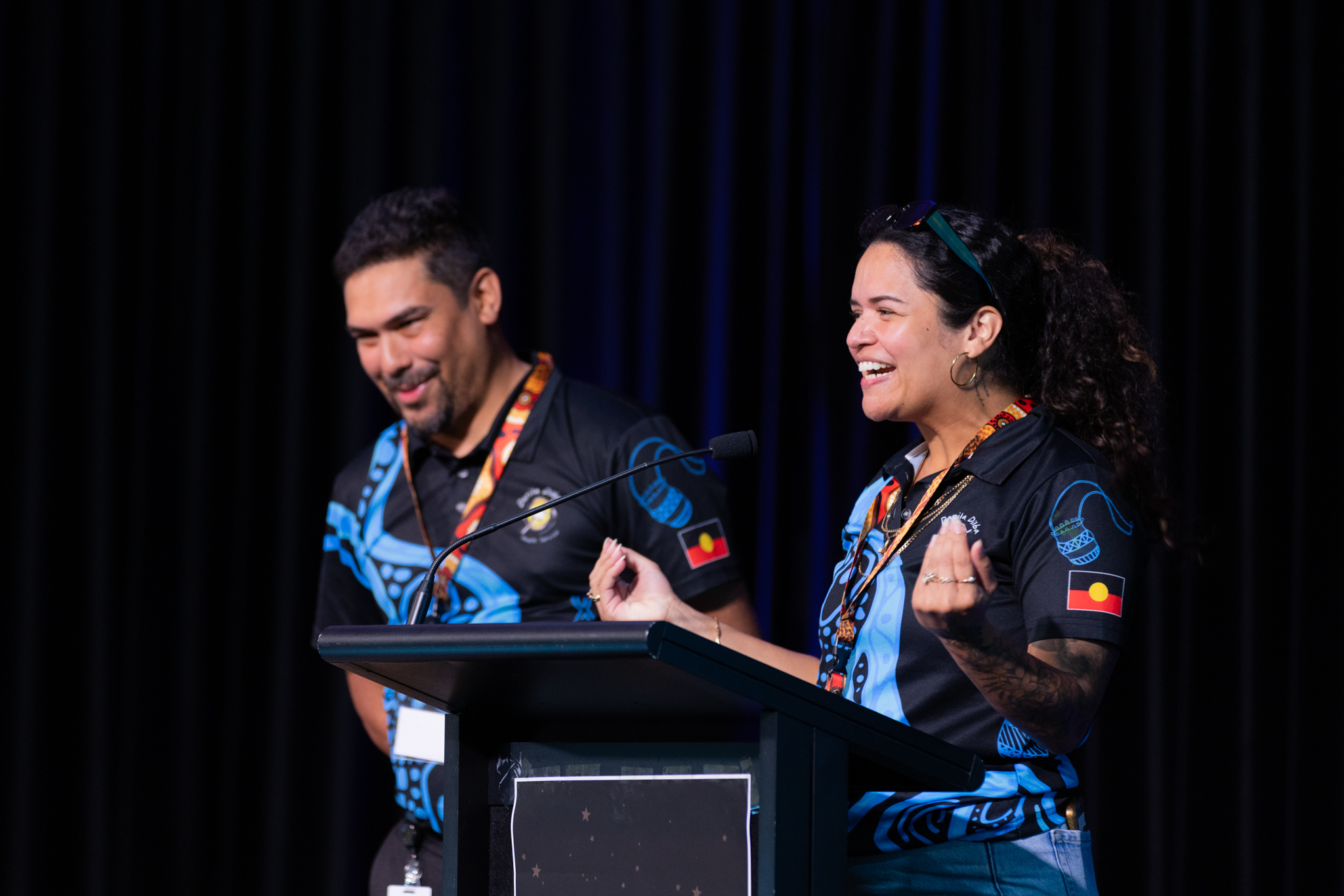
Gayaa Dhuwi launched its National Impact Platform 2025–2028 at the conference.
Ms Fishlock described it as "our blueprint for national reform, embedding social and emotional wellbeing at the centre of policy".
"It commits to a 'best of both worlds approach' that combines cultural and clinical practices, strengthens Aboriginal and Torres Strait Islander leadership, and prioritises the voices of those with lived experience," she said.
As the conference drew to a close, delegates were reminded the work of the Declaration continues.
On Larrakia Country, where saltwater meets red earth, Proud Futures was more than a conference — it was a call to action. It affirmed that Aboriginal and Torres Strait Islander peoples carry the strength of the past, the responsibility of the present, and the leadership to shape a healthier, culturally strong future for generations to come.
The Gayaa Dhuwi (Proud Spirit) Declaration can be found in full online.



